

US hits remaining parts of Iran’s aviation sector with sanctions in latest move to isolate Tehran
Advertisement
Read this article for free:
or
Already have an account? Log in here »
To continue reading, please subscribe:

Digital Subscription
One year of digital access for only $205*
- Enjoy unlimited reading on winnipegfreepress.com
- Read the E-Edition, our digital replica newspaper
- Access News Break, our award-winning app
- Play interactive puzzles
*First annual payment billed as $205.00 + GST for one year. This annual subscription will automatically renew at $233.00 + GST every 52 weeks (10% off the regular annual price of $259.35). Offer available to new and qualified returning subscribers only. Cancel any time.
To continue reading, please subscribe:
Add Free Press access to your Brandon Sun subscription for only an additional
$1 for the first 4 weeks*
- Enjoy unlimited reading on winnipegfreepress.com
- Read the E-Edition, our digital replica newspaper
- Access News Break, our award-winning app
- Play interactive puzzles
*Your next Brandon Sun subscription payment will increase by $1.00 and you will be charged $17.95 plus GST for four weeks. After four weeks, your payment will increase to $24.95 plus GST every four weeks.
Read unlimited articles for free today:
or
Already have an account? Log in here »
The Trump administration on Tuesday imposed sanctions on additional elements of Iran’s aviation industry, targeting more than two dozen commercial and private airlines as well as foreign cargo service providers in its new push to isolate Tehran from its remaining trading partners.
The latest actions are part of the Trump administration’s Operation Economic Outcast campaign that is aimed at severing “critical financial lifelines” for the already heavily sanctioned Iranian government. Hours later, the U.S. military struck multiple Iranian tankers in response to more attempted missile attacks on a Navy warship, according to a U.S. official, who spoke on condition of anonymity to discuss sensitive military operations.
It is all part of a two-pronged economic and military approach by President Donald Trump as he struggles to bring an end to a more than six-month-old war with Tehran.
The new penalties target the remaining facets of Tehran’s already beleaguered aviation ecosystem, which has been under layered U.S., United Nations and European restrictions and sanctions dating back to the 1979 Islamic Revolution.
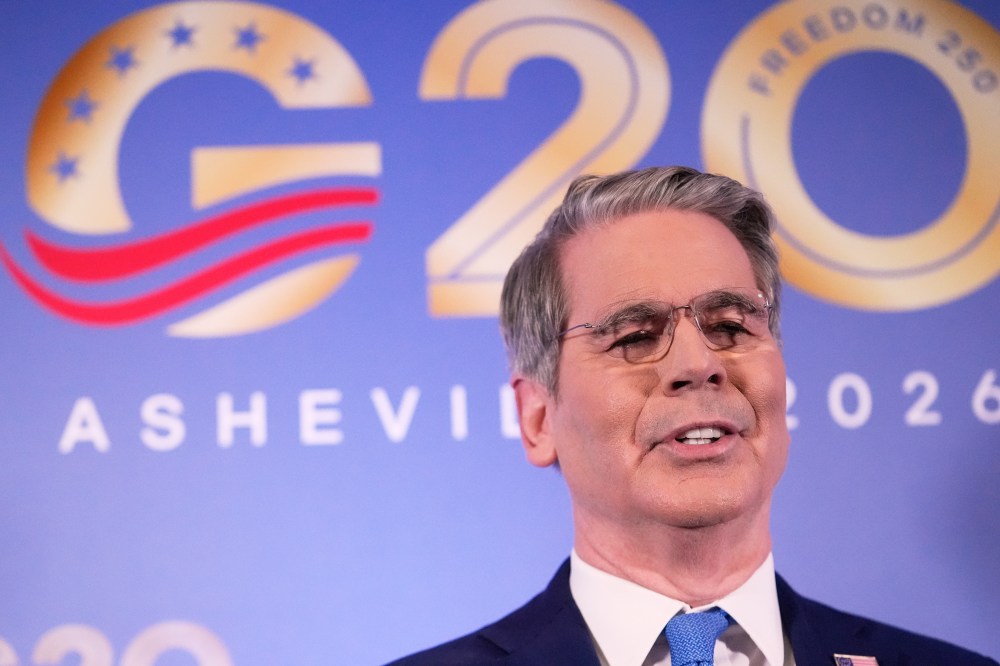
“Let this be a warning to anyone doing business with Iran’s remaining airlines, all of which we sanctioned today: You are at risk of being cut off from the global financial system,” Treasury Secretary Scott Bessent said in a press release.
The Trump administration accused the 36 entities targeted this week of supporting the Islamic Republic’s efforts to use its aviation sector to move weapons, personnel, and illicit cargo. The moves will subject foreign firms and governments that do business with the targeted entities to sanctions themselves, including a freeze on any assets they may have in U.S. jurisdictions.
In a post on X, Iranian Foreign Minister Abbas Araghchi called out the longstanding U.S. sanctions campaign against Iran, saying that the fallout “has been disastrous for America, including its standing worldwide.”
“After failing to achieve its aims through sanctions or war, Washington’s “novel” solution is…more sanctions. Seriously?” Araghchi wrote Tuesday afternoon.
The administration also claimed that private entities based in Turkey, the United Arab Emirates, Kazakhstan and Malaysia have provided parts and logistics services to Iran’s Mahan Air. The major airline, which flies from Tehran to a few dozen destinations in Asia, Europe and the Middle East, has been subject to U.S. counterterrorism sanctions since 2019 for its support for Iran’s paramilitary Revolutionary Guard, which the State Department has designated a foreign terrorist organization.
The airline was first targeted by the U.S. under the Obama administration in 2011, when it accused Mahan Air of being used to send weapons to Iranian proxies in Lebanon and Yemen.
But analysts describe Tuesday’s actions as the most comprehensive U.S. attempt to completely halt the country’s civil aviation sector and could eventually become a devastating aerial blockade.
“Before, it was the targeting of specific companies and individuals; now it’s just a blanket sanction on the entire aviation sector,” Farzin Nadimi, senior fellow at the Washington Institute for Near East Studies, said. “I think it will definitely be the most effective campaign and could result in the cessation of international flights into Iran.”
But Nadimi also warned that if the Treasury operation is not coupled with a public relations campaign to warn the Iranian people from using these airlines, it could risk dangerous or even deadly incidents. Most of Iran’s remaining commercial aircraft are decades old and have not received proper upgrades or inspections due to sanctions.
Last week, the U.S. announced penalties against Golden Global Yatirim Bankasi Anonim Sirketi, a Turkish bank, which it accused of being established to enable Iran’s efforts to transfer oil revenues from China to Turkey, where they could then be converted to cash and gold.
The U.S. also said the institution “knowingly offered” banking services to Iranian financial entities, including those already sanctioned by the U.S. government in 2022 for funneling Tehran’s oil sales.
An Egyptian bank’s operations in the United Arab Emirates were also limited last month as part of the campaign, but the administration stopped short of imposing sanctions as it grapples with how to sever Iran’s economic footprint without upending the global financial system.
___
Associated Press writer Konstantin Toropin in Washington contributed to this report.