

Nigeria’s parliament suspends engagements with South Africa over anti-migrant violence
Advertisement
Read this article for free:
or
Already have an account? Log in here »
To continue reading, please subscribe:

Digital Subscription
One year of digital access for only $205*
- Enjoy unlimited reading on winnipegfreepress.com
- Read the E-Edition, our digital replica newspaper
- Access News Break, our award-winning app
- Play interactive puzzles
*First annual payment billed as $205.00 + GST for one year. This annual subscription will automatically renew at $233.00 + GST every 52 weeks (10% off the regular annual price of $259.35). Offer available to new and qualified returning subscribers only. Cancel any time.
To continue reading, please subscribe:
Add Free Press access to your Brandon Sun subscription for only an additional
$1 for the first 4 weeks*
- Enjoy unlimited reading on winnipegfreepress.com
- Read the E-Edition, our digital replica newspaper
- Access News Break, our award-winning app
- Play interactive puzzles
*Your next Brandon Sun subscription payment will increase by $1.00 and you will be charged $17.95 plus GST for four weeks. After four weeks, your payment will increase to $24.95 plus GST every four weeks.
Read unlimited articles for free today:
or
Already have an account? Log in here »
ABUJA, Nigeria (AP) — Nigeria’s parliament said Friday that it’s suspending official visits to South Africa indefinitely over anti-immigrant protests targeting other Africans.
The violent protests, which erupted in South Africa earlier this year, have forced thousands of migrants to leave and caused diplomatic tensions with other African nations.
Kamoru Ogunlana, the clerk to Nigeria’s National Assembly, said in a statement that the parliament was “particularly concerned by reports of Nigerians being killed, injured, displaced and forced to abandon their businesses, investments, homes and other properties as a result of recurring violent attacks.”
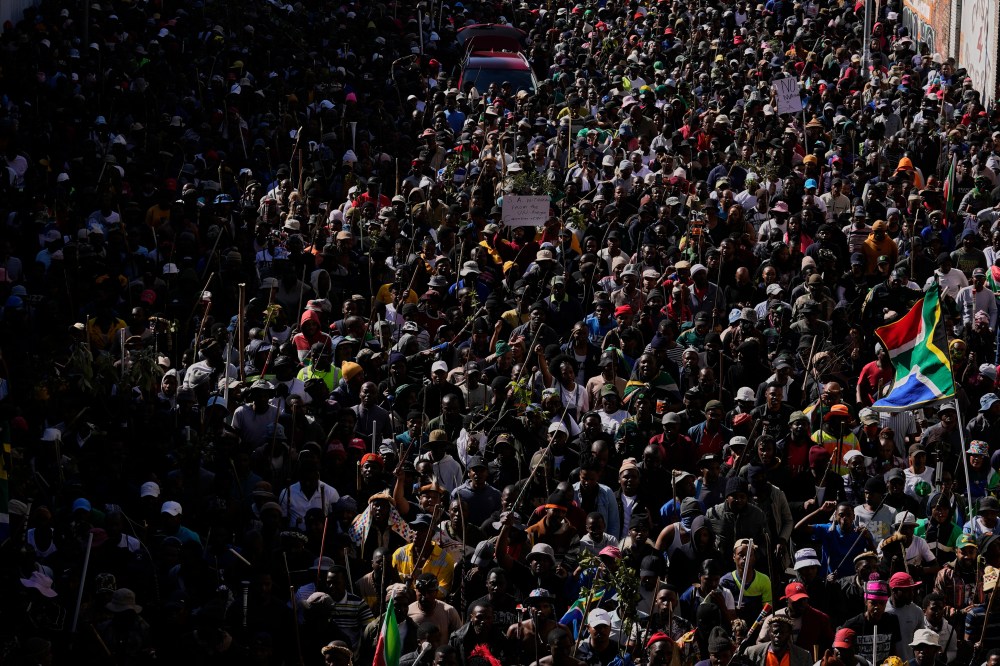
South Africa has for years attracted foreign nationals from across the continent, including many from Nigeria, because of its relative wealth and opportunity. But foreigners have also experienced sporadic outbursts of xenophobic violence. Protesters in the southern African country blame foreigners for high levels of unemployment, crime and pressure on public services.
In June, two Nigerians were killed during anti-migrant violence in South Africa, just two days before an unofficial deadline set by protesters for foreigners to leave. Nigeria’s foreign ministry said one was allegedly killed by police officers and the other by unidentified attackers.
Nigeria’s minister of state for foreign affairs, Ambassador Sola Enikanolaiye, hosted South African Foreign Minister Ronald Lamola in the country’s capital, Abuja, in July to discuss the recurring attacks. At that meeting, Enikanolaiye said that at least 98 Nigerians have been killed since 2022 in mob attacks, hate-related violence and extrajudicial killings.
The move by the parliament in Nigeria on Friday is a “strong expression” of concern over the safety and welfare of Nigerians living and conducting legitimate businesses in South Africa, Ogunlana said.
According to South Africa’s latest government figures, almost 90,000 people have either been voluntarily repatriated or have been deported since the migration tensions began. However, figures released by the governments of migrants’ home countries put the total at about 178,000.