

A judge rejects Pamela Smart’s latest bid for a new trial in 1990 accomplice to murder case
Advertisement
Read this article for free:
or
Already have an account? Log in here »
To continue reading, please subscribe:

Digital Subscription
One year of digital access for only $205*
- Enjoy unlimited reading on winnipegfreepress.com
- Read the E-Edition, our digital replica newspaper
- Access News Break, our award-winning app
- Play interactive puzzles
*First annual payment billed as $205.00 + GST for one year. This annual subscription will automatically renew at $233.00 + GST every 52 weeks (10% off the regular annual price of $259.35). Offer available to new and qualified returning subscribers only. Cancel any time.
To continue reading, please subscribe:
Add Free Press access to your Brandon Sun subscription for only an additional
$1 for the first 4 weeks*
- Enjoy unlimited reading on winnipegfreepress.com
- Read the E-Edition, our digital replica newspaper
- Access News Break, our award-winning app
- Play interactive puzzles
*Your next Brandon Sun subscription payment will increase by $1.00 and you will be charged $17.95 plus GST for four weeks. After four weeks, your payment will increase to $24.95 plus GST every four weeks.
Read unlimited articles for free today:
or
Already have an account? Log in here »
CONCORD, N.H. (AP) — A New Hampshire judge on Thursday dismissed the latest petition for a new trial from Pamela Smart, who is serving life in prison for orchestrating the murder of her husband by her teenage student more than three decades ago.
Smart, 59, was a 22-year-old high school media coordinator when she began an affair with the 15-year-old boy who later fatally shot her husband, Gregory Smart, in Derry in 1990.
The shooter was freed in 2015 after serving a 25-year sentence. Though Smart denied knowledge of the plot at the time, she was convicted in 1991 of being an accomplice to first-degree murder and other crimes and was sentenced to life without parole. Her trial was one of the first in the nation to be broadcast live on television from start to finish.
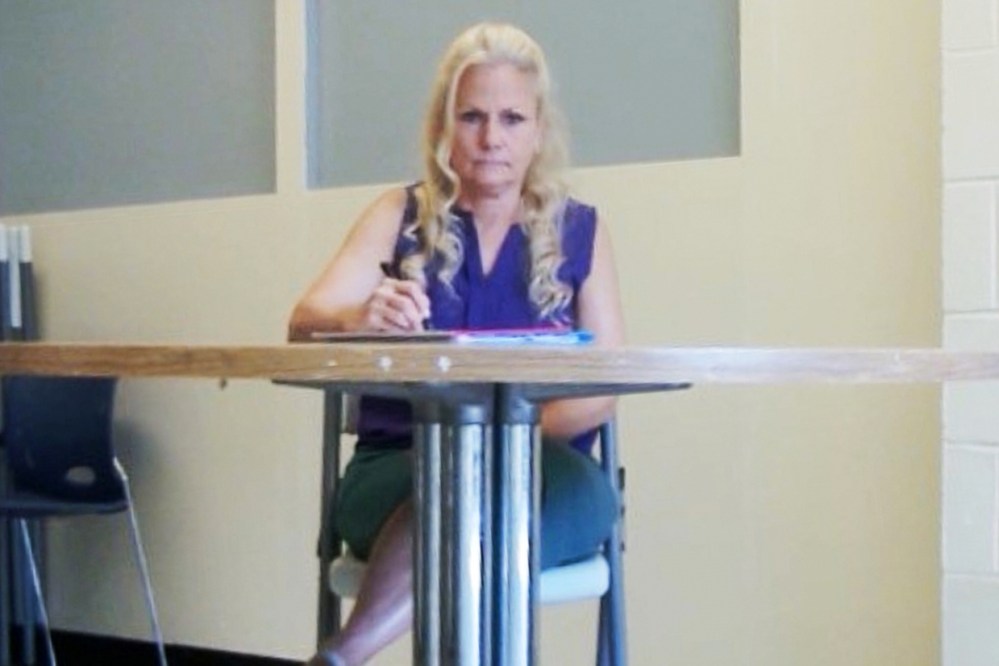
She didn’t take responsibility for her husband’s death until 2024, saying she spent years deflecting blame “almost as if it was a coping mechanism.”
Smart filed a petition for habeas corpus relief in January seeking to overturn her conviction over what her lawyers claimed were several constitutional violations. After holding a hearing in July, Merrimack County Superior Court Judge James Kennedy on Thursday granted the state’s motion to dismiss the petition, saying her arguments already were or could have been raised during earlier appeals, and even if they hadn’t, lacked merit.
Among other things, Smart’s lawyers argued that prosecutors misled the jury by providing them with inaccurate transcripts of surreptitiously recorded conversations between Smart and her student intern that included words that were not audible on the recordings.
Among the words they claimed weren’t audible but appeared in the transcript was the word “killed” in the sentence “you had your husband killed,” the word “busted” in the sentence “I’m gonna be busted,” and the word “murder” in the sentence “this would have been the perfect murder.”
In the petition, Smart’s lawyers described a forensic study suggesting that providing transcripts to juries along with muffled audio can lead listeners to believe the written text, even when it’s inaccurate.
But Kennedy said the study’s legal relevancy was “dubious” given that it wasn’t published or available to read in full and that even the description given by Smart’s attorneys failed to identify any inaccuracies. The judge also rejected Smart’s arguments that the verdict was tainted by media attention and by faulty jury instructions.
Smart’s trial was a media circus and one of the first high-profile cases in the U.S. about a sexual affair between a school employee and a student. The student, William Flynn, testified that Smart told him she needed her husband killed because she feared she would lose everything if they divorced and that she threatened to break up with Flynn if he didn’t kill her husband.
Flynn and three other teens who participated in the plot cooperated with prosecutors, and all have since been released.
The case inspired Joyce Maynard’s 1992 book “To Die For” and the 1995 film of the same name, starring Nicole Kidman and Joaquin Phoenix.