

The Asian Games are open with more athletes than the Summer Olympics and some unfamiliar sports
Advertisement
Read this article for free:
or
Already have an account? Log in here »
To continue reading, please subscribe:

Digital Subscription
One year of digital access for only $205*
- Enjoy unlimited reading on winnipegfreepress.com
- Read the E-Edition, our digital replica newspaper
- Access News Break, our award-winning app
- Play interactive puzzles
*First annual payment billed as $205.00 + GST for one year. This annual subscription will automatically renew at $233.00 + GST every 52 weeks (10% off the regular annual price of $259.35). Offer available to new and qualified returning subscribers only. Cancel any time.
To continue reading, please subscribe:
Add Free Press access to your Brandon Sun subscription for only an additional
$1 for the first 4 weeks*
- Enjoy unlimited reading on winnipegfreepress.com
- Read the E-Edition, our digital replica newspaper
- Access News Break, our award-winning app
- Play interactive puzzles
*Your next Brandon Sun subscription payment will increase by $1.00 and you will be charged $17.95 plus GST for four weeks. After four weeks, your payment will increase to $24.95 plus GST every four weeks.
Read unlimited articles for free today:
or
Already have an account? Log in here »
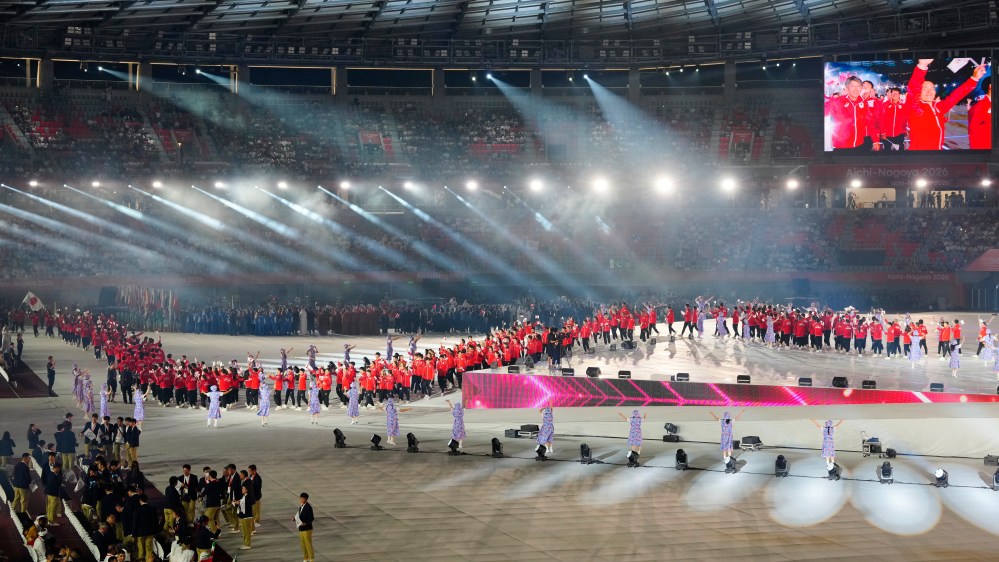
NAGOYA, Japan (AP) — The opening ceremony of the Asian Games on Saturday marked the official start of the 16-day event — but in name only.
Facing a packed schedule, competition in basketball started on Sept. 10 — more than a week ago. The semifinals in men’s basketball were on Friday, a day before the official opening.
Soccer has been going on for almost as long. The Summer Olympics typically start a few days early, but this multi-sport event pushes the envelope.
Welcome to the Asian Games, which feature at least 11,000 athletes. The 2024 Summer Olympics in Paris had about 10,700. The last Asian Games in Hangzhou, China, in 2023 had roughly 12,000.
Japanese organizers have yet to release an official athlete total from the 45 countries and regions contesting 43 sports. But it seems likely to reach the total in China of three years ago. Maybe more with a few new sports added.
The games feature the old-standby Olympic disciplines like track and field, swimming and soccer. But there are some Asian specialties, too: kurash, kabaddi, and sepaktakraw to name three.
Kurash is an ancient form of wrestling that originated in Uzbekistan. Kabaddi looks like a game of team tag with a physical edge. And sepaktakraw is a mix of volleyball and soccer.
Games organizers have also added mixed martial arts, padel and teqball to the menu — with esports also on the schedule — hence the time crunch.
Host Japan has the largest delegation with 933 athletes and China came with just over 800. China won 201 gold medals in the last games, followed by Japan (52) and South Korea (42). That pattern is expected to be repeated.
The usual protocol and pomp led by Japan’s royal family
Emperor Naruhito and Empress Masako headed the list of dignitaries. The president of the Olympic Council of Asia, Sheikh Joaan bin Hamad Al Thani, elected earlier this year, was alongside.
“Tonight the eyes of Asia, and much of the world, turn to Japan,” Sheikh Joaan said in his address, which was followed by the Emperor officially opening the games.
The president of the International Olympic Committee, Kirsty Coventry, was also present.
The theme of the opening ceremony was the “Harmonic Heart Beat,” and the stage on the infield at the Nagoya City Stadium was in the shape of a large heart.
Afghanistan led off the traditional parade of athletes with Japan coming in last and, of course, receiving thunderous applause.
Getting started should be a relief for organizers
The Asian Games have been dotted with controversies in the leadup to the opening ceremony. This also happens in the rush to get ready for most Olympics.
First, there’s the issue of housing for athletes. Japanese organizers decided against building a dedicated athletes village. They opted instead to house an estimated 17,000 athletes and officials on a massive cruise ship, in hotels, and in wooden containers converted to lodging.
Japan officially spent $13 billion on the Tokyo Olympics, delayed until 2021 by the pandemic. A government audit suggested the figure was likely twice that large. So lavish spending was out this time.
Athletes have complained the beds and rooms are too small, some have reported the wooden huts have leaks, and logistics could be an issue with venues spread out around Nagoya.
This is Japan’s third largest metropolitan area with a population of about 9.5 million and located about 200 miles (350 kilometers) south of Tokyo.
Then the inevitable politics. On Friday, the day before the official opening, two incidents made headlines.
Organizers played the North Korean national anthem at a field hockey game between South Korea and Bangladesh. South Korea players stood at attention, bewildered the North Korean anthem was playing.
Many South Koreans are, in fact, unfamiliar with North Korea’s anthem and did not know what they were hearing.
At about the same time, Taiwanese sports minister Lee Yang — a two-time Olympic gold medalist in badminton — was temporarily barred from a welcoming ceremony involving Taiwan, and other countries including North Korea, Palestine and India.
The Olympic Council of Asia attributed it to a misunderstanding but did not entirely clarify. Yang was eventually allowed to participate.
Taiwan competes in the Asian Games and the Olympics under the name of Chinese Taipei and without their flag due to China’s claim on the island off its east coast.
___
See full AP coverage of Asian sports here