

European ministers discuss stronger border controls and fast-track migrant returns
Advertisement
Read this article for free:
or
Already have an account? Log in here »
To continue reading, please subscribe:

Digital Subscription
One year of digital access for only $205*
- Enjoy unlimited reading on winnipegfreepress.com
- Read the E-Edition, our digital replica newspaper
- Access News Break, our award-winning app
- Play interactive puzzles
*First annual payment billed as $205.00 + GST for one year. This annual subscription will automatically renew at $233.00 + GST every 52 weeks (10% off the regular annual price of $259.35). Offer available to new and qualified returning subscribers only. Cancel any time.
To continue reading, please subscribe:
Add Free Press access to your Brandon Sun subscription for only an additional
$1 for the first 4 weeks*
- Enjoy unlimited reading on winnipegfreepress.com
- Read the E-Edition, our digital replica newspaper
- Access News Break, our award-winning app
- Play interactive puzzles
*Your next Brandon Sun subscription payment will increase by $1.00 and you will be charged $17.95 plus GST for four weeks. After four weeks, your payment will increase to $24.95 plus GST every four weeks.
Read unlimited articles for free today:
or
Already have an account? Log in here »
MUNICH, Germany (AP) — European interior ministers held talks on Saturday to strengthen border controls, improve emergency response times and establish fast-track procedures for returning some migrants.
The gathering of 17 ministers from the European Union and Britain comes as the 27-member bloc works to strengthen migration controls following the implementation in June of a migration and asylum pact.
Asylum applications in Europe have fallen sharply in recent months, and fewer migrants have attempted to cross the Mediterranean, although their treacherous journeys have become more deadlier than last year.
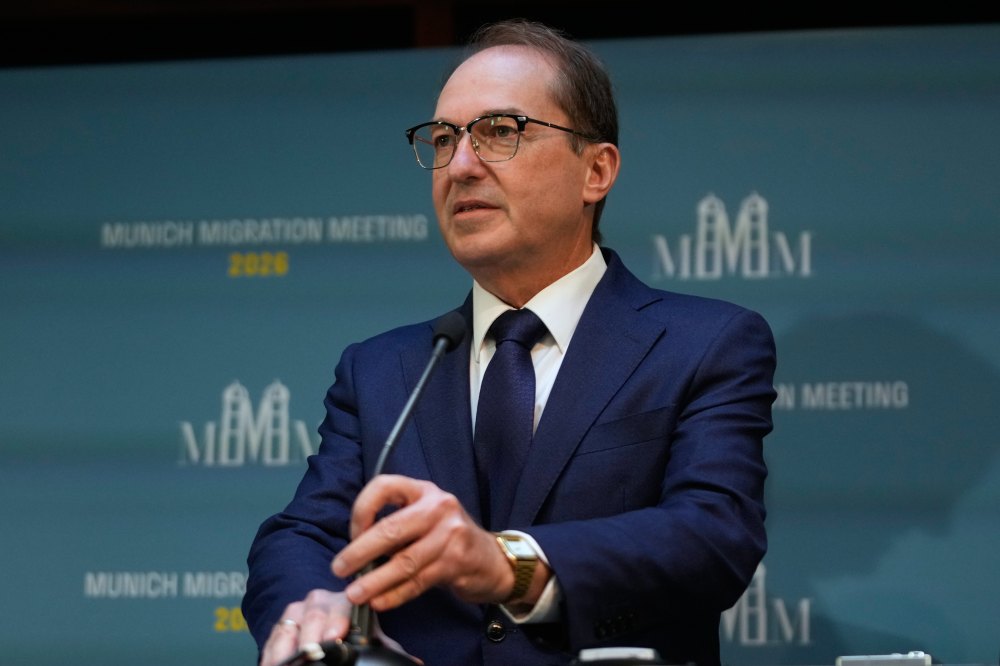
“There is a need for a new European migration crisis mechanism,” said German Interior Minister Alexander Dobrindt, alluding to some emergency situations of “waves of illegal border crossings.”
Citing an influx of migrants to the Spanish territory of Ceuta, which borders Morocco caused divisions in Europe, Dobrindt called for new rules to identify border emergencies, a mechanism to respond to them and a system for fast-tracking some returns.
He also said he hoped the European border security and coast guard agency, known as Frontex, could be involved in the return process.
EU Migration Commissioner Magnus Brunner said protecting the bloc’s borders was a central part of the reforms and that progress was being made.
“Illegal migration has dropped dramatically,” said Brunner. “In the last two years, it has gone down by 55 % and in the last year once again it dropped by one-third.
“We as Europeans want to decide who can stay in Europe and those who cannot stay then have to leave. This is what all this is about.”