

Rome court sentences 3 Egyptian security officials to 10 years over Giulio Regeni’s abduction
Advertisement
Read this article for free:
or
Already have an account? Log in here »
To continue reading, please subscribe:

Digital Subscription
One year of digital access for only $205*
- Enjoy unlimited reading on winnipegfreepress.com
- Read the E-Edition, our digital replica newspaper
- Access News Break, our award-winning app
- Play interactive puzzles
*First annual payment billed as $205.00 + GST for one year. This annual subscription will automatically renew at $233.00 + GST every 52 weeks (10% off the regular annual price of $259.35). Offer available to new and qualified returning subscribers only. Cancel any time.
To continue reading, please subscribe:
Add Free Press access to your Brandon Sun subscription for only an additional
$1 for the first 4 weeks*
- Enjoy unlimited reading on winnipegfreepress.com
- Read the E-Edition, our digital replica newspaper
- Access News Break, our award-winning app
- Play interactive puzzles
*Your next Brandon Sun subscription payment will increase by $1.00 and you will be charged $17.95 plus GST for four weeks. After four weeks, your payment will increase to $24.95 plus GST every four weeks.
Read unlimited articles for free today:
or
Already have an account? Log in here »
ROME (AP) — A court in Rome on Monday sentenced three Egyptian security officials convicted of aggravated kidnapping in the abduction of an Italian researcher in Cairo to 10 years in prison, while a fourth defendant was acquitted of murder.
The ruling marks the most significant judicial milestone yet in the decade-long quest for accountability over Giulio Regeni’s death. Rome’s chief prosecutor Francesco Lo Voi welcomed the outcome, saying the verdict was achieved despite what he described as a lack of “meaningful cooperation” from Egyptian authorities during the investigation. The defendants were tried in absentia.
“We are satisfied for having brought the case out of the quagmire into which it had risked sinking,” Lo Voi told reporters after the verdict.
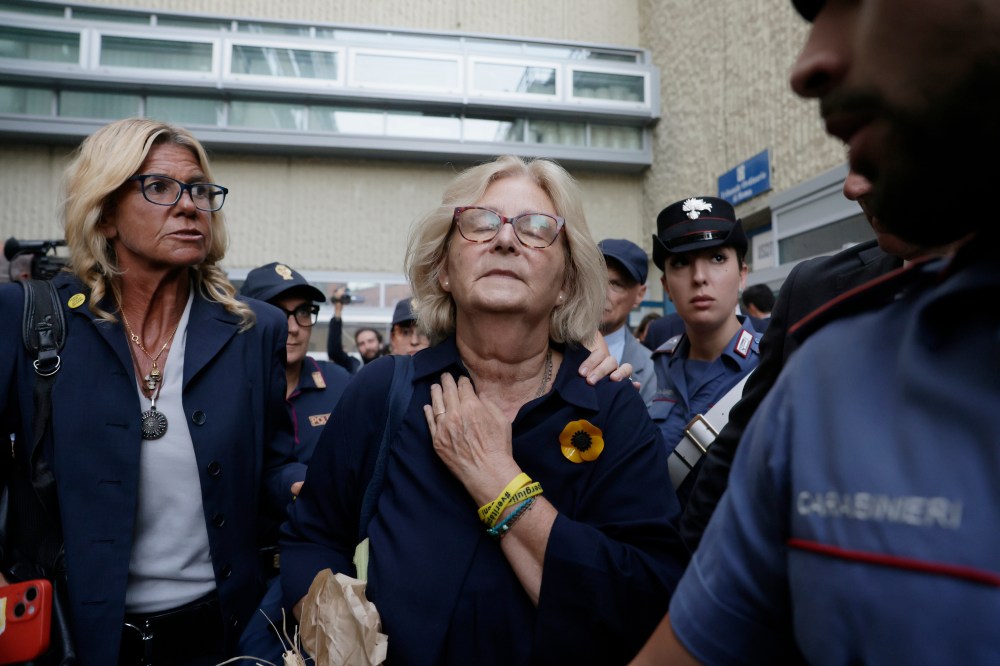
Regeni, a 28-year-old Italian doctoral candidate at the University of Cambridge, disappeared in Cairo on Jan. 25, 2016, while conducting research on independent trade unions in Egypt. His body was found nine days later on the outskirts of the Egyptian capital bearing signs of extensive torture, according to Italian investigators.
Rome prosecutors had charged the four Egyptians: Tariq Sabir, Hisham Helmi, Athar Kamel Mohamed Ibrahim and Magdi Ibrahim Abdelal Sharif with aggravated kidnapping in connection with Regeni’s disappearance. Sharif had also faced charges related to Regeni’s injuries and death.
Helmi, Ibrahim and Sharif were sentenced Monday to 10 years in prison for charges related to Regeni’s abduction, but not for his death. Sabir was acquitted.
The case quickly became one of the most contentious issues in relations between Italy and Egypt. Italian prosecutors maintained that members of Egypt’s security services abducted, detained, tortured and killed Regeni, while Egyptian authorities repeatedly denied state involvement and disputed the findings of the Italian investigation.
The investigation was marked by years of disputes over evidence and judicial cooperation. Italian magistrates accused Egyptian authorities of withholding key information requested through international legal channels, an allegation Cairo rejected.
The proceedings faced repeated delays because the defendants remained in Egypt and never appeared before the Italian court.
Italy’s Constitutional Court ultimately cleared the way for the trial to proceed in absentia, allowing hearings to begin in Rome despite longstanding disputes over notification of the accused.

In June, prosecutors sought a life sentence for Sharif, whom they identified as the man who physically carried out the killing, and prison terms of 17 years and six months for Sabir, Helmi and Ibrahim.
For Regeni’s family, the case became a decade-long campaign for accountability. Their calls for “truth and justice” drew broad support across Italy, where yellow banners bearing Regeni’s name became symbols of solidarity and demands for answers over his death.
The ruling marks the most significant judicial milestone yet in a case that has repeatedly tested relations between Italy and Egypt and drawn international attention to human rights concerns in Egypt.