

What to know about the investigation into Cornell University gang rape allegations
Advertisement
Read this article for free:
or
Already have an account? Log in here »
To continue reading, please subscribe:

Digital Subscription
One year of digital access for only $205*
- Enjoy unlimited reading on winnipegfreepress.com
- Read the E-Edition, our digital replica newspaper
- Access News Break, our award-winning app
- Play interactive puzzles
*First annual payment billed as $205.00 + GST for one year. This annual subscription will automatically renew at $233.00 + GST every 52 weeks (10% off the regular annual price of $259.35). Offer available to new and qualified returning subscribers only. Cancel any time.
To continue reading, please subscribe:
Add Free Press access to your Brandon Sun subscription for only an additional
$1 for the first 4 weeks*
- Enjoy unlimited reading on winnipegfreepress.com
- Read the E-Edition, our digital replica newspaper
- Access News Break, our award-winning app
- Play interactive puzzles
*Your next Brandon Sun subscription payment will increase by $1.00 and you will be charged $17.95 plus GST for four weeks. After four weeks, your payment will increase to $24.95 plus GST every four weeks.
Read unlimited articles for free today:
or
Already have an account? Log in here »
An intense, public outcry over a woman’s account of being gang-raped at a Cornell University fraternity house prompted New York’s governor this week to angrily yank control of the investigation away from the local prosecutor who didn’t initially see what happened as a crime.
Tompkins County District Attorney Matthew Van Houten has said Cornell police omitted key information that could have affected his decision whether or not to pursue criminal charges.
Now, the task of unraveling the case will fall to the state’s attorney general, Letitia James, who was appointed as a special prosecutor.
James, a Democrat best known for tangling with President Donald Trump, suggested at a news conference Friday that her investigation wouldn’t be rushed. She described it as a monthslong process, with no predetermined outcome.
Here’s what we know and don’t know about the woman’s allegations and the investigations that followed:
A lawsuit shone a fresh light on the woman’s allegations
The woman sued Cornell and seven former students last month, alleging she was given ketamine and became completely incapacitated while members of the Chi Phi fraternity sexually assaulted her at their campus residence in October 2024.
She reported the alleged assault to campus police about three weeks later, giving investigators a detailed account over two days. She also spoke with Cornell’s disciplinary investigators.
But Van Houten quickly declined to pursue charges or further investigation after reviewing a police summary of her interview.
After the victim filed her civil suit, Van Houten said it contained allegations he had never seen. He contended Cornell’s police had withheld key information, including a transcript of the woman’s interview where she explicitly said she was “100% confident” she was raped.
Van Houten said the materials suggested she had consented to some sex with multiple men, hadn’t been forced into other acts, and was intoxicated, but not to the point of helplessness.
Under New York law, being too drunk or high to consent to sex isn’t necessarily enough to support a rape charge. The law distinguishes that from being physically helpless or incapacitated by drugs administered without consent.
Van Houten later reopened the investigation. “Seeking justice sometimes requires us to reconsider or reopen cases when we are provided with additional evidence,” he said.
The school’s investigation produced conflicting accounts
Only a fraction of the evidence collected by the school has become public, but the portions that have provided a fuller — though disputed — timeline of events, as well as a glimpse at how the men responded to being accused.
According to the records, the woman had been invited to the fraternity by a member for whom she had long held strong romantic feelings. Cornell’s disciplinary panel found that she initially consented to sex with that man and one of his friends, though she later alleged in her lawsuit that she had been pressured into taking drugs and alcohol and was too intoxicated to consent.
Later, other men started coming into the room, some drawn by a message one of the fraternity brothers sent to a Snapchat group at 1:42 a.m. using a vulgar term to advertise that a woman’s body was freely available.
The woman told investigators that her intoxication had rendered her partly defenseless. She said some of the men inhaled drugs off her unclothed body.
“I felt like bait. I felt like lions around me. It just was a totally debilitating place to be in,” she told investigators.
The records also show that she acknowledged that her memory of the night was spotty, due to her extreme inebriation, and had verbally acquiesced to some acts she later felt were sexual abuse.
Some of the accused men disputed her account when speaking to investigators, or said that the drug use and sexual activity were consensual.
Cornell hasn’t detailed the results of its investigation, but said it resulted in some students being expelled. The records show it also cleared at least some of the men of sexual assault allegations.
New York’s governor was outraged by the police investigation
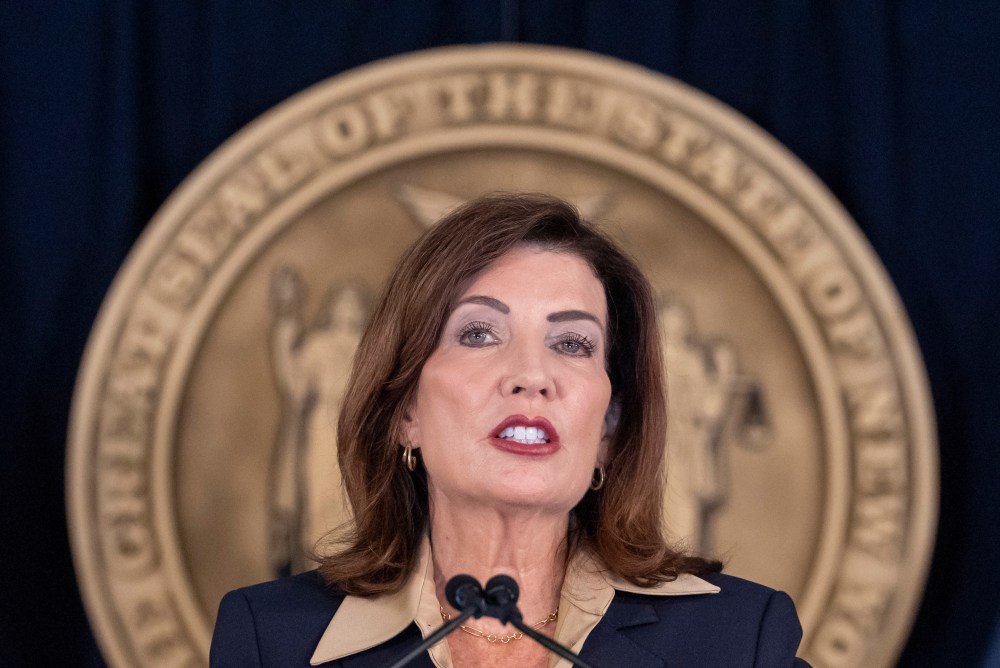
Hochul said she appointed James because she had lost faith in Van Houten’s handling of the case. She said Van Houten should have asked Cornell for more information and interviewed the woman before closing it.
“This woman, this young woman, had already endured something that is utterly unspeakable,” she said. “And then at every turn, she was failed by people and institutions with an obligation to protect her.”
Van Houten said he supports James’ appointment but maintains that New York law didn’t allow him to prosecute based solely on the woman’s allegations that she was too incapacitated to consent.
The case sparks calls for change
At a Cornell Student Assembly meeting Thursday, students and other members of the university community spent more than 2 1/2 hours discussing the handling of sexual assault allegations. Some expressed fear, anger, and grief — while others shared their own experiences of sexual violence on campus.
Among them was Jane Wang, who said she had reported being sexually assaulted at Cornell a year earlier.
When she filed her Title IX case in the midst of “mental, physical and emotional recovery from the assault,” she said, “I was also met with an abundance of paperwork, very little instruction on how to navigate it and no follow-up from our Title IX office of an outcome.”
The presidents of every fraternity in Cornell’s Interfraternity Council voted unanimously to cancel social events this weekend in response to the allegations, according to The Cornell Daily Sun. Twenty student organizations are also planning a protest Monday calling for an independent review of Cornell’s handling of the case and changes to its sexual assault policies, the newspaper reported.
The case has also renewed scrutiny of a New York sexual assault law that makes it more difficult to prosecute cases involving people too intoxicated to consent. New York is one of 19 states with such laws.
Hochul said Friday that she supports changing the law.