

Appeals court weighs judge’s authority to restore Trump administration funding cuts to Harvard
Advertisement
Read this article for free:
or
Already have an account? Log in here »
To continue reading, please subscribe:

Digital Subscription
One year of digital access for only $205*
- Enjoy unlimited reading on winnipegfreepress.com
- Read the E-Edition, our digital replica newspaper
- Access News Break, our award-winning app
- Play interactive puzzles
*First annual payment billed as $205.00 + GST for one year. This annual subscription will automatically renew at $233.00 + GST every 52 weeks (10% off the regular annual price of $259.35). Offer available to new and qualified returning subscribers only. Cancel any time.
To continue reading, please subscribe:
Add Free Press access to your Brandon Sun subscription for only an additional
$1 for the first 4 weeks*
- Enjoy unlimited reading on winnipegfreepress.com
- Read the E-Edition, our digital replica newspaper
- Access News Break, our award-winning app
- Play interactive puzzles
*Your next Brandon Sun subscription payment will increase by $1.00 and you will be charged $17.95 plus GST for four weeks. After four weeks, your payment will increase to $24.95 plus GST every four weeks.
Read unlimited articles for free today:
or
Already have an account? Log in here »
BOSTON (AP) — A federal appeals court heard opposing arguments Monday over whether a judge had the authority to restore billions of dollars in funding that the Trump administration cut from Harvard University.
U.S. District Judge Allison Burroughs ruled last year that the cuts amounted to illegal retaliation for Harvard’s rejection of the administration’s demands for changes to Harvard’s governance and policies.
The government had tied the move to Harvard’s delays in dealing with antisemitism, but the judge said the university’s federally backed research had little connection to discrimination against Jews.
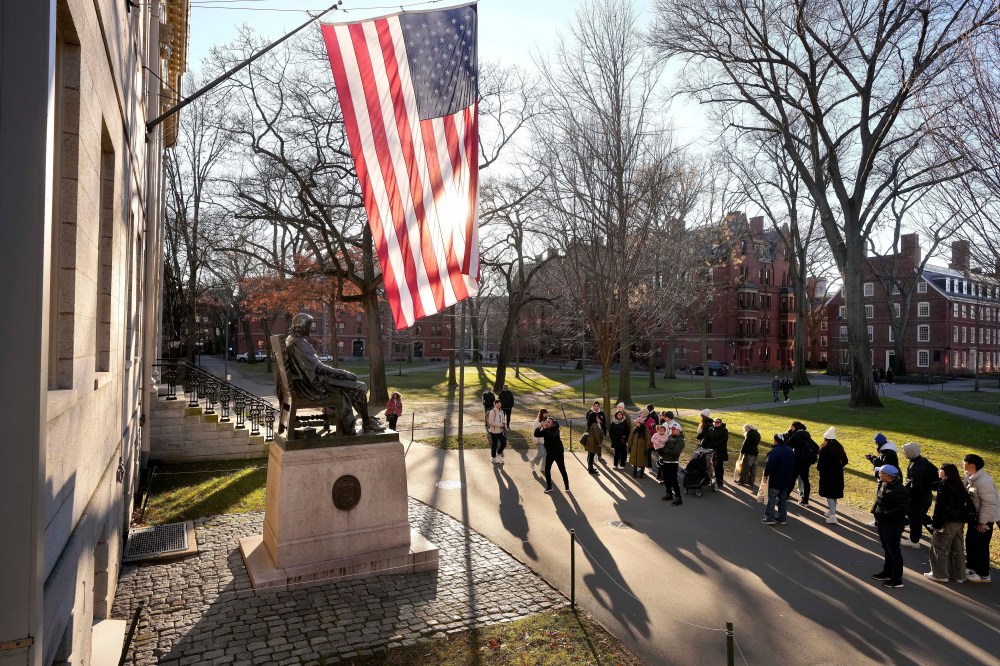
The ruling restored more than $2.6 billion in research funding for the wealthy Ivy League school.
Though the money has resumed flowing, a Justice Department attorney told a three-judge panel of the First U.S. Circuit Court of Appeals on Monday that Burroughs lacked the legal power to require the administration to pay it.
The fight over the money was a contractual dispute that rightly belonged in a different court: the U.S. Court of Federal Claims, DOJ attorney Michael Velchik said. That court, which traces its origins to the mid-1800s, handles lawsuits by citizens seeking money from the federal government.
“The problem is that the district court lacked jurisdiction to order specific performance,” Velchik told the First Circuit. “That is the only thing that we’re complaining about here.”
Velchik cited recent U.S. Supreme Court rulings in support of his argument.
Paul Clement, an attorney for Harvard, said the case was not a straightforward contractual dispute, but raised broader issues of retaliation and discrimination. The district court’s decision restoring the funding was the “perfect remedy” for the violations it found, he said.
“These are not claims that really depend on the contract in any particular way,” he said.
First Circuit Judge Joshua Dunlap, a nominee of President Donald Trump, pressed Clement on whether Burroughs had in effect issued an order requiring payment and whether Harvard could make its broader legal claims without a contract.
The other judges on the panel, Sandra Lynch and Gustavo Gelpi, were nominated by Democratic presidents. The judges did not immediately rule.
Harvard’s lawsuit accused the Trump administration of waging a retaliation campaign against the university after it rejected a series of demands in a letter from a federal antisemitism task force.
The letter demanded sweeping changes related to campus protests, academics and admissions. It was meant to address government accusations that the university had become a hotbed of liberalism and tolerated anti-Jewish harassment on campus.
The administration also has sought to prevent Harvard from hosting foreign students and threatened to revoke its tax-exempt status in a clash watched widely across higher education.
During Monday’s arguments, Lynch expressed skepticism of the administration’s claim that Harvard had been indifferent to antisemitism.
“There are no findings. There was no investigation. There was simply an announcement, ‘We’re terminating against that backdrop,’” she said.
It appeared the administration “didn’t want to have to cope with what the law and the facts of this case presented,” the judge added.
___
Thanawala reported from Atlanta.