

Colombia launches joint task force to protect pipeline and fight ELN rebels
Advertisement
Read this article for free:
or
Already have an account? Log in here »
To continue reading, please subscribe:

Digital Subscription
One year of digital access for only $205*
- Enjoy unlimited reading on winnipegfreepress.com
- Read the E-Edition, our digital replica newspaper
- Access News Break, our award-winning app
- Play interactive puzzles
*First annual payment billed as $205.00 + GST for one year. This annual subscription will automatically renew at $233.00 + GST every 52 weeks (10% off the regular annual price of $259.35). Offer available to new and qualified returning subscribers only. Cancel any time.
To continue reading, please subscribe:
Add Free Press access to your Brandon Sun subscription for only an additional
$1 for the first 4 weeks*
- Enjoy unlimited reading on winnipegfreepress.com
- Read the E-Edition, our digital replica newspaper
- Access News Break, our award-winning app
- Play interactive puzzles
*Your next Brandon Sun subscription payment will increase by $1.00 and you will be charged $17.95 plus GST for four weeks. After four weeks, your payment will increase to $24.95 plus GST every four weeks.
Read unlimited articles for free today:
or
Already have an account? Log in here »
BOGOTA, Colombia (AP) — Colombia’s president launched a joint task force Monday that will fight rebel groups and drug gangs in the country’s northeast, as the government changes its strategy in dealing with criminal groups, replacing peace talks with various military offensives.
President Abelardo de la Espriella said one of the main missions of the newly designated task force Urano will be to stop Colombia’s largest remaining rebel group, the National Liberation Army, from stealing gasoline and diesel from a pipeline that runs from the country’s Caribbean coast to a refinery in Barrancabermeja.
De la Espriella accused the group, known also as the ELN, of stealing fuel from the pipeline to “feed” criminal economies.
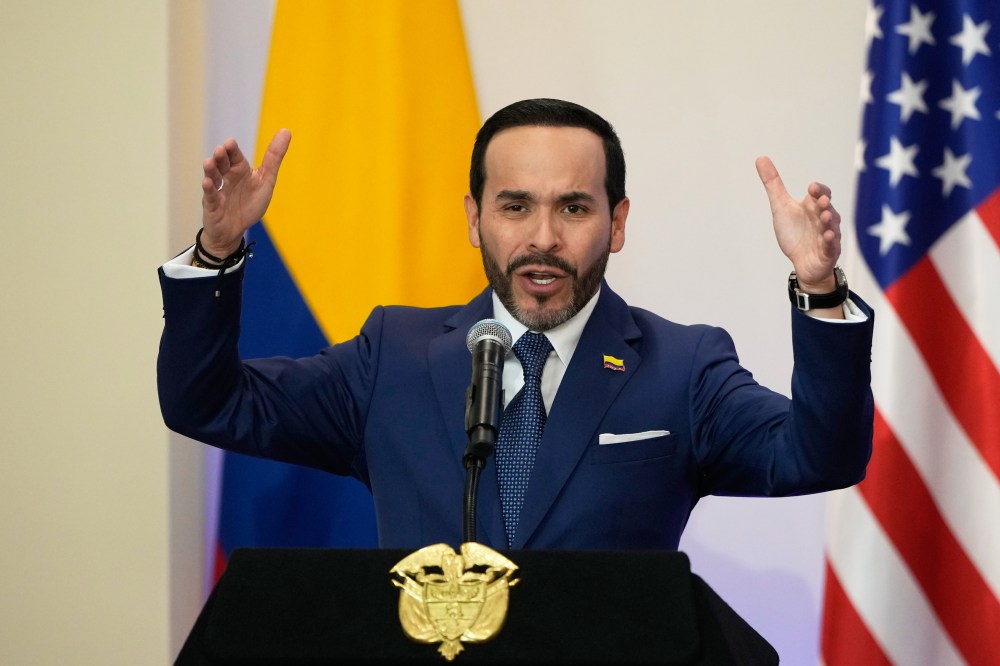
“They use it to make cocaine, to power illegal mines and to generate income for terrorist activities,” he said Monday at a ceremony in Valledupar.
For almost two decades, Colombia’s military deployed joint task forces — with troops from the army, the navy and the air force — to fight rebel groups in rural areas. The task forces were overseen directly by commanders in Bogota and helped the military achieve key victories against the FARC rebels until a peace deal was signed with that group in 2016.
The strategy was dropped two years ago by former President Gustavo Petro’s administration, as officials tried to give army commanders in rural areas greater control over operations. Some critics said the decision weakened Colombia’s military.
De la Espriella, a conservative who was sworn into office in August, has canceled peace talks with the nation’s remaining rebel groups.
He said that by bringing back the joint task forces, the government will be able to confront rebel groups and drug gangs with greater force. He added that the Urano task force will also include police officers.
“There will be no negotiations or empathy with terrorism,” he said.