

Ethiopia again demands access to the Red Sea as tensions with neighbors escalate
Advertisement
Read this article for free:
or
Already have an account? Log in here »
To continue reading, please subscribe:

Digital Subscription
One year of digital access for only $205*
- Enjoy unlimited reading on winnipegfreepress.com
- Read the E-Edition, our digital replica newspaper
- Access News Break, our award-winning app
- Play interactive puzzles
*First annual payment billed as $205.00 + GST for one year. This annual subscription will automatically renew at $233.00 + GST every 52 weeks (10% off the regular annual price of $259.35). Offer available to new and qualified returning subscribers only. Cancel any time.
To continue reading, please subscribe:
Add Free Press access to your Brandon Sun subscription for only an additional
$1 for the first 4 weeks*
- Enjoy unlimited reading on winnipegfreepress.com
- Read the E-Edition, our digital replica newspaper
- Access News Break, our award-winning app
- Play interactive puzzles
*Your next Brandon Sun subscription payment will increase by $1.00 and you will be charged $17.95 plus GST for four weeks. After four weeks, your payment will increase to $24.95 plus GST every four weeks.
Read unlimited articles for free today:
or
Already have an account? Log in here »
ADDIS ABABA, Ethiopia (AP) — Ethiopian Prime Minister Abiy Ahmed reiterated on Monday that his landlocked country must have access to the Red Sea, despite neighboring countries saying at a summit Sunday that responsibility for the sea rests with states along its shores and warning of the risk of regional conflict.
Ethiopia lost direct access to the Red Sea in 1993 after Eritrea, formerly a region of Ethiopia, became independent.
Abiy said access to the Red Sea was critical to Ethiopia’s “civilization” and that he would work to ensure the country has a port.
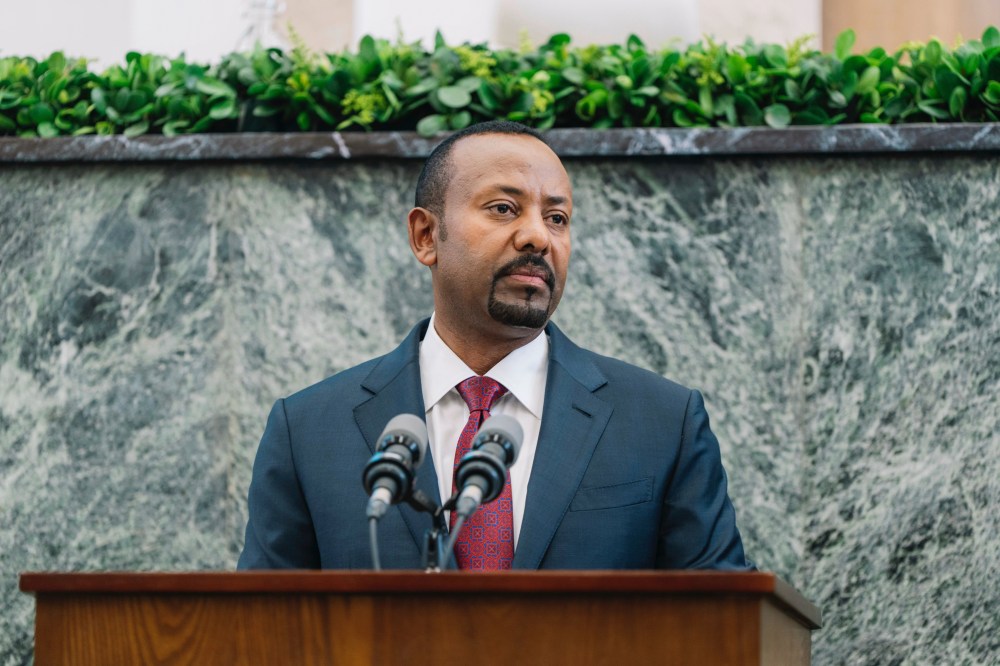
“Based on the principle of give and take, we will work diligently to ensure that Ethiopia has an outlet to the sea,” he said shortly after being sworn in for a third term.
Ethiopia’s relations with its regional neighbors have deteriorated in recent months. The country also faces renewed war with separatist rebels in the northern Tigray region.
Fighters from the Tigray People’s Liberation Front have clashed with federal troops in the Tigray region, where a devastating two-year war ended in 2022. Researchers at Ghent University, in Belgium, estimated that 500,000 civilians died from violence, famine and the collapse of health services.
Eritrean troops fought alongside Ethiopian forces during the war in Tigray, but recently, Ethiopia has accused Eritrea of supporting the rebels and mobilizing support from Egypt and Sudan. Eritrea, in turn, has accused Ethiopia of seeking access to the sea through its territory.
A separate dispute over Ethiopia’s Grand Ethiopian Renaissance Dam on the Nile River has strained relations with Egypt and Sudan, which rely on the river for water.
Representatives of Egypt, Eritrea, Sudan and Somalia met on Sunday in the Egyptian city of New Alamein and called for cooperation on regional issues. They said governance of the Red Sea was the exclusive responsibility of its coastal states and rejected actions that could affect Egypt’s and Sudan’s use of Nile waters.
Ethiopia’s Foreign Ministry said on Monday that discussions about the Nile and Red Sea must account for geographic realities, noting that the Blue Nile originates in Ethiopia and that the country lies close to the Red Sea.
The ministry said Ethiopia remained committed to dialogue and peaceful engagement with its neighbors while defending its sovereignty and national interests.
The latest tensions also follow the expulsion of an Egyptian diplomat, who was declared persona non grata.
The United Nations and the African Union have expressed concern over the rising tensions and called for a peaceful resolution.