

2 months after Spain’s worst border crisis, migrants at a Ceuta tent camp weigh their choices
Advertisement
Read this article for free:
or
Already have an account? Log in here »
To continue reading, please subscribe:

Digital Subscription
One year of digital access for only $205*
- Enjoy unlimited reading on winnipegfreepress.com
- Read the E-Edition, our digital replica newspaper
- Access News Break, our award-winning app
- Play interactive puzzles
*First annual payment billed as $205.00 + GST for one year. This annual subscription will automatically renew at $233.00 + GST every 52 weeks (10% off the regular annual price of $259.35). Offer available to new and qualified returning subscribers only. Cancel any time.
To continue reading, please subscribe:
Add Free Press access to your Brandon Sun subscription for only an additional
$1 for the first 4 weeks*
- Enjoy unlimited reading on winnipegfreepress.com
- Read the E-Edition, our digital replica newspaper
- Access News Break, our award-winning app
- Play interactive puzzles
*Your next Brandon Sun subscription payment will increase by $1.00 and you will be charged $17.95 plus GST for four weeks. After four weeks, your payment will increase to $24.95 plus GST every four weeks.
Read unlimited articles for free today:
or
Already have an account? Log in here »
CEUTA, Spain (AP) — Many of the migrants in a sprawling tent village in Ceuta came searching for better economic opportunities. Others fled war and violence, or sought refuge in Spain because of their gender or sexuality.
With a humanitarian crisis unfolding, some have come forward with allegations of abuse.
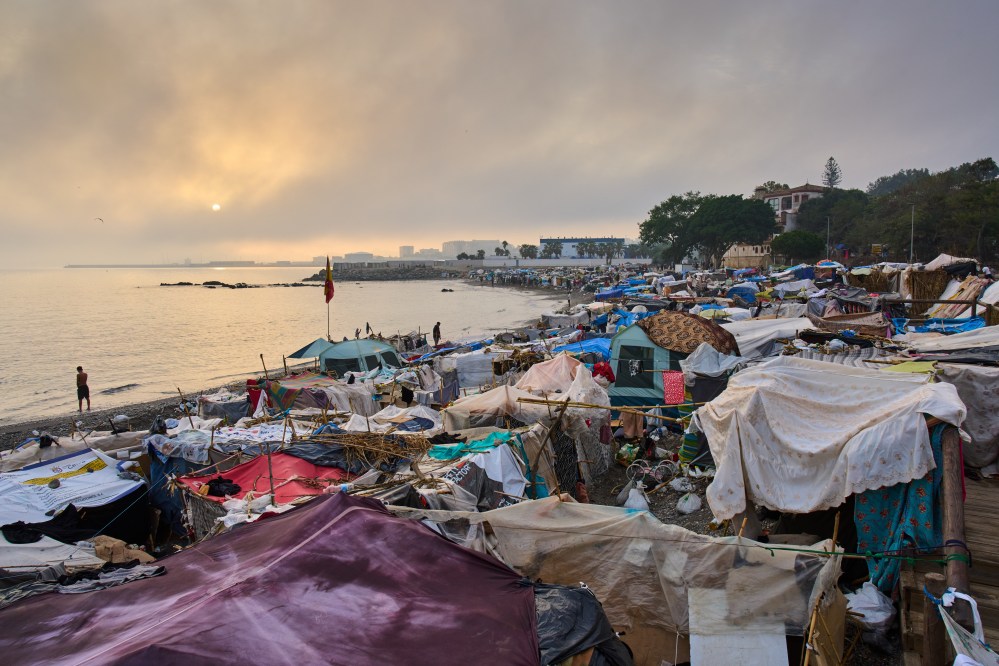
Interviews at the now-demolished camp revealed migrants’ motivations for seeking protection.
Moroccan artisan, 27, says Spanish soldiers beat him
A Moroccan migrant recalled pressing his shirt against his head in the early morning. The blood kept flowing.
A group of Spanish soldiers had tied his head to a tree that September morning, he said, and struck him in the head, on the back and on his arms. He spoke on condition of anonymity out of fear for his safety.
The soldiers had approached him and another migrant and told them to follow, saying that their superior would register them, according to a police report he filed, which The Associated Press has reviewed.
“They stuffed us into the trunk of a car, locked us in and drove us to the forest,” he said in an interview on Oct. 1. His mouth was covered with gray electrical tape, he said.
“When they were beating me, I saw death, only death,” he said. “Imagine your face being tied to a tree while they strike your head, taking hit after hit, right to the front of your face.”
He received staples in his head for his injuries, he said, and showed the AP his healing wounds. He said he wants to hold the soldiers to account.
Spanish prosecutors are investigating reports of torture and mistreatment of migrants in Ceuta, including minors. Amnesty International published a report in September detailing allegations of inhumane treatment by Spanish soldiers.
“I never thought anything like this could happen,” the artisan said. “We truly believed the people here are good and that the government is decent.”
“Sometimes I ask myself why I even came here, but other times I tell myself that God will help me.”
Transgender man, 19, returns to Morocco
A transgender teen swam to Ceuta in July from the Moroccan city of Fnideq. Soon, he thought, he would be in a shelter. Instead, he spent nearly two months at the beachside camp.
He left home because of the challenges of being transgender, he said. He spoke on the condition of anonymity due to fears of reprisals for his gender identity.
“People in Morocco don’t have any mercy,” he said in an interview on Sept. 29. “They look at the outside of you, not the inside.”
In Ceuta, he said he briefly lived with extended family, but they kicked him out after learning about his identity. “They didn’t accept my situation,” he said.
Spain’s asylum law recognizes gender identity and sexual orientation as valid grounds for seeking protection. Cases are assessed individually.
In early October, he returned to Morocco after police cleared the camp.
A gay man threatened by his family
A soft-spoken 34-year-old man left Tetouan, in northern Morocco, after his brother found pictures of him and his boyfriend on his phone and threatened to report them to the police.
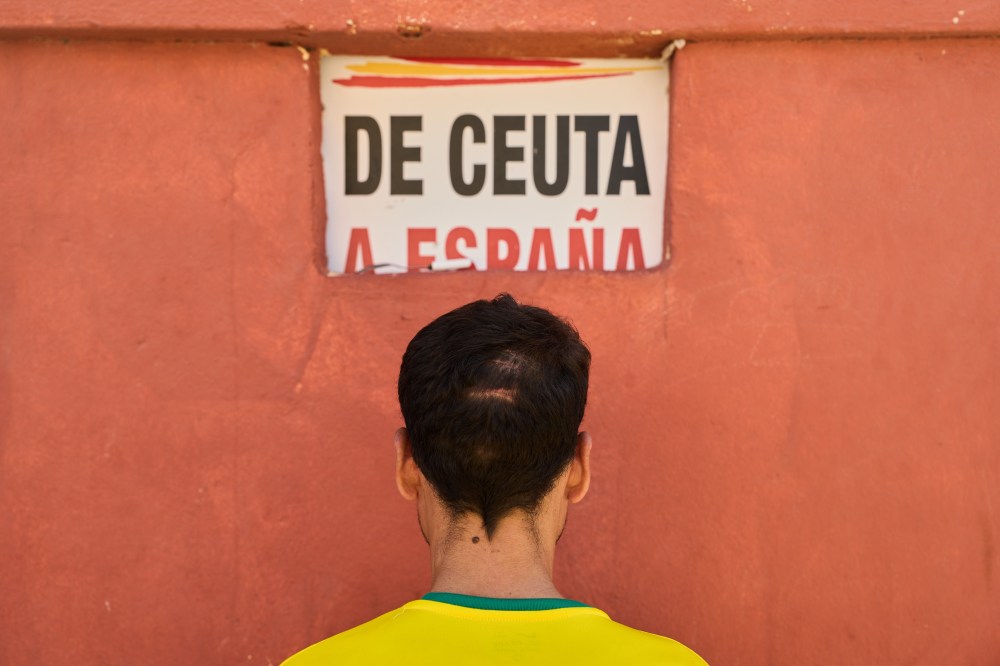
The brothers were already in a bitter dispute over the sale of a family home. In a previous argument, he said his brother had burned him with hot oil.
He spoke on condition of anonymity for fear of reprisals from his family, community and the Moroccan government.
Consensual sexual activity with members of the same sex is illegal in Morocco, and can be publishable by fines and up to three years imprisonment. Hundreds of men and women are prosecuted annually under such laws, according to the U.S. State Department.
Homosexuality is regularly cited as an asylum claim for Moroccans attempting to flee.
“I left Morocco because being gay is so hard,” he said.
Persecuted for criticizing Islam
A 28-year-old Moroccan asylum seeker said he received death threats for posting content online that is critical of Islam.
In 2025, he hosted TikTok livestreams focused on the religion. He began receiving death threats, and says he was kidnapped in Marrakech by a follower.
“That was the tipping point,” he said.
The AP was not able to independently verify his claims, but viewed a copy of his asylum paperwork in which he detailed them to Spanish authorities.
He spoke on condition of anonymity due to fear of reprisals. Publicly criticizing Islam in Morocco can lead to criminal prosecution, carrying prison sentences and fines.
He crossed into Ceuta in July, joining tens of thousands more.
“The first week was pure survival” he said. “It felt like running from zombies; some people wanted to attack you, others wanted to rob you.”
He fears for his safety if he is sent back to Morocco.
___
Associated Press writer Akram Oubachir in Casablanca, Morocco, contributed to this report.