

North Korea fires multiple ballistic missiles, adding to streak of weapons tests
Advertisement
Read this article for free:
or
Already have an account? Log in here »
To continue reading, please subscribe:

Digital Subscription
One year of digital access for only $205*
- Enjoy unlimited reading on winnipegfreepress.com
- Read the E-Edition, our digital replica newspaper
- Access News Break, our award-winning app
- Play interactive puzzles
*First annual payment billed as $205.00 + GST for one year. This annual subscription will automatically renew at $233.00 + GST every 52 weeks (10% off the regular annual price of $259.35). Offer available to new and qualified returning subscribers only. Cancel any time.
To continue reading, please subscribe:
Add Free Press access to your Brandon Sun subscription for only an additional
$1 for the first 4 weeks*
- Enjoy unlimited reading on winnipegfreepress.com
- Read the E-Edition, our digital replica newspaper
- Access News Break, our award-winning app
- Play interactive puzzles
*Your next Brandon Sun subscription payment will increase by $1.00 and you will be charged $17.95 plus GST for four weeks. After four weeks, your payment will increase to $24.95 plus GST every four weeks.
Read unlimited articles for free today:
or
Already have an account? Log in here »
SEOUL, South Korea (AP) — North Korea on Monday fired multiple ballistic missiles toward its eastern waters, South Korea’s military said, adding to a recent streak of weapons demonstrations that has heightened tensions during a prolonged freeze in diplomacy.
South Korea’s Joint Chiefs of Staff said the missiles were fired from an area around the North Korean capital of Pyongyang, where the country has used its airport as a major launch site in recent years. The joint chiefs did not immediately specify how many missiles they detected or how far they flew. Japan’s Defense Ministry said it detected at least two missiles and assessed that the weapons landed in waters outside the country’s exclusive economic zone.
The launch came days after South Korea on Friday flight-tested its first domestically developed hypersonic weapon, designed to fly at least five times the speed of sound and evade missile defense systems, which President Lee Jae Myung described as an important step in strengthening the South’s conventional defense capabilities.
While maintaining a hard line toward Seoul, North Korea has been ramping up weapons testing as it seeks to expand its arsenal of nuclear-capable systems, including an Oct. 3 test of what the North described as a hypersonic intermediate-range missile designed to evade missile defenses in South Korea and Japan.
North Korea has also conducted other missile tests and live-fire drills and commissioned a new warship as leader Kim Jong Un continues to flaunt his nuclear weapons program while rejecting U.S. and South Korean offers to resume long-stalled diplomacy.
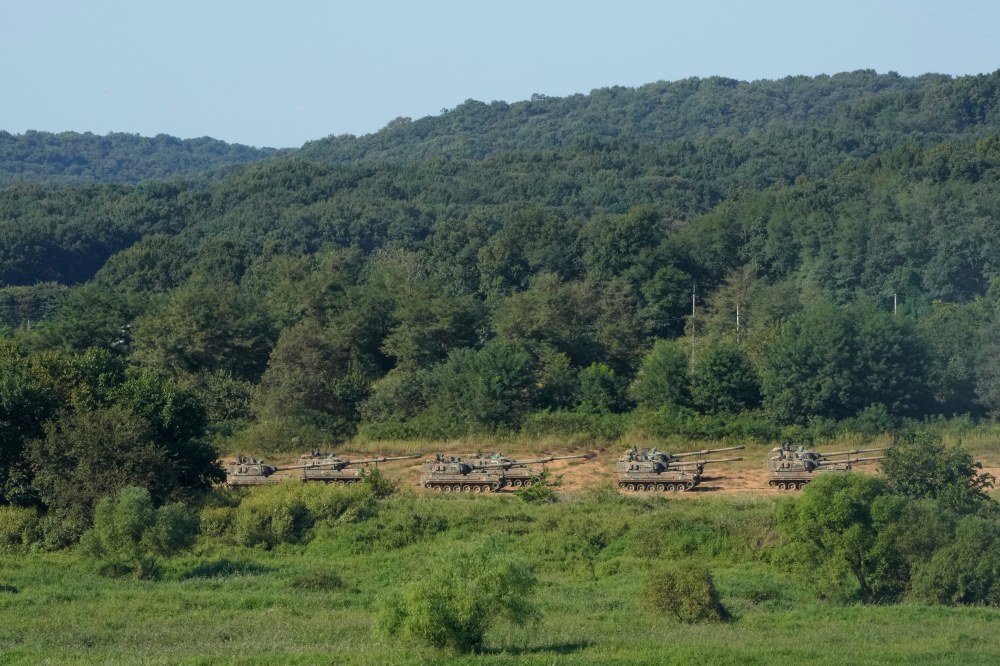
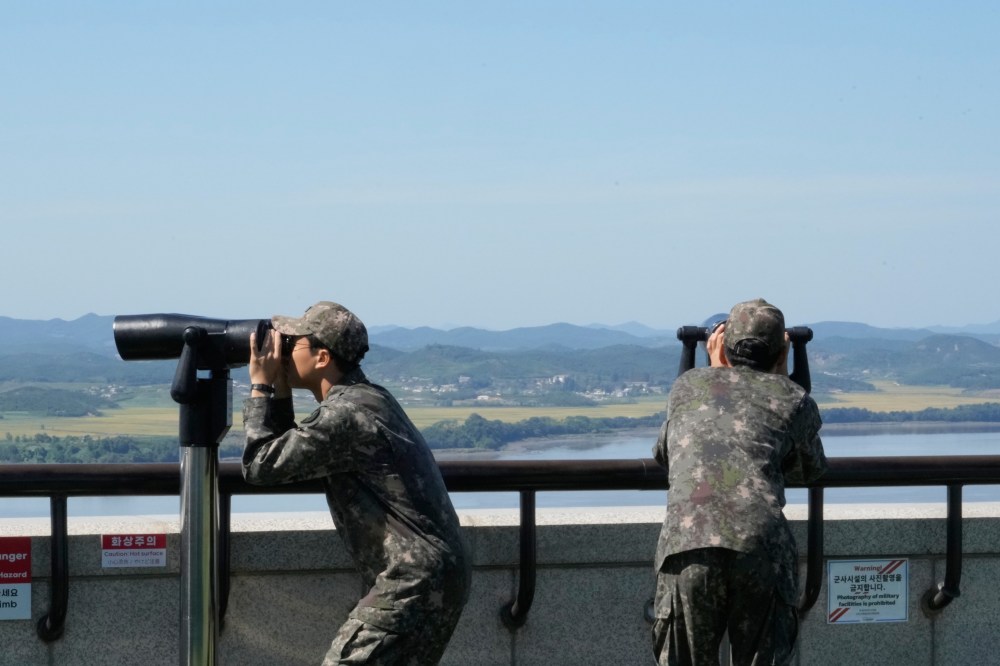
Tensions were further worsened after three South Korean soldiers were injured in land mine explosions last month near the heavily armed inter-Korean border. The South’s military and the U.S.-led United Nations Command concluded the blasts were caused by devices planted by North Korea, which has denied responsibility and ridiculed the South’s demands for an apology.
Kim in recent years has halted all diplomacy and cooperation with South Korea and described the neighbor as a permanent enemy during a prolonged stalemate in larger nuclear negotiations with Washington. He has so far rebuffed U.S. President Donald Trump’s calls to revive their diplomacy, which broke down in 2019, with his government demanding that Washington abandon its “hostile” policy toward Pyongyang and drop demands for North Korea’s denuclearization as a precondition for talks.
The tensions have been a setback for Lee, who favors engagement with North Korea and has tempered his rhetoric toward the North even as public anger grows over the mine blasts. Lee has also called for strengthening South Korea’s conventional defense capabilities while reducing its reliance on the United States. Washington unilaterally decided to scale back a major military exercise with South Korea in August, with Trump citing his “very good relationship” with Kim.
___
AP writer Mari Yamaguchi contributed from Tokyo.