

Hezbollah to compensate owners of homes destroyed in Lebanon during war with Israel
Advertisement
Read this article for free:
or
Already have an account? Log in here »
To continue reading, please subscribe:

Digital Subscription
One year of digital access for only $205*
- Enjoy unlimited reading on winnipegfreepress.com
- Read the E-Edition, our digital replica newspaper
- Access News Break, our award-winning app
- Play interactive puzzles
*First annual payment billed as $205.00 + GST for one year. This annual subscription will automatically renew at $233.00 + GST every 52 weeks (10% off the regular annual price of $259.35). Offer available to new and qualified returning subscribers only. Cancel any time.
To continue reading, please subscribe:
Add Free Press access to your Brandon Sun subscription for only an additional
$1 for the first 4 weeks*
- Enjoy unlimited reading on winnipegfreepress.com
- Read the E-Edition, our digital replica newspaper
- Access News Break, our award-winning app
- Play interactive puzzles
*Your next Brandon Sun subscription payment will increase by $1.00 and you will be charged $17.95 plus GST for four weeks. After four weeks, your payment will increase to $24.95 plus GST every four weeks.
Read unlimited articles for free today:
or
Already have an account? Log in here »
BEIRUT (AP) — Hezbollah will pay up to $14,000 in aid to families whose homes in Lebanon were destroyed or made uninhabitable during the war with Israel, the head of the group’s Executive Council said Tuesday.
At a news conference, Ali Daamoush accused the Lebanese state of failing to carry out its duties to help the displaced.
He said families who lost their homes in Beirut and its southern suburbs would receive $14,000 each, while those elsewhere in Lebanon would get $12,000. Each payment includes $8,000 for furniture, with the rest intended to cover rent.
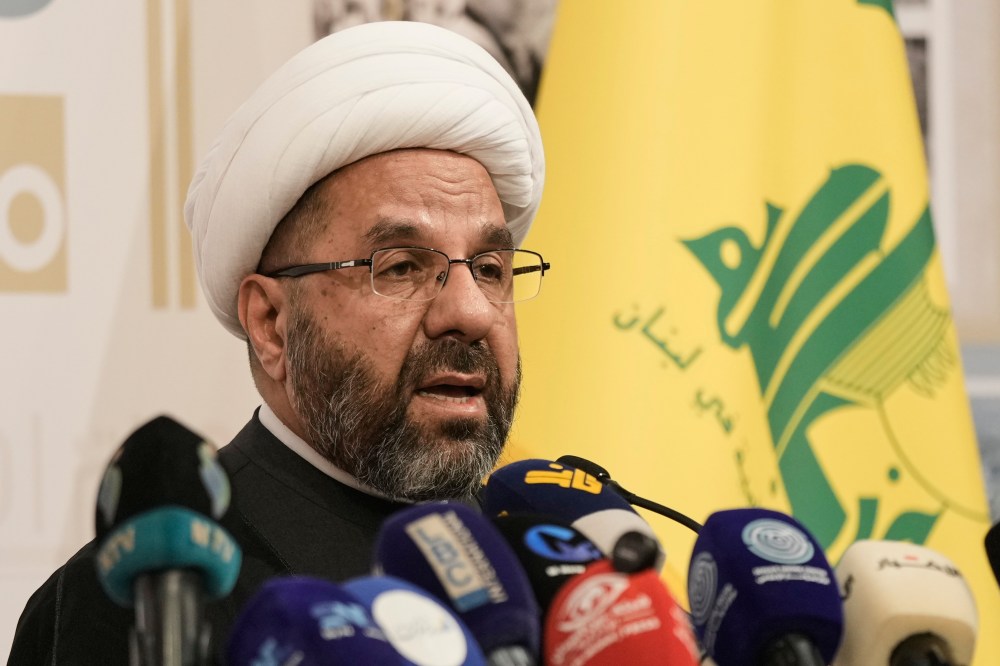
Daamoush did not say how many families would benefit or how much the payments would total. The money most likely came from Iran, which has supplied Hezbollah with billions of dollars and weapons over decades.
The initiative appears aimed at bolstering support among the Iran-backed militant group and political party’s base and signaling defiance to the Lebanese government and the United States, which has sought to cut off Hezbollah’s funding.
The press conference was group’s first on such payments since its latest two wars with Israel, which killed more than 8,000 people and destroyed tens of thousands of homes in Lebanon.
In recent years, the United States has increased its sanctions on individuals and institutions that Washington says Hezbollah uses to funnel money into Lebanon. Flights from Iran to Lebanon have been banned for nearly two years as part of efforts to pressure the Iran-backed group.
The latest war began when Hezbollah fired rockets into Israel in early March, two days after the U.S. and Israel launched a war on Iran. Israel launched a ground invasion, capturing dozens of Lebanese villages and towns along the border, before a U.S.-brokered ceasefire ended the conflict in late June.
About 1.2 million people were displaced in Lebanon at the height of the war. Most have returned home since the ceasefire, but more than 300,000 remain displaced, according to the International Organization for Migration.
A framework agreement signed by Lebanon, Israel and the United States in Washington on June 26 commits Lebanon and the U.S. to preventing reconstruction funds from reaching entities or individuals affiliated with non-state armed groups and taking available legal measures to prohibit their activities.
Under the agreement, Israeli forces were to gradually withdraw from southern Lebanon and hand over control to the Lebanese army, while Hezbollah was to be disarmed, but implementation has stalled.
Hezbollah has rejected the agreements reached earlier this year after rare direct talks in Washington and Rome between Lebanon and Israel, which officially still remain in a state of war.
U.S. State Department spokesman Tommy Pigott told Lebanon’s This is Beirut news outlet last week that the money that Hezbollah is promising does not exist. If the money was in Iran, he added, “it wouldn’t be able to be delivered to Hezbollah because of our efforts to cut off the Iranian regime from their terrorist proxies.”
Asked about those remarks, Daamoush said: “We are not concerned about what the American administration says.” He added: “We are working to serve our people and will do all we can to give them shelter so that they go back to their normal life.”
Hezbollah will set up centers so that people can visit to review their cases and receive compensation, he said.