

Colombia opens an embassy in Jerusalem after restoring diplomatic ties with Israel
Advertisement
Read this article for free:
or
Already have an account? Log in here »
To continue reading, please subscribe:

Digital Subscription
One year of digital access for only $205*
- Enjoy unlimited reading on winnipegfreepress.com
- Read the E-Edition, our digital replica newspaper
- Access News Break, our award-winning app
- Play interactive puzzles
*First annual payment billed as $205.00 + GST for one year. This annual subscription will automatically renew at $233.00 + GST every 52 weeks (10% off the regular annual price of $259.35). Offer available to new and qualified returning subscribers only. Cancel any time.
To continue reading, please subscribe:
Add Free Press access to your Brandon Sun subscription for only an additional
$1 for the first 4 weeks*
- Enjoy unlimited reading on winnipegfreepress.com
- Read the E-Edition, our digital replica newspaper
- Access News Break, our award-winning app
- Play interactive puzzles
*Your next Brandon Sun subscription payment will increase by $1.00 and you will be charged $17.95 plus GST for four weeks. After four weeks, your payment will increase to $24.95 plus GST every four weeks.
Read unlimited articles for free today:
or
Already have an account? Log in here »
Colombia opened an embassy in Jerusalem on Wednesday, marking a major shift in relations with Israel after conservative President Abelardo de la Espriella restored diplomatic ties severed by his predecessor over the war in Gaza.
Colombia’s Foreign Ministry hailed the opening as a “diplomatic milestone,” while Israeli Foreign Minister Gideon Sa’ar called it “a day of celebration for Israel-Colombia relations, and for Jerusalem, our capital.”
The two countries established diplomatic relations in 1957 and have maintained particularly close security ties. Colombia uses Israeli-made rifles and fighter-bombers as part of its military arsenal.
But in 2024, then-President Gustavo Petro severed ties with Israel, accusing it of genocide over its military operations in the Gaza Strip, which he compared to Nazi concentration camps. Israel rejected the allegations and condemned Colombia’s decision.
After breaking ties, Petro announced plans to open an embassy in Ramallah, in the occupied West Bank, but the diplomatic mission never opened.
Restoring relations with Israel became a priority for de la Espriella’s government after he took office with the backing of U.S. President Donald Trump.
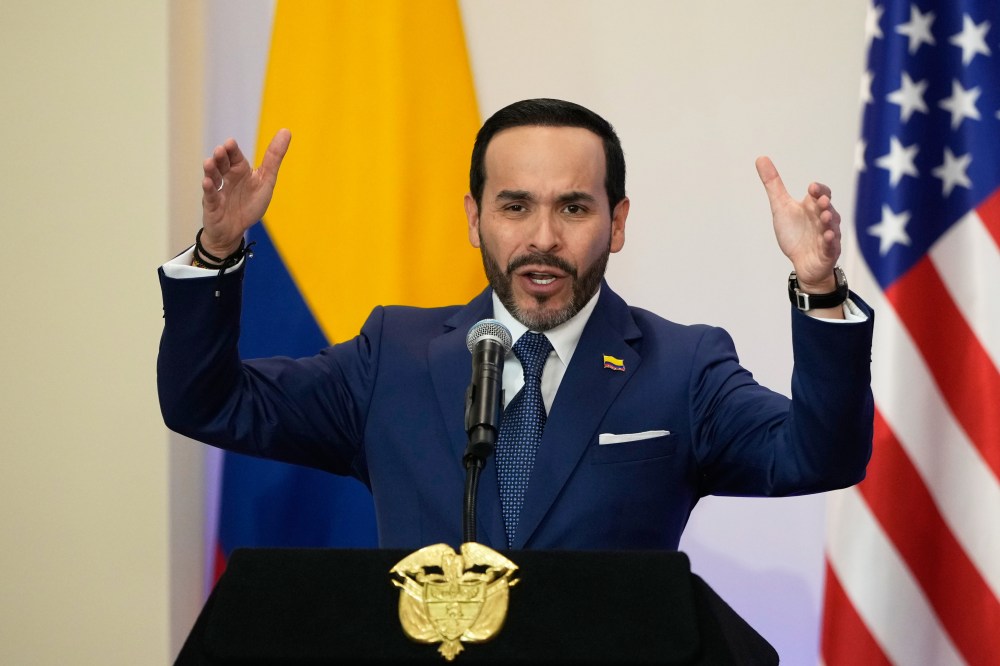
“This embassy is a visible expression of our determination to restore dialogue, strengthen mutual trust and build an agenda that delivers tangible benefits to our citizens,” Colombian Foreign Minister Omar Bula said.
In early October, Colombia appointed Tania Gilinski Bacal as its ambassador to Israel and tasked her with strengthening trade ties and cooperation on security, intelligence, cybersecurity and information sharing.
Trump recognized Jerusalem as Israel’s capital in late 2017, making the U.S. the first country to do so.
Since then, nine foreign governments have followed suit, including several Latin American countries. The Palestinians claim east Jerusalem, captured by Israel in the 1967 Mideast war, as the capital of a future state, while Israel considers the entire city to be its capital. The final status of Jerusalem is one of the core issues in the Israeli-Palestinian conflict, and the competing claims to east Jerusalem, home to the city’s most important religious sites, have repeatedly erupted into violence.
Most countries maintain embassies in Tel Aviv, saying the final status of Jerusalem should be settled in negotiations.