

Amateur museum home to remains of 500
Human bones, pre-Columbian pottery part of massive collection
Advertisement
Read this article for free:
or
Already have an account? Log in here »
To continue reading, please subscribe:

Digital Subscription
One year of digital access for only $205*
- Enjoy unlimited reading on winnipegfreepress.com
- Read the E-Edition, our digital replica newspaper
- Access News Break, our award-winning app
- Play interactive puzzles
*First annual payment billed as $205.00 + GST for one year. This annual subscription will automatically renew at $233.00 + GST every 52 weeks (10% off the regular annual price of $259.35). Offer available to new and qualified returning subscribers only. Cancel any time.
To continue reading, please subscribe:
Add Free Press access to your Brandon Sun subscription for only an additional
$1 for the first 4 weeks*
- Enjoy unlimited reading on winnipegfreepress.com
- Read the E-Edition, our digital replica newspaper
- Access News Break, our award-winning app
- Play interactive puzzles
*Your next Brandon Sun subscription payment will increase by $1.00 and you will be charged $17.95 plus GST for four weeks. After four weeks, your payment will increase to $24.95 plus GST every four weeks.
Read unlimited articles for free today:
or
Already have an account? Log in here »
Hey there, time traveller!
This article was published 03/03/2019 (2696 days ago), so information in it may no longer be current.
By all accounts, the amateur museum that Donald C. Miller ran out of his home in the cornfields of central Indiana wasn’t exactly a secret. Newspaper reporters, Boy Scout troops and residents of the rural farming community of Waldron were all invited to drop in and look around in his basement, where glass cases covered most of the walls.
Tens of thousands of rare cultural artifacts were on display, including pre-Columbian pottery, Ming Dynasty jade, an Egyptian sarcophagus and a dugout canoe that had travelled down the Amazon River. And the eccentric nonagenarian collector was part of the attraction.
“This man, he’s an amazing piece of history,” Amy Mohr, a friend of Miller’s from church, told the Indianapolis Star in 2014. “He’s an artifact himself.”
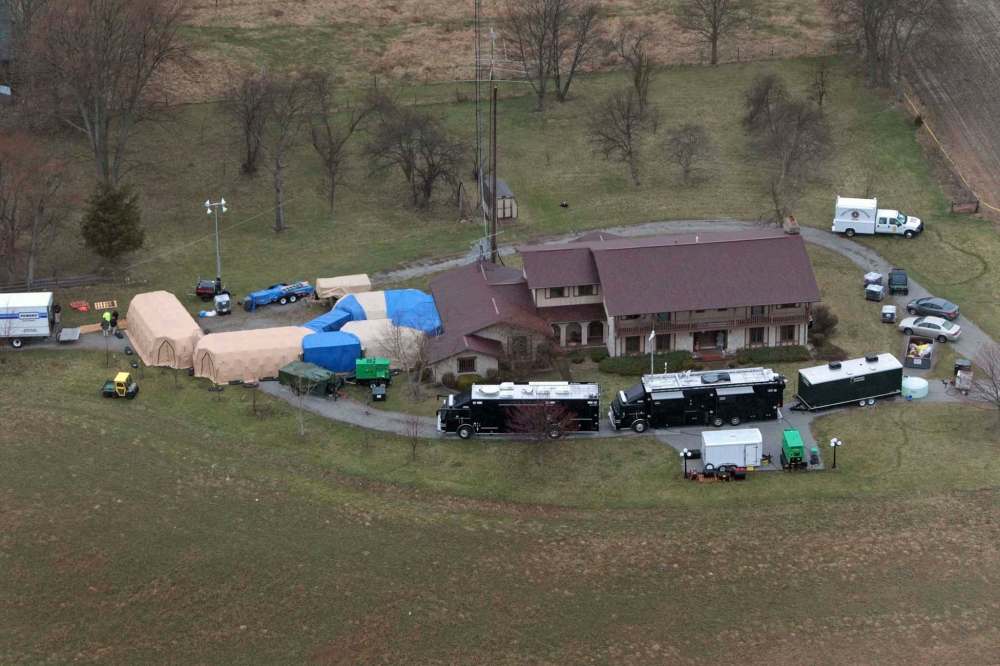
But when the FBI’s art crime detectives showed up and began sifting through Miller’s extensive collection in April 2014, suspecting that many of the relics carefully laid out in the cabinets had been obtained illegally in violation of antiquities laws, they came across something that horrified them: roughly 2,000 human bones, nearly all of which are believed to have been taken from ancient native American burial sites.
“To the best of our knowledge right now, those 2,000 bones represent about 500 human beings,” Tim Carpenter, who heads the FBI’s art theft unit, told CBS News in an interview that aired Tuesday. “It’s very staggering.”
Miller, a Christian missionary and ham radio operator who claimed to have worked on the Manhattan Project, died at 91 in 2015, nearly a year after the FBI raided his home and seized around 42,000 items whose cultural value was said to be immeasurable. Until this week, officials had provided little information about the case and declined to go into detail about exactly what the art crime detectives had found.
Talking Tuesday to CBS This Morning, Carpenter said that before his death, Miller admitted he had come by many of the items illegally, and he had gone on unsanctioned archeological digs all over the country and the world. He also came to agree that the artifacts should be returned to their proper homes. But since he didn’t live long enough to see the investigation run its course, many aspects of his life — and the trove he left behind — are a mystery.
For instance, CBS’s Anna Werner asked, why would anyone have so many human bones?
“I don’t know,” Carpenter replied, shaking his head. “I truly don’t know.”
The ghoulish crime of digging up long-dormant graves has been an ongoing source of frustration for native American communities. Toward the end of the 19th century, amateur and professional archeologists alike began running roughshod over tribal burial grounds, excavating the skeletons of Indigenous people who had died hundreds of years before. Some bone fragments were displayed in museums, while others were closely analyzed by anthropologists looking to test since-debunked theories of race science, such as the belief that intelligence was directly correlated with skull size. It took nearly 100 years before the Native American Graves Protection and Repatriation Act was signed into law in 1990, making it illegal to buy or sell native American remains.
“All too often here, we have been treated as curiosities rather than a people,” Pete Coffey, a tribal official with North Dakota’s Mandan, Hidatsa and Arikara Nation, told CBS. “They could very well be my own great-great-great-great grandfather, or grandmother… I characterize it as being ripped out of the earth.”
Coffey is one of the tribal leaders now working with the FBI to return the misappropriated remains to their original resting places, CBS reported. Experts say they believe most of the bones that were found in Miller’s home were removed from burial sites in North Dakota, and that many belonged to the Arikara tribe. It’s unclear whether Miller had shown off the remains to people who visited his home, or whether he had dug them up himself or purchased them from someone else who did.
Until Tuesday, the FBI had remained circumspect about the 2014 raid, which did not result in Miller’s arrest or any charges being brought against him. At the time, officials said they had received tips about his cache of treasures and were investigating to see whether any of the items were illegal for private citizens to possess. In addition to copious native American artifacts, Miller had reportedly collected priceless relics from countries including China, Russia, Peru, Haiti and Australia, and stored them in outbuildings scattered around his remote Waldron compound, as well as in his commodious basement.
Robert A. Jones, the FBI special agent in charge of the case, told reporters at the time that Miller’s methods for procuring some of those objects had violated multiple laws and treaties, but also undercut that claim by acknowledging that the relevant statutes might not have been in place yet. Miller had started his collection eight decades before, when he first found arrowheads on his family’s farm as a child.
Advocates for criminal justice reform and libertarian groups such as the Cato Institute were quick to criticize what they saw as an overly aggressive approach from the FBI, arguing that the government had offered no evidence that Miller had done anything illegal.
“The FBI plan is apparently to seize the contents of an elderly man’s lifelong hobby, then force him to prove he obtained each item in his collection legally,” Radley Balko wrote in the Washington Post.
Nearly five years later, the investigation is ongoing, and experts anticipate it could take decades to sort through the thousands of objects that the FBI seized, since determining their legality means first figuring out where and when each was purchased. Some artifacts have already been repatriated. Bogota’s City Paper reported this past October that 40 pieces of pre-Columbian pottery, some dating to 1,500 BC, had been ceremonially returned by the U.S. State Department after the FBI determined that Miller had smuggled them out of the country. Other artifacts have been sent back to countries such as Canada, Ecuador, New Zealand and Spain, the FBI’s Indianapolis bureau said in a tweet Tuesday. An additional 361 items from Miller’s collection will be returned to China this week.
Before splashy headlines in the national media labelled him a real-life Indiana Jones, Miller was known to Waldron and surrounding Rush County as a larger-than-life figure who had a penchant for telling unverifiable stories and playing a 1927 Wurlitzer organ to entertain his guests. Speaking to the Star in 1998, he said he had been stationed in New Mexico during the Second World War and assigned to the top-secret Manhattan Project, where he claimed to have witnessed the detonation of the first atomic bomb. When the war ended, he went on to spend 30 years working as an electrical engineer for the Naval Avionics Center in Indianapolis, while simultaneously making trips to build churches in Haiti and Colombia. After retiring at 60, he said he and wife Sue, a former high school teacher, regularly travelled to impoverished countries to do missionary work.
All the while, he filled up their home with historical curios, including a Second World War-era Nazi helmet and a shrunken head whose provenance he did not fully explain.
A former co-worker told the Star in 2014 that Miller had used his ample vacation time at Naval Avionics to conduct amateur archaeological expeditions in far-flung parts of the world, and that he often came back with wild tales about his misadventures — from winding up in a Mexican jail to being interrogated by Libyan soldiers who thought he had been sent by the CIA. While those stories proved impossible to confirm, Mohr, his friend from church, recalled that Miller had tried to leave Haiti with a few cannonballs, and ended up getting stopped at the airport at the end of their mission trip.
In the months before his death, Miller had retreated from public life, residents told the Star. When a news crew from CBS showed up at the sprawling two-storey house before Tuesday’s broadcast, his wife said she was unable to comment on the FBI’s discoveries. A Chinese terracotta warrior statue was still standing outside the door.
— Washington Post