

Oldest Texas death row inmate executed for officer’s death
Advertisement
Read this article for free:
or
Already have an account? Log in here »
To continue reading, please subscribe:

Digital Subscription
One year of digital access for only $205*
- Enjoy unlimited reading on winnipegfreepress.com
- Read the E-Edition, our digital replica newspaper
- Access News Break, our award-winning app
- Play interactive puzzles
*First annual payment billed as $205.00 + GST for one year. This annual subscription will automatically renew at $233.00 + GST every 52 weeks (10% off the regular annual price of $259.35). Offer available to new and qualified returning subscribers only. Cancel any time.
To continue reading, please subscribe:
Add Free Press access to your Brandon Sun subscription for only an additional
$1 for the first 4 weeks*
- Enjoy unlimited reading on winnipegfreepress.com
- Read the E-Edition, our digital replica newspaper
- Access News Break, our award-winning app
- Play interactive puzzles
*Your next Brandon Sun subscription payment will increase by $1.00 and you will be charged $17.95 plus GST for four weeks. After four weeks, your payment will increase to $24.95 plus GST every four weeks.
Read unlimited articles for free today:
or
Already have an account? Log in here »
Hey there, time traveller!
This article was published 21/04/2022 (1638 days ago), so information in it may no longer be current.
HUNTSVILLE, Texas (AP) — Texas’ oldest death row inmate was executed Thursday for killing a Houston police officer during a traffic stop nearly 32 years ago.
Carl Wayne Buntion, 78, was executed at the state penitentiary in Huntsville. He was condemned for the June 1990 fatal shooting of Houston police officer James Irby, a nearly 20-year member of the force.
The U.S. Supreme Court had declined a request by Buntion’s attorneys to stop his execution.
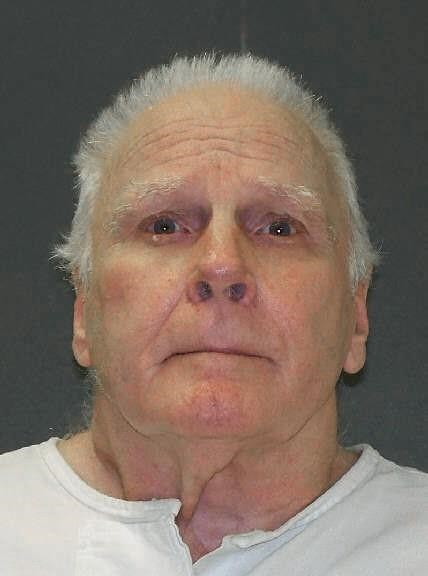
Buntion had been on parole for just six weeks when he shot the 37-year-old Irby. Buntion, who had an extensive criminal record, was a passenger in the car that Irby pulled over. In 2009, an appeals court vacated Buntion’s sentence, but another jury resentenced him to death three years later.
Before his death, James Irby had talked of retirement and spending more time with his two children, who at the time were 1 and 3 years old, said his wife, Maura Irby.
“He was ready to fill out the paperwork and stay home and open a feed store,” Maura Irby, 60, said. “He wanted to be the dad that was there to go to all the ballgames and the father daughter dances. He was a super guy, the love of my life.”
Leading up to his execution, various state and federal courts had also turned down appeals by Buntion’s lawyers to stop his death sentence. The Texas Board of Pardons and Paroles on Tuesday had rejected his clemency request.
Buntion’s attorneys said he was responsible for Irby’s death and “deserved to be punished severely for that crime.”
But they argued his execution was unconstitutional because the jury’s finding he would be a future danger to society — one of the reasons he was given a death sentence— has proven incorrect, and also his execution would serve no legitimate purpose because so much time has passed since his conviction. His attorneys described Buntion as a geriatric inmate who posed no threat as he suffers from arthritis, vertigo and needed a wheelchair.
“This delay of three decades undermines the rationale for the death penalty … Whatever deterrent effect there is diminished by delay,” his attorneys David Dow and Jeffrey Newberry, wrote in court documents.
With his execution, Buntion became the oldest person Texas has put to death since the Supreme Court lifted its ban on capital punishment in 1976. The oldest inmate executed in the U.S. in modern times was Walter Moody Jr., who was 83 years old when he was put to death in Alabama in 2018.
Buntion was also the first inmate executed in Texas in 2022. Although Texas has been the nation’s busiest capital punishment state, it had been nearly seven months since it carried out an execution. There have been only three executions in each of the last two years, due in part to the coronavirus pandemic and delays over legal questions about Texas’ refusal to allow spiritual advisers to touch inmates and pray aloud in the death chamber.
In March, the U.S. Supreme Court said states must accommodate requests to have faith leaders pray and touch inmates during executions.
Texas prison officials agreed to Buntion’s request to allow his spiritual adviser to pray aloud and touch him while he was put to death.
Maura Irby said she had believed Buntion would die of old age on death row.
“I had stuffed so much of it away in a big trunk and shut the lid on it in my mind, in my heart because I didn’t think anything was really going to come of it,” Irby said.
While the execution stirred up painful memories for her, Irby said it also reminded her of her advocacy work in public safety after her husband’s death, including helping put together legislation that allowed victim impact statements at trials.
Irby said she and her two children hoped that with the execution, a painful chapter in their lives can finally be shut.
“So, I hope Jimmy will finally rest in peace and then we can all kind of breathe a sigh of relief and just keep him in our prayers now and in our hearts,” Irby said.
___
Lozano reported from Houston.
___
Follow Juan A. Lozano on Twitter: https://twitter.com/juanlozano70