

North Korea fires 2 suspected missiles in 6th launch in 2022
Advertisement
Read this article for free:
or
Already have an account? Log in here »
To continue reading, please subscribe:
Monthly Digital Subscription
$1 per week for 24 weeks*
- Enjoy unlimited reading on winnipegfreepress.com
- Read the E-Edition, our digital replica newspaper
- Access News Break, our award-winning app
- Play interactive puzzles
*Billed as $4.00 plus GST every four weeks. After 24 weeks, price increases to the regular rate of $19.95 plus GST every four weeks. Offer available to new and qualified returning subscribers only. Cancel any time.
Monthly Digital Subscription
$4.99/week*
- Enjoy unlimited reading on winnipegfreepress.com
- Read the E-Edition, our digital replica newspaper
- Access News Break, our award-winning app
- Play interactive puzzles
*Billed as $19.95 plus GST every four weeks. Cancel any time.
To continue reading, please subscribe:
Add Free Press access to your Brandon Sun subscription for only an additional
$1 for the first 4 weeks*
*Your next subscription payment will increase by $1.00 and you will be charged $16.99 plus GST for four weeks. After four weeks, your payment will increase to $23.99 plus GST every four weeks.
Read unlimited articles for free today:
or
Already have an account? Log in here »
Hey there, time traveller!
This article was published 26/01/2022 (1527 days ago), so information in it may no longer be current.
SEOUL, South Korea (AP) — North Korea on Thursday fired two suspected ballistic missiles into the sea in its sixth round of weapons launches this month, South Korea’s military said.
Experts say North Korea’s unusually fast pace in testing activity underscores an intent to pressure the Biden administration over long-stalled negotiations aimed at exchanging a release of crippling U.S.-led sanctions against the North and the North’s denuclearization steps.
The renewed pressure comes as the pandemic further shakes the North’s economy, which was already battered by crippling U.S.-led sanctions over its nuclear weapons program and decades of mismanagement by its own government.
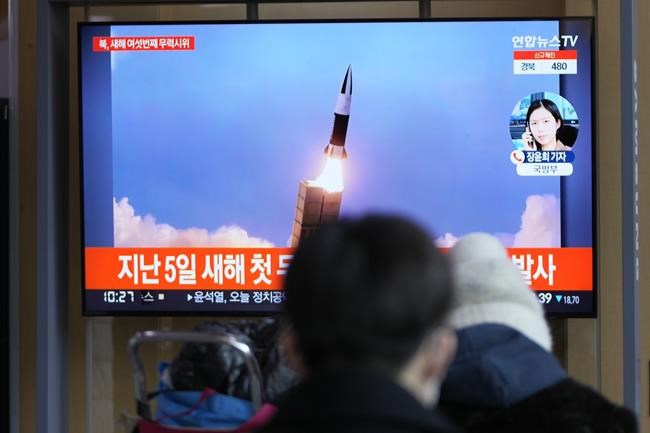
South Korea’s Joint Chiefs of Staff said the weapons, which were likely short-range, were launched five minutes apart from the eastern coastal town of Hamhung and flew 190 kilometers (118 miles) on an apogee of 20 kilometers (12.4 miles) before landing at sea.
Aviation authorities issued a Notice to Airmen, or NOTAM, for pilots operating in South Korean airspace, advising them of a “missile launched from North Korea” and that they maintain close communication with air traffic controls, according to the website of South Korea’s Office of Civil Aviation.
The U.S. Indo Pacific Command said the latest launches, while highlighting the destabilizing impact of North Korea’s weapons program, didn’t pose an “immediate threat to U.S. personnel or territory, or to our allies.
Japanese Prime Minister Fumio Kishida confirmed there were no reports of damage to vessel and aircraft around the Japanese coast. He called the North’s repeated missile firings as “extremely regrettable” and violations of U.N. Security Council resolutions.
Senior South Korean security and military officials gathered for an emergency National Security Council meeting where they expressed strong regret over the North’s continuing launches and urged Pyongyang to recommit to dialogue, Seoul’s presidential office said.
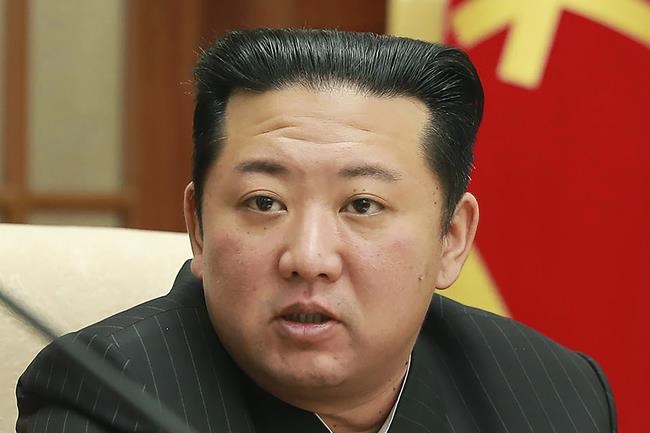
The North also last week issued a veiled threat to resume the testing of nuclear explosives and long-range missiles targeting the American homeland, which leader Kim Jong Un suspended in 2018 while initiating diplomacy with the United States.
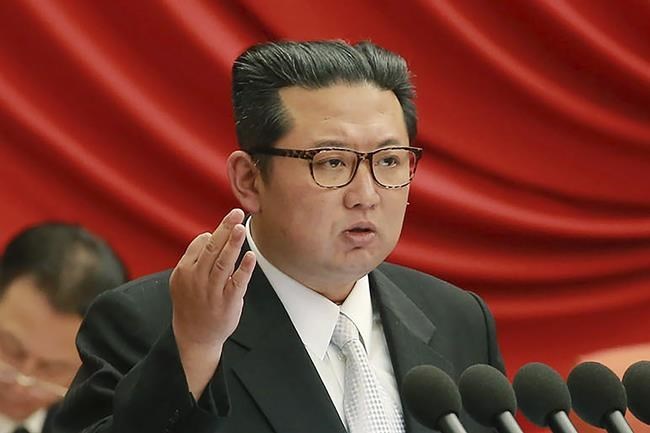
Kim’s high-stakes summitry with then-President Donald Trump derailed in 2019 after the Americans rejected North Korea’s demands for major sanctions relief in exchange for a partial surrender of its nuclear capabilities.
Some experts say North Korea could dramatically escalate weapons demonstrations after the Winter Olympics, which begin Feb. 4 in China, the North’s main ally and economic lifeline.
They say Pyongyang’s leadership likely feels it could use a dramatic provocation to move the needle with the Biden administration, which has been preoccupied with bigger adversaries including China and Russia.
The Biden administration has offered open-ended talks but showed no willingness to ease sanctions unless Kim takes real steps to abandon the nuclear weapons and missiles he sees as his strongest guarantee of survival.
The North has been ramping up its testing activity since last fall, demonstrating various missiles and delivery systems apparently designed to overwhelm missile defense systems in the region.
Experts say Kim is trying to apply more pressure on rivals Washington and Seoul to accept it as a nuclear power in hopes of winning relief from economic sanctions and convert the diplomacy with Washington into mutual arms-reduction negotiations.
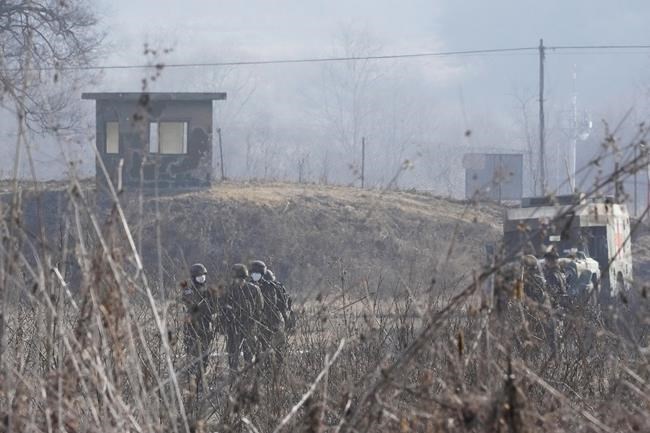
Thursday’s launch came two days after South Korea’s military detected the North flight-testing two suspected cruise missile at an unspecified inland area.
North Korea opened 2022 with a pair of test-firings of a purported hypersonic missile, which Kim described as an asset that would remarkably bolster his nuclear “war deterrent.”
The North also this month test-fired two different types of short-range ballistic missiles it has developed since 2019 that are designed to be maneuverable and fly at low altitudes, which experts say potentially improve their chances of evading and defeating missile defense systems.
In a ruling party meeting attended by Kim last week, the North accused the Biden administration of hostility and threats and said it will consider “all temporally-suspended activities” it had paused during its diplomacy with the Trump administration, in an apparent threat to resume testing of nuclear explosives and intercontinental ballistic missiles.
Pyongyang’s Foreign Ministry had earlier warned of “stronger and certain reaction” after the Biden administration imposed fresh sanctions following the North’s second hypersonic test on Jan. 11.
The U.S. Treasury Department imposed sanctions on five North Koreans over their roles in obtaining equipment and technology for the country’s missile programs, while the State Department ordered sanctions against another North Korean, a Russian man and a Russian company for their broader support of North Korea’s weapons activities.
However, Washington’s efforts to seek new U.N. Security Council sanctions against the five North Koreans sanctioned by the Treasury Department were blocked last week by China and Russia, which have called for the U.N. to end key sanctions against the North, citing its economic difficulties.
“Despite efforts to strengthen sanctions, Washington’s responses to North Korean launches this month are nowhere near its reaction to Pyongyang’s provocations in 2017,” when the North staged an unusually provocative run in nuclear and ICBM tests, said Leif-Eric Easley, a professor at Ewha University in Seoul.
“U.S. policy has become more measured and coordinated but is still inadequate for changing North Korean behavior. The Biden administration has other priorities, ranging from pandemic recovery at home to confronting Russia over Ukraine, Iran regarding its nuclear program, and China across the board,” he said.
Despite international concerns over its weapons activity, North Korea will still get to chair a U.N. disarmament forum during a one-month presidency between May 30 to June 24, according to a U.N. statement.
The U.N. Conference on Disarmament, which has 65 member states and focuses on nuclear disarmament issues, says the conference’s presidency rotates among member states.
U.N. Watch, a Geneva-based activist group, called for the U.S. and European ambassadors to walk out of the conference during North Korea’s presidency, saying that the country threatens to attack other U.N. member states with missiles and commits atrocities against its own people.
___
AP writer Mari Yamaguchi in Tokyo contributed to this report.