Middle East

Big culture on the prairie

By Carol Sanders 12 minute read Saturday, May. 26, 2012

While events in the Middle East have made headlines here for the last 60 years, people from that part of the world have quietly been making this province their home.

Long before there was a mosque in Manitoba, and long before grocery stores even sold something as exotic as yogurt, folks from the Middle East came to this province for school, for freedom and for a fresh start.

They set down roots, wove their way into the culture of friendly Manitoba, and then made things better for those who followed.

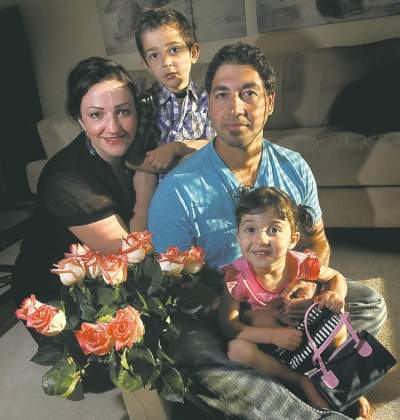
Three in the vanguard who devoted themselves to their community -- a young mother from Syria, a refugee from Palestine and a farm boy from Lebanon -- tell the story:

Advertisement

Advertise With Us

Weather

Apr. 2, 6 PM: 0°c Cloudy with wind Apr. 3, 12 AM: -2°c Cloudy

Winnipeg MB

1°C, Cloudy with wind

Full Forecast

Seeds of the future

The Economist 5 minute read Preview

Seeds of the future

The Economist 5 minute read Saturday, May. 26, 2012

AS PEOPLE watch to see what sort of country Egypt will become after this week's elections, they should keep an eye on a shy-mannered but ruthlessly determined young man called Maikel Nabil. His views, boldly disseminated across cyber-space, are unlikely to win agreement from more than a handful of his compatriots. He is a self-declared atheist, a pacifist, a supporter of better relations with Israel and holds liberal opinions on social issues.

But the fate of people like Nabil and his kind is a good bellwether for the atmosphere in the Middle East. He spent much of last year in prison, and some of that time on hunger strike, because he was deemed to have insulted the army. Whether he remains free to proclaim his (in Egyptian terms, idiosyncratic) ideas will say a lot about the country's new order.

At the very least, the advent of electronic and social media has vastly improved the ability of individuals like Nabil to act as a catalyst for change in the Arab world, stimulating and galvanizing people to think and act more freely, even if they disagree with his views. Earlier this month at the Oslo Freedom Forum -- an ever-more-important gathering for those who defy tyranny -- the stars of the show were young Middle Eastern cyber-activists like him, some relishing the half-completed democratic change which they helped to bring about, others still labouring under regimes that wish they would disintegrate.

When half a dozen of them (including young veterans of cyber-protest from Morocco, Libya, Tunisia, and Bahrain) held a public debate, every word they said was tweeted within seconds by Sultan al-Qassemi, an Emirates-based activist, to his 110,000 or so followers.

Read
Saturday, May. 26, 2012

PETE MULLER / THE ASSOCIATED PRESS ARCHIVES
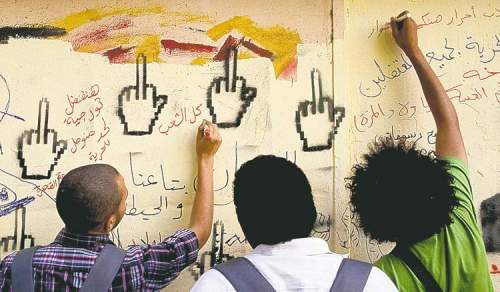
Youth activists write on a wall in Tahrir Square, Cairo, earlier this week.

PETE MULLER / THE ASSOCIATED PRESS ARCHIVES
Youth activists write on a wall in Tahrir Square, Cairo, earlier this week.

Plight of one, plight of all

Allan Wise 4 minute read Saturday, May. 26, 2012

I left Iran, my country of birth, 26 years ago. I vividly remember, as I walked away, turning my head and taking a glance at my mother standing on our balcony fighting off her tears.

I was 17 and one of the last members of my circle of family and friends to head for a life in the diaspora.

This was happening for the second time in the history of my family, as my grandfather, too, had left Russia and sought refuge in Iran in the aftermath of the Bolshevik Revolution.

Over the years, I've closely watched the developments in Iran and in the Middle East.

Afghans want security, of course

By Ariana Yaftali 6 minute read Preview

Afghans want security, of course

By Ariana Yaftali 6 minute read Saturday, May. 26, 2012

For me, Winnipeg is a real home. My adopted country, Canada, has given me and my family a sense of freedom, safety and security. There are moments, however, I think of my country of birth, Afghanistan, to which I still maintain a connection.

That Afghanistan remains a top item on the agenda of the international community since Sept. 11, 2001, makes me think of what it is like today and what it will be like tomorrow.

I think of today's Afghanistan, devastated by more than 30 years of conflict, as a country with a complex situation that ought to be examined in the context of its history.

In 1979, Russia invaded Afghanistan with the help of the Afghan Communist regime. In 1980, internal conflict with massive support from external forces intensified the existing conflict. Subsequently, in 1990, the civil war started. Throughout the country, Afghans experienced different violations of human rights. The rise of insecurity and struggles for power among mujaheedin leaders who failed to protect the civilians facilitated the arrival of the Taliban movement from their Pakistani madrassas (religious schools).

Read
Saturday, May. 26, 2012

CP
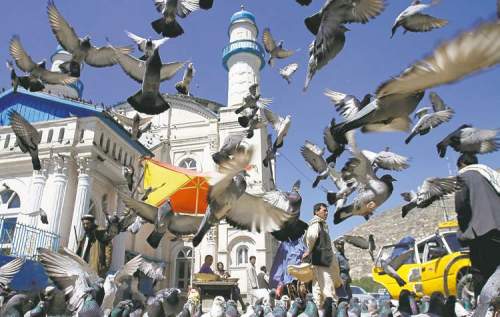
Pigeons cover the sky as Afghan men gather outside Shah-e-Dushamshera mosque in Kabul, Afghanistan, Tuesday, May 22, 2012. (AP Rahmat Gul)

CP
Pigeons cover the sky as Afghan men gather outside Shah-e-Dushamshera mosque in Kabul, Afghanistan, Tuesday, May 22, 2012. (AP Rahmat Gul)

‘Our golden chance’

By Carol Sanders 4 minute read Preview

‘Our golden chance’

By Carol Sanders 4 minute read Saturday, May. 26, 2012

Khalid Hassani goes to school full time, works two jobs to support his mother and five siblings and drives two brothers to gymnastics several times a week.

He may have won Winnipeg's Youth Role Model Award for courage recently, but says life here and now is a piece of cake compared to what the family left behind in Afghanistan.

"Two people killed my father in front of me," said Khalid, recalling the shooting death of his dad at his electronics shop in Kabul when Khalid was just eight.

Having a business in Afghanistan was very difficult because his dad often had to deal with different religious military groups and gangs, said Khalid, now 24.

Read
Saturday, May. 26, 2012

JOE BRYKSA / WINNIPEG FREE PRESS
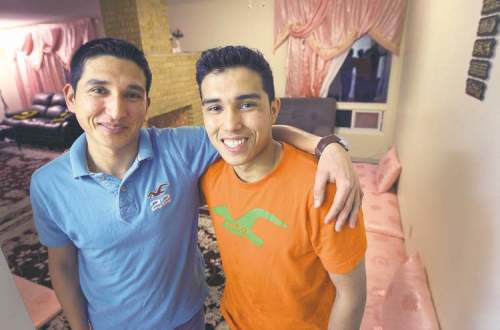
Kahlid Hassani (left, with his brother Qayum), works two jobs, goes to school full time and supports his mother and five siblings -- but he still finds his life here to be a piece of cake compared to growing up in Afghanistan. He won Winnipeg's Youth Role Model Award for courage.

JOE BRYKSA / WINNIPEG FREE PRESS 
Kahlid Hassani (left, with his brother Qayum), works two jobs, goes to school full time and supports his mother and five siblings -- but he still finds his life here to be a piece of cake compared to growing up in Afghanistan. He won Winnipeg's Youth Role Model Award for courage.

Where being gay is a death sentence

By Carol Sanders 8 minute read Preview

Where being gay is a death sentence

By Carol Sanders 8 minute read Saturday, May. 26, 2012

The president of Iran once infamously said there are no homosexuals in his country.

The truth is, anyone outed as gay in the Islamic theocracy might end up dead as a result.

Or as a refugee in Winnipeg, if they're lucky -- like 27-year-old Hamed, who arrived in March.

He was sponsored by a Group of Five connected to the Rainbow Resource Centre in Winnipeg.

Read
Saturday, May. 26, 2012

Boris Minkevich / Winnipeg Free Press
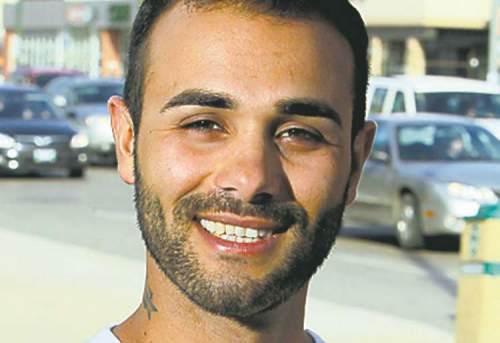
A gay man named Hamed from Iran.

Boris Minkevich / Winnipeg Free Press
A gay man named Hamed from Iran.

Iraq had too much past, too little present

Hani Al-Ubeady 6 minute read Preview

Iraq had too much past, too little present

Hani Al-Ubeady 6 minute read Saturday, May. 26, 2012

As part of a recent six-country tour, I went to the cradle of civilization, whose historical contributions are the bedrock of many nations in the world, including the West.

I'm speaking of Iraq, whose capital is Baghdad, a city I took great risks to flee in disguise more than 20 years earlier.

I arrived by air from Beirut. By the time the 90-minute flight was completed, anxiety had wrapped its arms around my heart. A barrage of thoughts rained down on me. I was heading off to a politically unstable place where well-equipped militia and war profiteers and plunderers control the country. A visitor like me would be at their mercy.

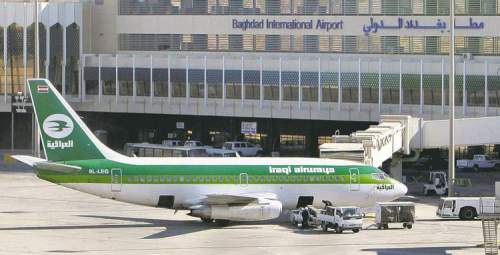
The good memories from my stay in Beirut evaporated when a swash-buckler with a civilian outfit approached me at the arrivals desk at Baghdad International Airport.

Read
Saturday, May. 26, 2012

Khalid Mohammed / THE ASSOCIATED PRESS ARCHIVES
Baghdad International airport is where many returnees have their first experience of today's situation in the country they fled.

Khalid Mohammed /  THE ASSOCIATED PRESS ARCHIVES
Baghdad International airport is where many returnees have their first experience of today's situation in the country they fled.

Lebanese roots in Canada deep

Chama Tasse 5 minute read Preview

Lebanese roots in Canada deep

Chama Tasse 5 minute read Saturday, May. 26, 2012

I was born in Canada. I am proud to be Canadian. I always get asked that question because I look different and have a different name.

I went back to Lebanon four years ago and the security guards looked at my passport and they said "she is from a different country."

I replied in Arabic, telling them that in Canada they ask if I am from a different country and here, in Lebanon you guys say I'm from a different country. Where do I belong?

To be a second-generation Lebanese is extremely difficult because you have to keep up with two different cultures, two different languages and two different ways of life.

Read
Saturday, May. 26, 2012

JOE.BRYKSA@FREEPRESS.MB.CA

JOE.BRYKSA@FREEPRESS.MB.CA

Faces of our Middle Eastern community

12 minute read Preview

Faces of our Middle Eastern community

12 minute read Saturday, May. 26, 2012

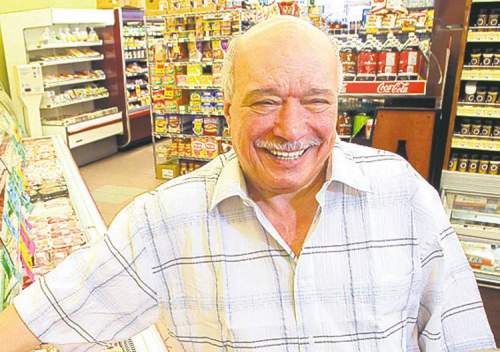
Wajih 'Moe' ZeidHe came to Winnipeg from Palestine in 1967. He now owns four local Foodfare stores and the former Chicken Delight at Corydon Avenue and Stafford Street, which is leased to Harvey's. His first impression of Winnipeg? "I wasn't equipped for winter. I thought 'Oh my God, what did I do?' " He decided he had a return ticket and if he didn't want to stay, he could call it a holiday, then go back. "I will give it a chance."


Zahra MoussaviShe came from Iran with her two children and went to Calgary. While she could read English, she couldn't speak it very well. She came to study at the University of Manitoba and was hired there in 1999. She is now a professor and the Canada Research Chair in the electrical and computer engineering department at the U of M. She also is working to set up a neuro-diagnostic and treatment centre for dementia at the Riverview Health Centre. First impression of Winnipeg? "Hell doesn't have to be made of fire. As a poor PhD student, I walked every day. I came in September 1993, and it was one of the coldest winters. I had a 15-minute walk, I never took the bus, and it was so cold. But Winnipeg, and Manitoba in general, people all come back. I tried to escape two times, but both times I came back. I really like the people and I like the greenery."


Read
Saturday, May. 26, 2012

Winnipeg Free Press
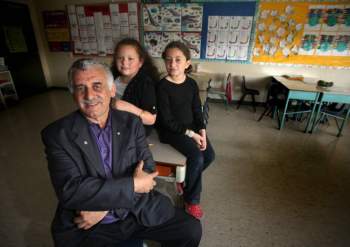
Wajih 'Mo' Zeid

Winnipeg Free Press
Wajih 'Mo' Zeid

After fundamentalist thugs broke his wrist for performing banned music, he knew he had to leave

By Kevin Prokosh 6 minute read Preview

After fundamentalist thugs broke his wrist for performing banned music, he knew he had to leave

By Kevin Prokosh 6 minute read Saturday, May. 26, 2012

Amir Amiri's break with his Iranian homeland happened the instant fundamentalist thugs snapped his wrist for performing banned music in public.

"They said they were going to teach me a lesson I'd never forget," says Amiri, who was a teenage santur player and internationally decorated composer when he became the victim of brutal street justice in 1995.

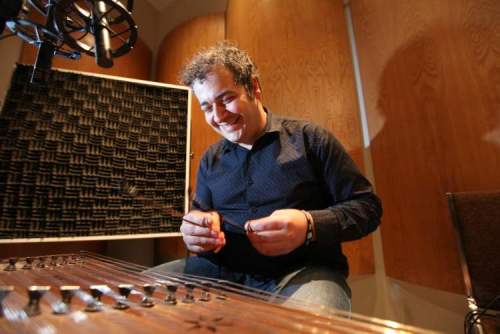
His real crime was playing his santur -- a 72-string hammer dulcimer -- not with the approved right hand but leading with his left hand. Sanctions for his youthful indiscretion were swift. His licence to play music and to carry an instrument were both revoked, and the assault emphasized official displeasure.

"That was the straw that broke the camel's back," recalls Amiri, at 36 a relative newcomer to Winnipeg. He was six years old when he started playing the santur.

Read
Saturday, May. 26, 2012

RUTH BONNEVILLE / WINNIPEG FREE PRESS
Santur player/composer Amir Amiri at a recording session for his upcoming CD. "If I had stayed (in Iran) I would be dead now."

RUTH BONNEVILLE / WINNIPEG FREE PRESS
Santur player/composer Amir Amiri at a recording session for  his upcoming CD.

Tolerance the payoff for Iraqi settling in Winnipeg

By Carol Sanders 5 minute read Preview

Tolerance the payoff for Iraqi settling in Winnipeg

By Carol Sanders 5 minute read Saturday, May. 26, 2012

In the last 30 years, the number of Iraqis moving to Manitoba has soared for many reasons: the Iran-Iraq war; the despotism of Saddam Hussein; then the chaos that followed his ouster and the U.S. invasion.

In 1991, the Canadian census recorded 4,790 Iraqis; just 152 in Manitoba. Today, there are about 2,500 in Manitoba alone, said Hani Al-Ubeady. The man born in Iraq has worked with refugees at Winnipeg's Welcome Place for a decade and has seen them coming from a unique perspective for a long time.

Al-Ubeady was a kid in Iraq in the 1980s. His family in Baghdad was well off but, living under Saddam Hussein's rule, he couldn't speak his mind or voice a contrary opinion. That didn't sit right.

"I've got what I need, then why don't I go with the flow and join the herd?" he asked himself. "Education was free, but motivation was lacking," he said.

Read
Saturday, May. 26, 2012

Phil Hossack / Winnipeg Free Press
Hani Al-Ubeady with wife Mernisa and their Canadian-born kids Benamru, 4, and Mina, 3. 'I'm not saying I'd hate to be rich, but there's a component of satisfaction and contentment you get from living here.'

Phil Hossack / Winnipeg Free Press
Hani Al-Ubeady with wife Mernisa and their Canadian-born kids Benamru, 4, and Mina, 3. 'I'm not saying I'd hate to be rich, but there's a component of satisfaction and contentment you get from living here.'

The Jews of Manitoba, or ‘The centre of its own Diaspora’

By Allan Levine 14 minute read Preview

The Jews of Manitoba, or ‘The centre of its own Diaspora’

By Allan Levine 14 minute read Saturday, May. 26, 2012

Rabbi Arthur Chiel immediately knew he was somewhere special when he first visited Winnipeg in 1944.

Winnipeg was, as he later put it, a "Yiddishe shtot (a Yiddish town) unlike any that I had contact with in the U.S."

What dazzled the man who was to become spiritual leader at Winnipeg's Rosh Pina Synagogue during the 1950s and author of the 1961 scholarly study, The Jews in Manitoba, was not only the number of synagogues and Jewish organizations that existed. It was also the diversity of Jewish life and opinion in Winnipeg and throughout Manitoba.

Anthony Astrachan, an editor and foreign correspondent for the Washington Post, came to the same conclusion when he spent time in Winnipeg in the '70s. He later wrote in the U.S. Jewish magazine Present Tense that Winnipeg's celebrated vitality was based on five key ingredients: "Political activism, radicalism, a vital Yiddish culture mixed with universal Jewish devotion to education, a Prairie mystique and a geographic isolation that has made Winnipeg the centre of its own Diaspora."

Read
Saturday, May. 26, 2012

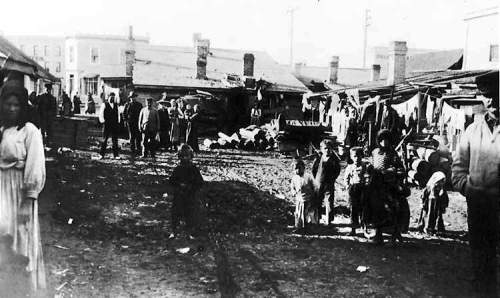
Winnipeg's 'New Jerusalem' in the North End 1890s (JHC)

Winnipeg's 'New Jerusalem' in the North End 1890s (JHC)

Faces of our Jewish community

20 minute read Preview

Faces of our Jewish community

20 minute read Saturday, May. 26, 2012

Ferdinande JacobsAccording to historians, he was likely not only the first Jew in Canada, but he also lived in the area that became Manitoba, working for the Hudson's Bay Company starting in 1732.


Harry WeixelbaumHe was a hotel keeper in West Lynne, located across the Red River from Emerson. He became the province's first Jewish alderman in July 1882.


Read
Saturday, May. 26, 2012

The Winnipeg Free Press
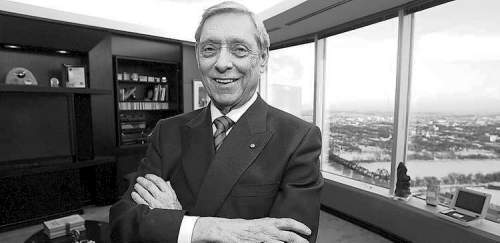
Israel (Izzy) Asper

The Winnipeg Free Press
Israel (Izzy) Asper

LOAD MORE