‘The only drummer who could make you cry’
Levon Helm: An appreciation
Advertisement
Read this article for free:
or
Already have an account? Log in here »
To continue reading, please subscribe:

Digital Subscription
One year of digital access for only $205*
- Enjoy unlimited reading on winnipegfreepress.com
- Read the E-Edition, our digital replica newspaper
- Access News Break, our award-winning app
- Play interactive puzzles
*First annual payment billed as $205.00 + GST for one year. This annual subscription will automatically renew at $233.00 + GST every 52 weeks (10% off the regular annual price of $259.35). Offer available to new and qualified returning subscribers only. Cancel any time.
To continue reading, please subscribe:
Add Free Press access to your Brandon Sun subscription for only an additional
$1 for the first 4 weeks*
- Enjoy unlimited reading on winnipegfreepress.com
- Read the E-Edition, our digital replica newspaper
- Access News Break, our award-winning app
- Play interactive puzzles
*Your next Brandon Sun subscription payment will increase by $1.00 and you will be charged $17.95 plus GST for four weeks. After four weeks, your payment will increase to $24.95 plus GST every four weeks.
Read unlimited articles for free today:
or
Already have an account? Log in here »
Hey there, time traveller!
This article was published 22/04/2012 (5242 days ago), so information in it may no longer be current.
CHICAGO — Levon Helm was the rarest of musical multi-taskers: an unflappable drummer and a singer who wrung soul out of every note. He also was a terrific team player and bandmate who made the people around him sound good.
Helm was “the only drummer who could make you cry,” critic Jon Carroll once wrote.
“It’s nearly impossible to sing so smoothly and hit that hard at the same time,” singer Neko Case wrote on Twitter this week.
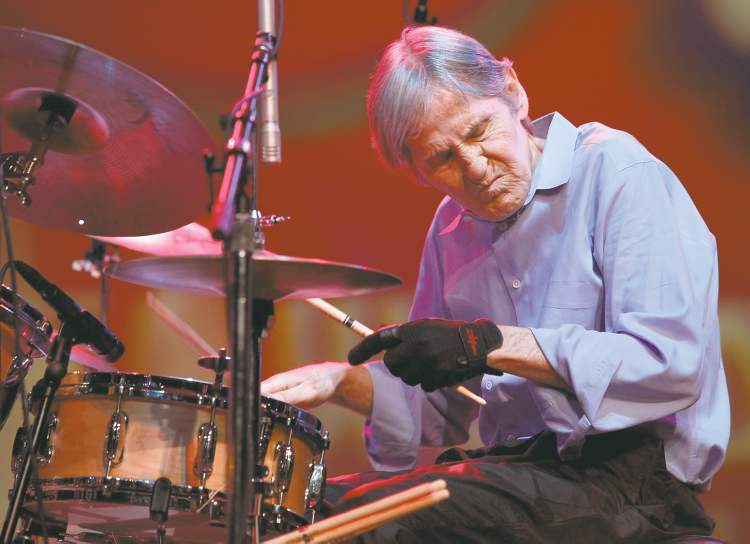
Helm, who died Thursday in New York City at age 71 after a long battle with cancer, was part of one of the most revered ensembles in rock history, The Band, a quintet built on interplay, empathy and shared responsibility. Helm was one of three distinctive lead vocalists in the group, along with the late Richard Manuel and Rick Danko. He was an understated musician who knew exactly when to lay back and when to assert himself to best serve the song. For Helm, Danko, Manuel, Robbie Robertson and Garth Hudson, the sum truly was greater than the parts.
In the ’90s, his gutsy tenor voice was reduced to a croak because of throat cancer, but he re-emerged in the last decade as a revered elder statesman of American roots music. He won three Grammy Awards and continued to tour as recently as March.
Mark Lavon Helm was born (according to his official website) on May 26, 1940 in Arkansas, the son of music-loving cotton farmers (he reputedly became known as Levon because it was easier for his bandmates to pronounce). As a teenager, he was a regular in the clubs around Helena, Ark., and was recruited by singer Ronnie Hawkins to join his band, the Hawks.
Helm then helped enlist Robertson, Manuel, Danko and Hudson, all of whom were Canadian. They developed a telepathic interplay during gruelling one-night stands across the country. As the group began seasoning its country-blues-rock ’n’ roll stew with soulful harmonies and R&B grooves, it left behind its more one-dimensional leader, who remained a devotee of Sun Records-style rockabilly.
By the mid-’60s, Levon and the Hawks, as they were sometimes known, were supporting Bob Dylan as he transitioned into rock from folk, stirring emotions in his fans that ranged from adulation to outright derision.
Together, the hurricane-haired bard and the grizzled-beyond-its-years bar band reinvented rock, meshing Dylan’s poetic assault with roller-coaster surges of sound: Robertson’s slice-and-dice guitar, the gospel-soul keyboard interplay of Manuel and Hudson, the peerless groove of Danko’s bass and Helm’s drums.
The audience reaction was nearly as violent as the music. Some fans accused Dylan of selling out and greeted him with boos and insults. Discouraged, Helm quit and eventually went to work on an oil rig in the Gulf of Mexico.
Dylan and the rest of the Hawks regrouped in upstate New York in 1967-68 and rejuvenated themselves by playing acoustic music in the basement of a house known as Big Pink, rented by Hudson, Danko and Manuel. The music tapped into the twin streams of pre-rock blues and country, a stark contrast to the psychedelic experiments of the late ’60s.
Helm was persuaded to rejoin the group, and soon he and the rest of the Hawks were signed by Capitol Records, the home of the Beatles. Helm only half-jokingly suggested the quintet name itself racial epithets aimed at Caucasians because, according to his autobiography, it was playing the music of poor Southern white folks, not unlike the music he heard and played with his family while growing up in Arkansas.
But a simpler moniker stuck — The Band, which seemed to suit the quintet’s insular demeanour. It also created an impression of aloofness. On stage, the quintet often seemed to be playing to each other rather than for an audience. Yet it was exactly that quality that made the 1968 debut, Music From Big Pink, a landmark.
In the flower-power era, Music From Big Pink was a rustic affront to convention. It was revolutionary by not catering to the revolutionary rhetoric of the times, instead addressing themes that were personal, spiritual and familial.
The self-titled followup expanded this homespun approach to visionary proportions, embracing the South and its lore as a metaphor for universal longing. The effect was enhanced by Elliot Landy’s stark black-and-white photography, in which the band’s baleful, bearded 19th-century faces seemed drawn from the characters in Robertson’s The Night They Drove Old Dixie Down, as movingly sung by Helm, the band’s sole Southerner.
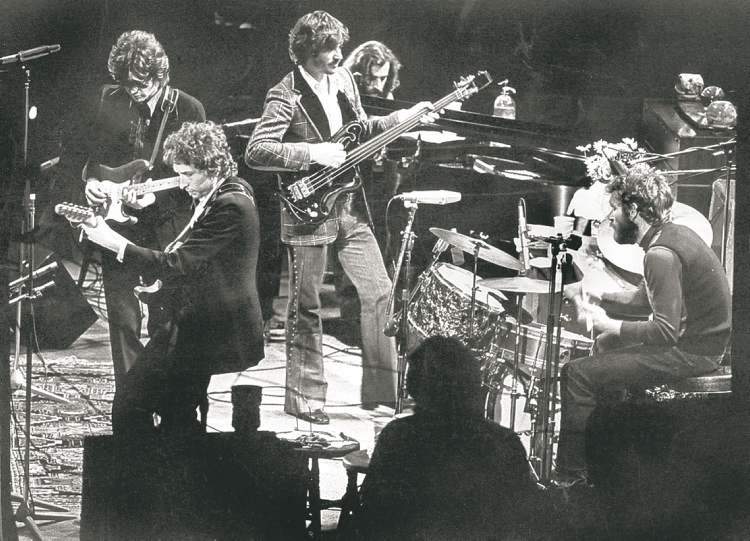
With these two albums as a springboard, The Band became one of the most celebrated groups of the era, even without any major hits. It was splashed on the cover of Time magazine and reunited with Dylan to tour in 1974, this time to wild acclamation and sizable profit.
Subsequent albums lacked the staying power of the first two, and Robertson, who had established himself as the band’s primary songwriter, eventually wanted out to start a career in Hollywood. He concocted The Last Waltz, a lavish 1976 dinner-concert movie with numerous guest stars (including Dylan, Neil Young, Van Morrison, Muddy Waters and Joni Mitchell) that was to be the group’s farewell.
Helm’s performance is particularly stunning, as he sings with soulful conviction even as he hammers the drums through an epic six-hour concert.
He developed a credible career as an actor, most notably playing Loretta Lynn’s father in Coal Miner’s Daughter (1980) and Chuck Yeager’s loyal friend in The Right Stuff (1983).
He also continued to participate in various Band reunions with Manuel, Danko and Hudson, but the road took a tragic toll. Manuel committed suicide in 1986 and Danko died of a drug-related heart attack in 1999. Helm was diagnosed with throat cancer in the late ’90s and eventually lost his voice after radiation therapy. He began singing again in 2004, and hosted regular “Midnight Ramble” sessions at his home studio in Woodstock, N.Y., modelled after the travelling minstrel shows of his youth. His guests included Elvis Costello, Emmylou Harris, Dr. John and Steely Dan’s Donald Fagen.
He later released the acclaimed Dirt Farmer and Electric Dirt solo albums, digging into the rich soil of country, blues, soul and gospel that he had known since his childhood. Dirt Farmer brought him his first Grammy Award in 2008, and Electric Dirt and the live Ramble at the Ryman (2011) also won Grammys. The voice that had been reduced to a whisper by illness was now a world-weary drawl, weathered by time but not defeated by it.
— The Chicago Tribune
Recommended listening
Levon Helm’s distinctive Southern tenor voice, R&B-influenced drumming and mandolin playing were central to The Band’s 10 studio albums, four live albums (including two with Bob Dylan) and 31 singles. The albums Music From Big Pink, The Band and the live Rock of Ages are considered among rock’s finest. Helm’s final three solo albums, Dirt Farmer, Electric Dirt and Ramble at the Ryman, each won Grammy Awards.
Helm’s earthy style is showcased on these tracks:
❚ The Weight (from Music From Big Pink)
❚ Up On Cripple Creek (The Band)
❚ The Night They Drove Old Dixie Down (The Band)
❚ Life Is a Carnival (Rock of Ages)
❚ Ophelia (Ramble at the Ryman)
❚ Mystery Train (Moondog Matinee)
❚ Poor Old Dirt Farmer (Dirt Farmer)
❚ Growing Trade (Electric Dirt)
— USA Today
Related Articles
Levon Helm, former member of The Band, is in 'final stages' of long battle with cancer
Advertisement Advertise With Us
Advertisement Advertise With Us