Transit of Venus advanced science, world trade
Advertisement
Read this article for free:
or
Already have an account? Log in here »
To continue reading, please subscribe:

Digital Subscription
One year of digital access for only $205*
- Enjoy unlimited reading on winnipegfreepress.com
- Read the E-Edition, our digital replica newspaper
- Access News Break, our award-winning app
- Play interactive puzzles
*First annual payment billed as $205.00 + GST for one year. This annual subscription will automatically renew at $233.00 + GST every 52 weeks (10% off the regular annual price of $259.35). Offer available to new and qualified returning subscribers only. Cancel any time.
To continue reading, please subscribe:
Add Free Press access to your Brandon Sun subscription for only an additional
$1 for the first 4 weeks*
- Enjoy unlimited reading on winnipegfreepress.com
- Read the E-Edition, our digital replica newspaper
- Access News Break, our award-winning app
- Play interactive puzzles
*Your next Brandon Sun subscription payment will increase by $1.00 and you will be charged $17.95 plus GST for four weeks. After four weeks, your payment will increase to $24.95 plus GST every four weeks.
Read unlimited articles for free today:
or
Already have an account? Log in here »
Hey there, time traveller!
This article was published 02/06/2012 (5213 days ago), so information in it may no longer be current.
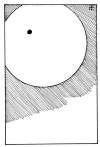
On Tuesday, June 5, a tiny black dot will move across the face of the sun, causing some people to get excited. However, when the same little dot showed up 251 years ago, a lot of people got really, really excited.
That’s because the little dot was the planet Venus, and it gave 18th-century scientists a twice-in-a-lifetime chance to find the distance to the sun and all the other planets, to improve navigation, and to win imperial glory.
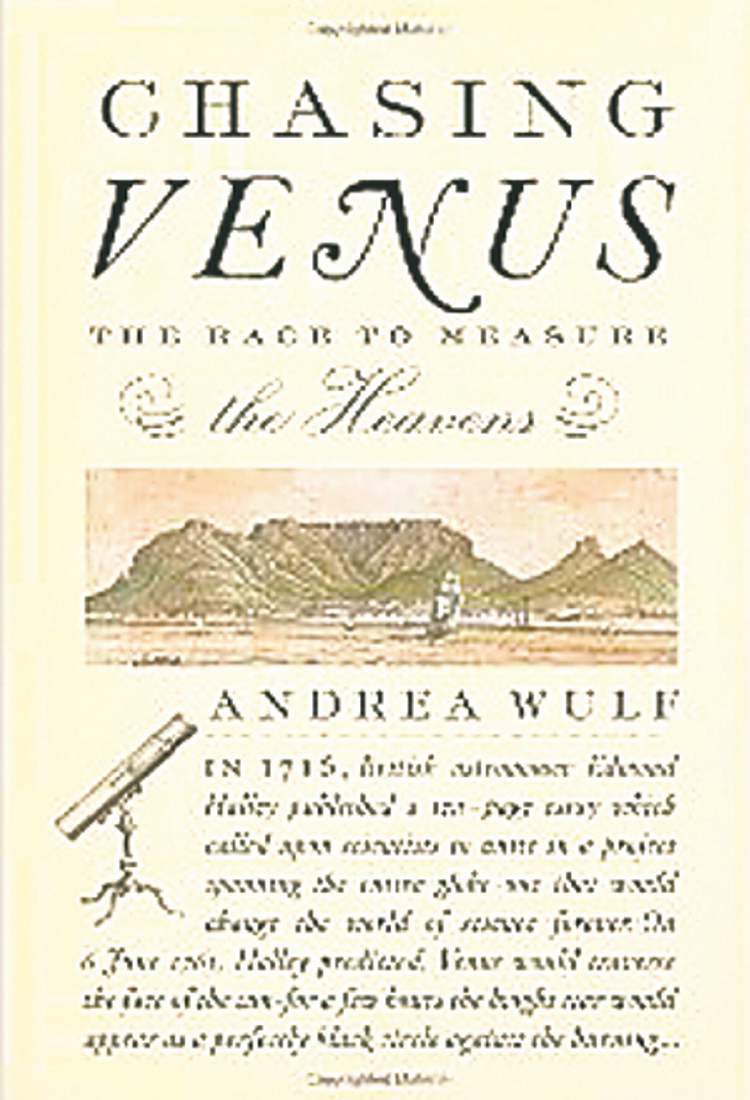
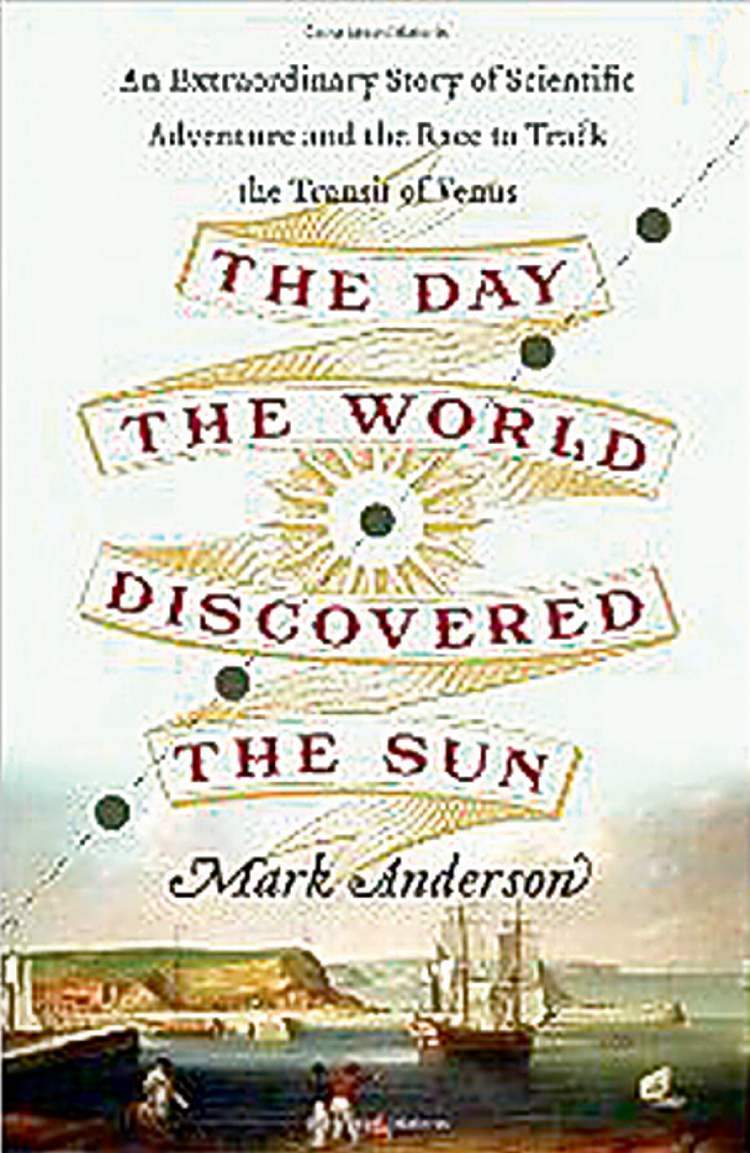
Just in time for the next transit of Venus, two strikingly similar popular histories have appeared telling the story of the first big international science project: The Day the World Discovered the Sun by American Mark Anderson, and Chasing Venus by Indian-born Andrea Wulf.
The narrative of both focuses on transits of Venus in 1761 and 1769. Transits usually come in pairs separated by eight years, but with over a century between pairs.
(This means that June 5 is your last opportunity before you die. There was one in 2004 and another pair in 1874 and 1882.)
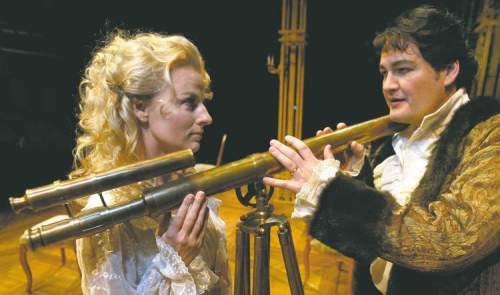
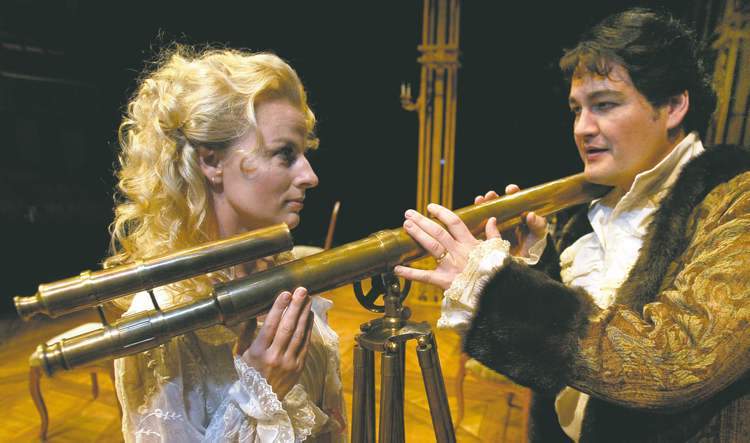
Local arts lovers may recall Winnipeg playwright Maureen Hunter’s drama Transit of Venus, which premiered at Manitoba Theatre Centre in 1992. Manitoba Opera produced an operatic version in 2007.
Even before the 1760s, astronomers knew how to predict these transits to the hour. Edmond Halley (the comet guy) sent out a call in 1716 to a future generation of scientists the world over to unite around this rare event that he would not live to see.
With accurate measurements from all over the globe of the crucial moments when Venus touched the inside and outside edges of the sun, it would be possible to calculate the solar parallax, which would tell the world, finally, the distance to the sun.
That one number would unlock the distances to all the other planets, and in so doing make maritime navigation more precise — in an age when the inability to determine longitude often led to shipwrecks and tragedy.
In the 1760s, tracking the transit of Venus was not an esoteric gentlemen’s diversion.

Burgeoning scientific societies in Britain, France, Sweden, and Russia, among others, petitioned their kings and queens successfully for the necessary funding to make Halley’s dream a reality.
Even though the 1761 transit coincided with the Seven Years War, there was uneasy co-operation between the colonial empires on the scientific front. They agreed to share the data from their respective expeditions, since each measurement strengthened the rest.
These expeditions drive the story forward but they also form a backdrop to describe the larger world at this time of newly awakened scientific wonder. Anderson’s book in particular follows many tangential currents such as the discovery of Tahiti, a plague of measles, and the kraken of the Norwegian Sea.
Chasing Venus is equally interesting, but is more loyal to the actual transits, with coverage of all the major expeditions. To its credit, it is exhaustively researched with nearly 100 of notes and appendices, and with figures, maps, portraits and sketches that are absent from The Day the World Discovered the Sun.
The 1761 efforts were not entirely successful. Charles Mason and Jeremiah Dixon set out for Sumatra, but after an encounter with a hostile French warship, they only made it as far as the Cape of Good Hope and only witnessed half the transit.
The Frenchman Guillaume Le Gentil (the focus of Hunter’s drama) reached his destination of Pondicherry, India, just in time, despite disease and unco-operative winds, only to find it had been taken by the British. He was stuck at sea, and his measurements were inaccurate and useless.
Meanwhile, Swedish observer Pehr Wilhelm Wargentin had a clear blue sky, and noticed a faint halo around the planet which suggested it had an atmosphere. However, as Venus touched the edge of the sun, unexpected optical fuzziness — the “black drop effect” — made his times inaccurate.
With incomplete and suspect data, estimates for the distance to the sun varied by as much as 20 per cent, though they did fall close to today’s accepted value of 149,597,870 kilometres. They had eight years to argue and prepare for a second chance.
The conditions, both astronomical and political, were more favourable for the 1769 transit. The world was at relative peace, and Venus would be better positioned for an precise measurement.
The second transit also occasioned even more fantastic voyages, the chief among these being that of Lieutenant James Cook on the HMS Endeavour.
With his astronomer Charles Green, they observed the transit from Tahiti, while the gentleman botanist Joseph Banks explored the island, collecting plant specimens and testing the “hospitality” of South Sea women.
The Endeavour then sailed westward in search of the rumoured Terra Australis, eventually returning to share its many discoveries with the world. Along with transit measurements from Baja, Calif., and Vard, Norway, clearer dimensions of the solar system emerged.
Much more than an effort to find one number, the transit of Venus epitomized a new era of international co-operation and respect for science. Either account of this effort, that of Anderson (more stories) or Wulf (more focused, more organized) will provide a worthwhile read for anyone with compatible interests.
Paul Klassen is a Winnipeg engineer.
Book review
Chasing Venus
The Race to Measure the Heavens
- By Andrea Wulf
- Knopf, 304 pages, $32
The Day the World Discovered the Sun
An Extraordinary Story of 18th Century Scientific Adventure and the Race to Track the Transit of Venus
- By Mark Anderson
- De Capo Press, 288 pages, $29

Advertisement Advertise With Us
Advertisement Advertise With Us