Art-house horror

City cinematographer brings love of film history to genre

Advertisement

Advertise with us

Winnipeg has its share of local stars when it comes to the horror genre.

Read this article for free:


or

Already have an account? Log in here »

To continue reading, please subscribe:

Subscribe and receive a limited-edition Free Press branded hat or tote.

Digital Subscription

One year of digital access for only $205*

  • Enjoy unlimited reading on winnipegfreepress.com
  • Read the E-Edition, our digital replica newspaper
  • Access News Break, our award-winning app
  • Play interactive puzzles

*First annual payment billed as $205.00 + GST for one year. This annual subscription will automatically renew at $233.00 + GST every 52 weeks (10% off the regular annual price of $259.35). Offer available to new and qualified returning subscribers only. Cancel any time.

To continue reading, please subscribe:

Add Free Press access to your Brandon Sun subscription for only an additional

$1 for the first 4 weeks*

  • Enjoy unlimited reading on winnipegfreepress.com
  • Read the E-Edition, our digital replica newspaper
  • Access News Break, our award-winning app
  • Play interactive puzzles
Start now

*Your next Brandon Sun subscription payment will increase by $1.00 and you will be charged $17.95 plus GST for four weeks. After four weeks, your payment will increase to $24.95 plus GST every four weeks.

Hey there, time traveller!
This article was published 26/10/2013 (4712 days ago), so information in it may no longer be current.

Winnipeg has its share of local stars when it comes to the horror genre.

Makeup ace Doug Morrow is a seasoned monster-maker who turned the beautiful Jenna Dewan (a.k.a. Mrs. Channing Tatum) into a grotesque demon-witch in the 2005 supernatural thriller Tamara.

Actor-stuntman Rick Skene has orchestrated motorized mayhem in films such as Wishmaster 3 and Joy Ride 3 and has played the psycho himself as the slasher Santa in Silent Night. (His sons Sean and Dan Skene got into that particular act in the roles of Three Finger and One-Eye, respectively, in Wrong Turn 4.)
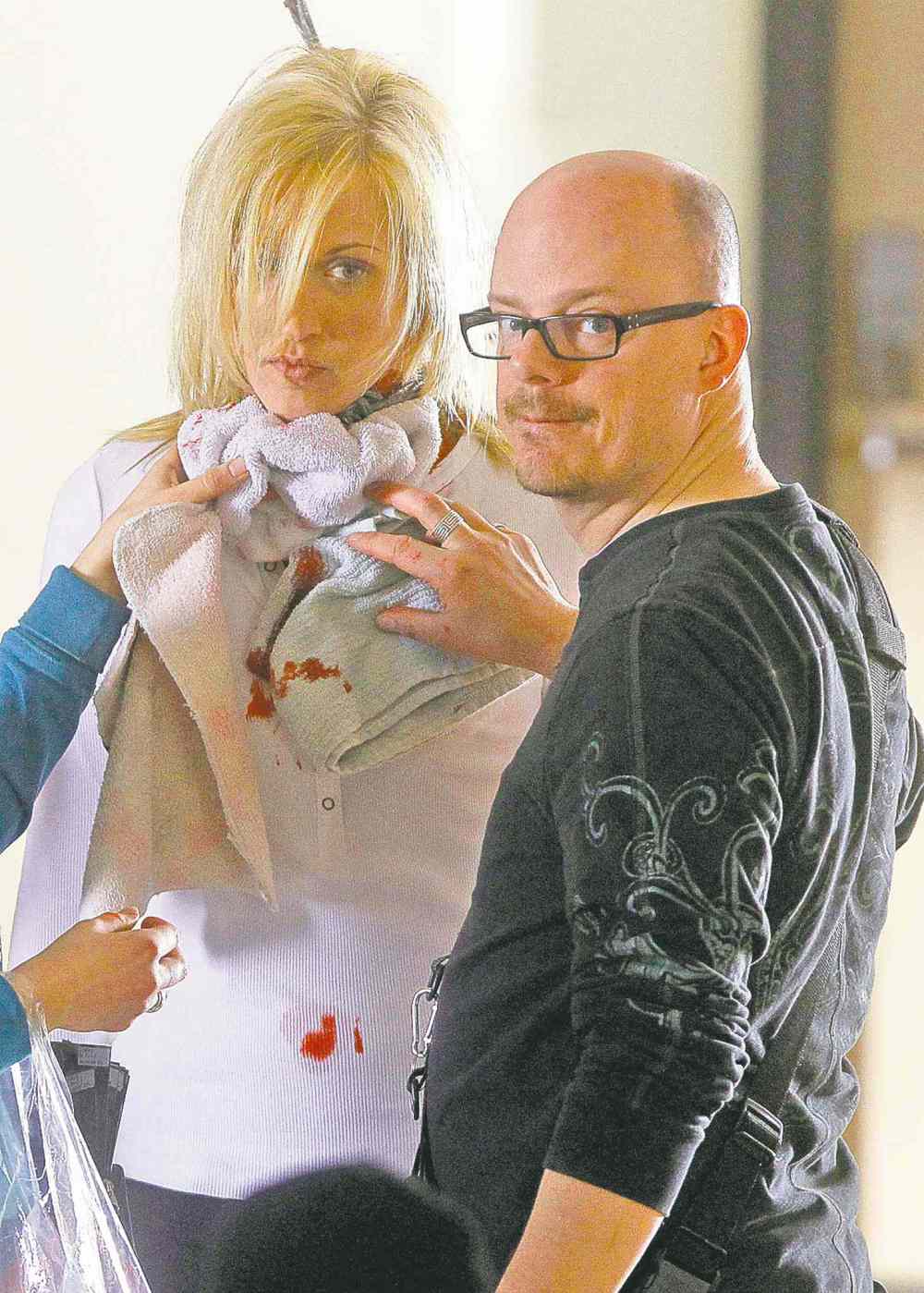
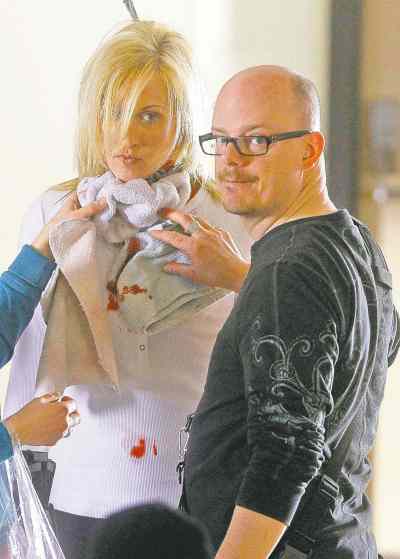
TREVOR HAGAN / WINNIPEG FREE PRESS - Makeup artist, Doug Morrow, right, contains artificial blood on the neck of Samatha Kendrick during filming of Wrong Turn 4. The horror flick is being shot at the former Brandon Mental Health Institute in Brandon, Manitoba. 11-03-07

Making a name for himself in that talent pool is cinematographer Michael Marshall. The Calgary-born transplant was educated in filmmaking at Confederation College in Thunder Bay and, in the mid-’80s, toiled in Toronto at MuchMusic and on the sets of genre TV series such as Friday the 13th and War of the Worlds.

He gravitated to Winnipeg after being seduced with the classically stylish films of Guy Maddin and John Paizs.

“I could tell immediately that this is where I wanted to be, working together with a group of artists who were in the business for their own reasons, every crew member drawn to a common cause,” he says.

In a way, he also gravitated to the horror genre, initially because that was where the work was.

But Marshall, 50, is not one to show up on a film set without doing his homework. He brings film history and art history to the table. On his first horror film, the Edmonton-made frontier werewolf movie Ginger Snaps Back (2004), he studied the “gothic sensibility” behind the story before he shot a frame of film.

“For reference, I drew upon archaic woodcuts and illustrations — Francisco Goya and Alberto Durero in particular.”

If that sounds like a highfalutin approach to genre films, Marshall says he takes that approach with all his work.

“For every picture I do, from outright slashers to crime dramas or family comedies, I refer back to various artists, certainly the greats such as Caravaggio or Rembrandt, but also illustrators such as Arthur Rackham or Edwin Georgi — people who could tell a story within a single frame, using light and shadow to create immediate drama.”

If the movie Curse of Chucky may seem like just another horror knock-off to the uninitiated, the movie represents a serious artistic collaboration, Marshall says.

“When something larger like Curse Of Chucky comes along, it is a real treat to let the creative juices flow,” he says, speedy shooting schedule notwithstanding.
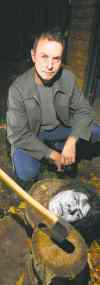
Trevo Hagan / Winnipeg Free Press
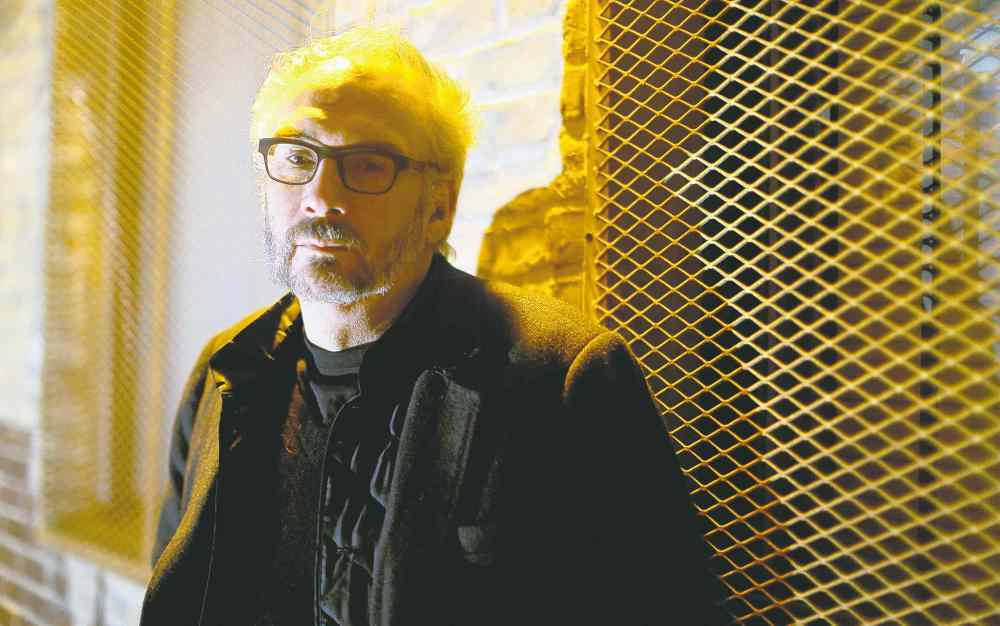
Cinematographer Michael Marshall gravitated to Winnipeg after being seduced with the classically stylish films of Guy Maddin and John Paizs.
Trevo Hagan / Winnipeg Free Press Cinematographer Michael Marshall gravitated to Winnipeg after being seduced with the classically stylish films of Guy Maddin and John Paizs.

“Time is still of the essence, but there is room to expand upon visual themes. We drew on the classics of suspense such as Hitchcock and Mario Bava, using the camera as a tool to suggest hidden desires, and I got a chance to play with some Pre-Raphaelite lighting and composition as inspired by John Everett Millais or Arthur Hughes, as well as returning to the art of gothic illustrators such as Gustave Doré.

“The goal was to create the feel of an evocative fairy tale, stark images that burned into the eye, something that you would remember after the story ended and the lights were out,” Marshall says. “It was quite fun and challenging since, on average, it took two to three hours to get a single shot of the Chucky animatronic doll, and there wasn’t a lot of time to fuss about.

“The entire crew pulled together to create a real work of art, which was the goal from the outset, an art horror film,” he says. “I’m very happy with the result, and the reviewers responded quite favourably to the look of the finished project.” (Mancini himself said: “We’re really proud of the fact that the reviews are stating the movie looks like a theatrical-quality release, and I think a lot of that has to do with the Winnipeg crew.”)

“It makes me want to push things even further,” Marshall says.

“I have come to love horror films. There is so much room yet to create images that both compel and terrify, and play with emotions on every level.

“And there is talent enough here to make that happen,” he says.

randall.king@freepress.mb.ca

Randall King

Randall King
Writer

Randall King writes about film for the Winnipeg Free Press.

Our newsroom depends on a growing audience of readers to power our journalism. If you are not a paid reader, please consider becoming a subscriber.

Our newsroom depends on its audience of readers to power our journalism. Thank you for your support.

Report Error Submit a Tip

More Stories

Cabernet Sauvignon star of wine festival

Ben Sigurdson 5 minute read Preview

Cabernet Sauvignon star of wine festival

Ben Sigurdson 5 minute read Yesterday at 3:00 AM CDT

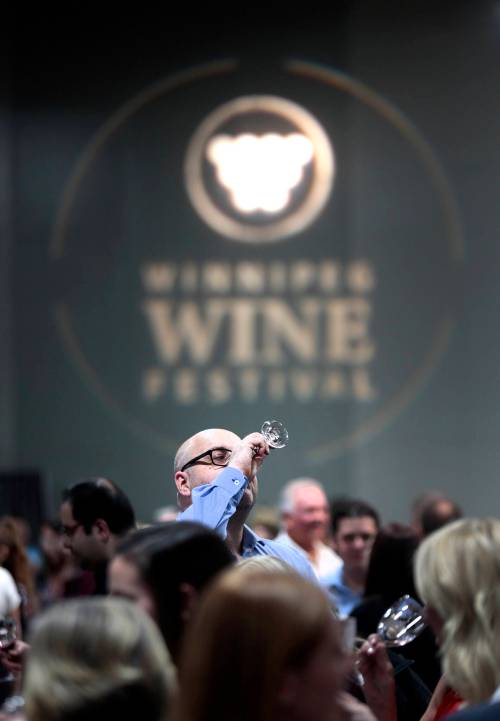
The Winnipeg Wine Festival will celebrate the king of red wine grapes next weekend — the theme of this year’s festival, which takes place Sept. 25 and 26 at the RBC Convention Centre, is Cabernet Sauvignon.

Cab Sauv, as it’s also known, is the world’s most widely planted wine grape of any colour, first coming to prominence in the 1800s in France’s Bordeaux region, where the grape is still popular. Rather than single-variety wines, Bordeaux reds tend to be blends, with those coming from the left bank of the Gironde estuary being Cabernet-dominant, while right-bank wines are Merlot-dominant, with Cabernet Sauvignon playing a supporting role. Cabernet and Merlot work well together and many other countries have followed suit in blending the two.

A team at University of California Davis put Cabernet Sauvignon through a DNA test in 1996 and discovered its parent grapes are Cabernet Franc and Sauvignon Blanc — it’s likely that at some point the two varieties, planted next to each other in some vineyard, crossed and mutated and became the grape we know today. (Someone growing grapes in the 19th century must have had an inkling of what was up, as the grape has been called Cabernet Sauvignon since long before the DNA test.)

Flavour-wise, most Cabernet Sauvignon wines are big and bold, with a core of deep dark berry flavours, some graphite and spice notes and relatively bright acidity. It’s a grape that is well-suited to barrel aging, with most examples seeing at least some time in wood.

Read
Yesterday at 3:00 AM CDT

Family account spiced with magic realism, geopolitical intrigue and a ghost story

Reviewed by Zilla Jones 4 minute read Preview

Family account spiced with magic realism, geopolitical intrigue and a ghost story

Reviewed by Zilla Jones 4 minute read Yesterday at 2:01 AM CDT

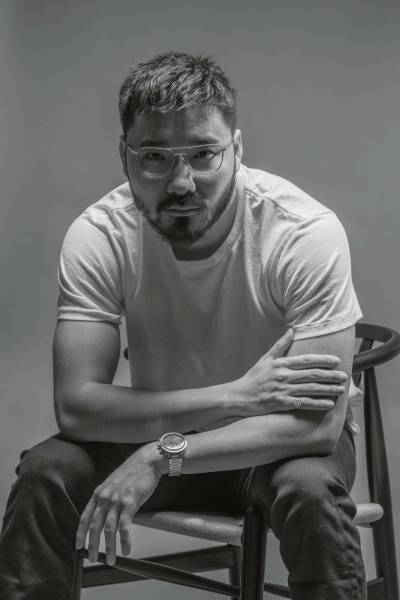
Tom Lin’s second novel Babylon, South Dakota moves beyond a historical account of an immigrant family’s struggle, delightfully blending and bending genres.

Lin is a Chinese-born novelist whose family emigrated to the U.S. when he was four years old. His debut novel, The Thousand Crimes of Ming Tsu, won the 2022 Andrew Carnegie Medal for Excellence in Fiction, making him the youngest ever recipient of that award. He earned a PhD in English from the University of California Davis and is currently an assistant professor of English and creative writing at the University of Iowa.

Babylon, South Dakota takes place in an unspecified time period that can be understood to be during the Mao era — likely the 1950s or ’60s. A young Chinese couple, the Hsuis, immigrate to the rural community that gives the book its title. They take the names Saul and Mei and settle on a 160-acre homestead left to them by a distant relative.

Saul’s dream is to breed and sell chrysanthemums from seeds he brought from China, while Mei wants to raise livestock. They speak no English, know nothing of life in the United States, are unprepared for the harshness of winter and the isolation of the farm and bring nothing with them except some gold, which Mei hides around the house for emergencies. Their only link to the outside world is a discarded and marginally functioning TV set, which Saul rescues and rigs up.

Read
Yesterday at 2:01 AM CDT

Winnipeg Jets at Edmonton Oilers

1 minute read Yesterday at 3:22 PM CDT

American Hostage stars recall warmth of Winnipeggers during brutal winter

Randall King 7 minute read Preview

American Hostage stars recall warmth of Winnipeggers during brutal winter

Randall King 7 minute read Friday, Sep. 18, 2026

TORONTO — When you stream the eight-part series American Hostage, a sense of familiarity may strike.

That’s because the show was shot in Winnipeg — especially in the Exchange District — from November of last year to the beginning of February, with Winnipeg portraying Indianapolis circa 1977.

The whole world seemed to be watching that midwest American city that year as a hostage crisis unfolded involving one Tony Kiritsis, an angry man who goes ballistic when a mortgage brokerage was poised to foreclose on property he had dreamed of developing into a shopping centre.

Kiritsis kidnapped his mortgage broker, Richard Hall, wiring a shotgun to the back of his head, and demanded a public airing of his grievances, with the reluctant help of popular radio broadcaster Fred Heckman.

Read
Friday, Sep. 18, 2026

New Jets show promise despite loss to experienced Oilers

Mike McIntyre 8 minute read Preview

New Jets show promise despite loss to experienced Oilers

Mike McIntyre 8 minute read Updated: 9:34 AM CDT

Preseason hockey games are always more about the process than the result, and that’s especially true when the opposing rosters appear to be a major mismatch on paper.

So a 5-2 loss by an inexperienced group of Winnipeg Jets skaters against a star-studded Edmonton Oilers squad on Saturday night in the Alberta capital was neither surprising nor alarming.

There was, however, plenty to like from the visitors’ perspective despite the outcome.

Let’s break it down.

Read
Updated: 9:34 AM CDT

Art-house horror

By Randall King 4 minute read Preview

Art-house horror

By Randall King 4 minute read Saturday, Oct. 26, 2013

Winnipeg has its share of local stars when it comes to the horror genre.

Makeup ace Doug Morrow is a seasoned monster-maker who turned the beautiful Jenna Dewan (a.k.a. Mrs. Channing Tatum) into a grotesque demon-witch in the 2005 supernatural thriller Tamara.

Actor-stuntman Rick Skene has orchestrated motorized mayhem in films such as Wishmaster 3 and Joy Ride 3 and has played the psycho himself as the slasher Santa in Silent Night. (His sons Sean and Dan Skene got into that particular act in the roles of Three Finger and One-Eye, respectively, in Wrong Turn 4.)

Read
Saturday, Oct. 26, 2013