

Bring Filipino refugees to Manitoba
Advertisement
Read this article for free:
or
Already have an account? Log in here »
To continue reading, please subscribe:

Digital Subscription
One year of digital access for only $205*
- Enjoy unlimited reading on winnipegfreepress.com
- Read the E-Edition, our digital replica newspaper
- Access News Break, our award-winning app
- Play interactive puzzles
*First annual payment billed as $205.00 + GST for one year. This annual subscription will automatically renew at $233.00 + GST every 52 weeks (10% off the regular annual price of $259.35). Offer available to new and qualified returning subscribers only. Cancel any time.
To continue reading, please subscribe:
Add Free Press access to your Brandon Sun subscription for only an additional
$1 for the first 4 weeks*
- Enjoy unlimited reading on winnipegfreepress.com
- Read the E-Edition, our digital replica newspaper
- Access News Break, our award-winning app
- Play interactive puzzles
*Your next Brandon Sun subscription payment will increase by $1.00 and you will be charged $17.95 plus GST for four weeks. After four weeks, your payment will increase to $24.95 plus GST every four weeks.
Read unlimited articles for free today:
or
Already have an account? Log in here »
Hey there, time traveller!
This article was published 15/11/2013 (4642 days ago), so information in it may no longer be current.
The Canadian government on Wednesday announced special immigration measures to help people affected by typhoon Haiyan, the devastating storm that slammed into the Philippines last week. While details of these special measures have not yet been released, the government should be congratulated for stepping up to the plate in response to this unprecedented disaster.
Canada has a strong track record of responding to international disasters in a comprehensive way. When the Haiti earthquake struck in 2010, Canada fast-tracked immigration applications for Haitians with family in Canada. This allowed thousands of parents, grandparents, spouses and young children to be reunited with their Canadian relatives.
While the measures the government put into place after the Haiti earthquake were positive, those special immigration measures did not cover many extended family members. As a result, cousins, aunts, uncles, and adult brothers and sisters of Canadian permanent residents and citizens, were often not allowed to take advantage of these special measures.
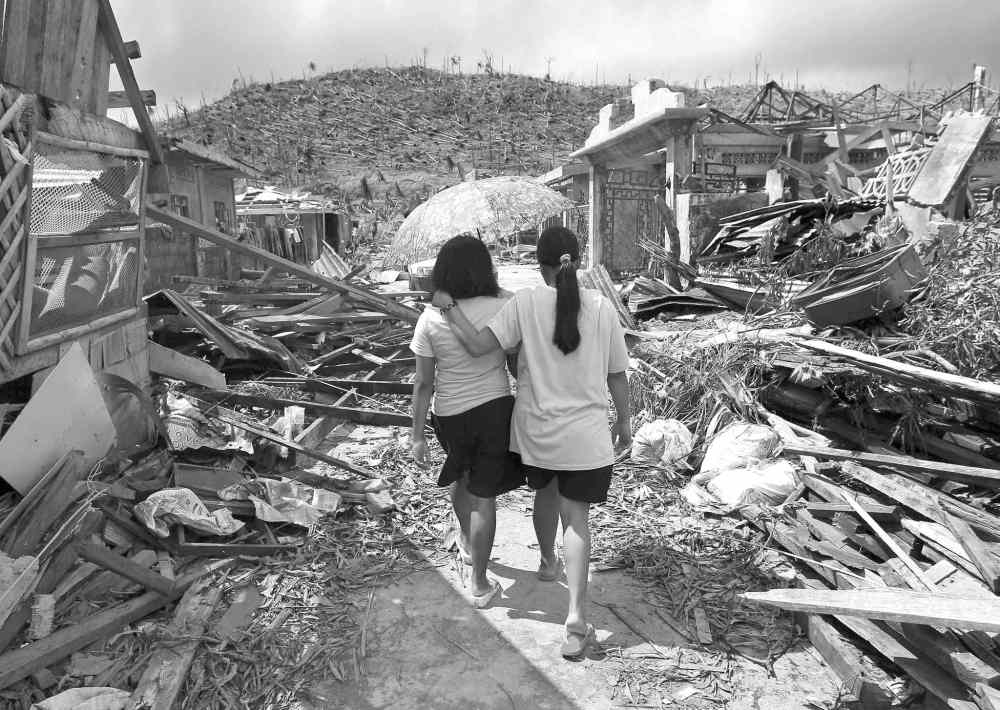
Should every relative of a Canadian resident affected by typhoon Haiyan be given a visa to come to Canada? This may be difficult. However, developing flexible criteria to help some of these people can, and should, be done quickly.
This is where Manitoba can lead. The Manitoba Provincial Nominee Program is unique in that it is one of the only provincial immigration programs that allows for Canadian residents to assist extended family in coming to Canada.
What Manitoba should do is follow what Quebec did after the 2010 Haiti earthquake. Quebec set up flexible criteria to allow for some Haitians not covered by federal rules to immigrate to Quebec. Manitoba should work with Canada to create flexible criteria to allow people affected by the typhoon to be fast-tracked to Canada through the provincial nominee program. If individuals have already been approved by Manitoba up to this date, the Canadian government should fast-track these applicants.

When the special immigration measures were announced after the Haiti earthquake, Canadians were still allowed to sponsor their parents and grandparents. Since 2011, the Canadian government has frozen these immigration applications. Essentially, this means Canadian citizens and residents cannot sponsor their parents and grandparents to Canada until the freeze is lifted in January.
Because of this unprecedented disaster, Canada should lift the freeze for victims of this typhoon. As it is less than six weeks since the freeze will be lifted anyway, lifting the freeze a little bit early should have little impact. To be fair to other Canadians looking to sponsor their parents and grandparents in 2014, any sponsorship applications for typhoon victims should not count against the total cap of applications Canada will allow under this category.
A more difficult question is whether Canada, after lifting the freeze on Family Class applications, should implement the new financial criteria that Canadian residents will have to meet to bring their relatives here. In January, Canadian residents looking to sponsor their parents and grandparents will have to demonstrate a much higher income level than what was required under the previous criteria for a period of three years. If this new criteria is implemented, any special measures would not provide relief to the newest immigrants to Canada. Again, flexibility and compassion are needed to deal with these issues.
R. Reis Pagtakhan is an immigration lawyer with Aikins Law in Winnipeg.
Related Articles
Manitoba to speed application process for Filipino immigrants
Advertisement Advertise With Us
Advertisement Advertise With Us