Up close and personal
Political parties use marketing techniques to figure out how we think... and vote
Advertisement
Read this article for free:
or
Already have an account? Log in here »
To continue reading, please subscribe:

Digital Subscription
One year of digital access for only $205*
- Enjoy unlimited reading on winnipegfreepress.com
- Read the E-Edition, our digital replica newspaper
- Access News Break, our award-winning app
- Play interactive puzzles
*First annual payment billed as $205.00 + GST for one year. This annual subscription will automatically renew at $233.00 + GST every 52 weeks (10% off the regular annual price of $259.35). Offer available to new and qualified returning subscribers only. Cancel any time.
To continue reading, please subscribe:
Add Free Press access to your Brandon Sun subscription for only an additional
$1 for the first 4 weeks*
- Enjoy unlimited reading on winnipegfreepress.com
- Read the E-Edition, our digital replica newspaper
- Access News Break, our award-winning app
- Play interactive puzzles
*Your next Brandon Sun subscription payment will increase by $1.00 and you will be charged $17.95 plus GST for four weeks. After four weeks, your payment will increase to $24.95 plus GST every four weeks.
Read unlimited articles for free today:
or
Already have an account? Log in here »
Hey there, time traveller!
This article was published 23/11/2013 (4625 days ago), so information in it may no longer be current.
This is an insightful examination of how our national political parties use modern marketing techniques to win votes.
According to Toronto author and journalist Susan Delacourt, we are now consumers rather than citizens in the eyes of our leaders, and we select parties the same way we choose our favourite beer or toothpaste.
Delacourt traces the history of Canada’s consumer-oriented culture and the rise of direct marketing techniques, which came to be used heavily in the 1970s. At the same time, party strategists discovered a connection between what we buy and how we vote.
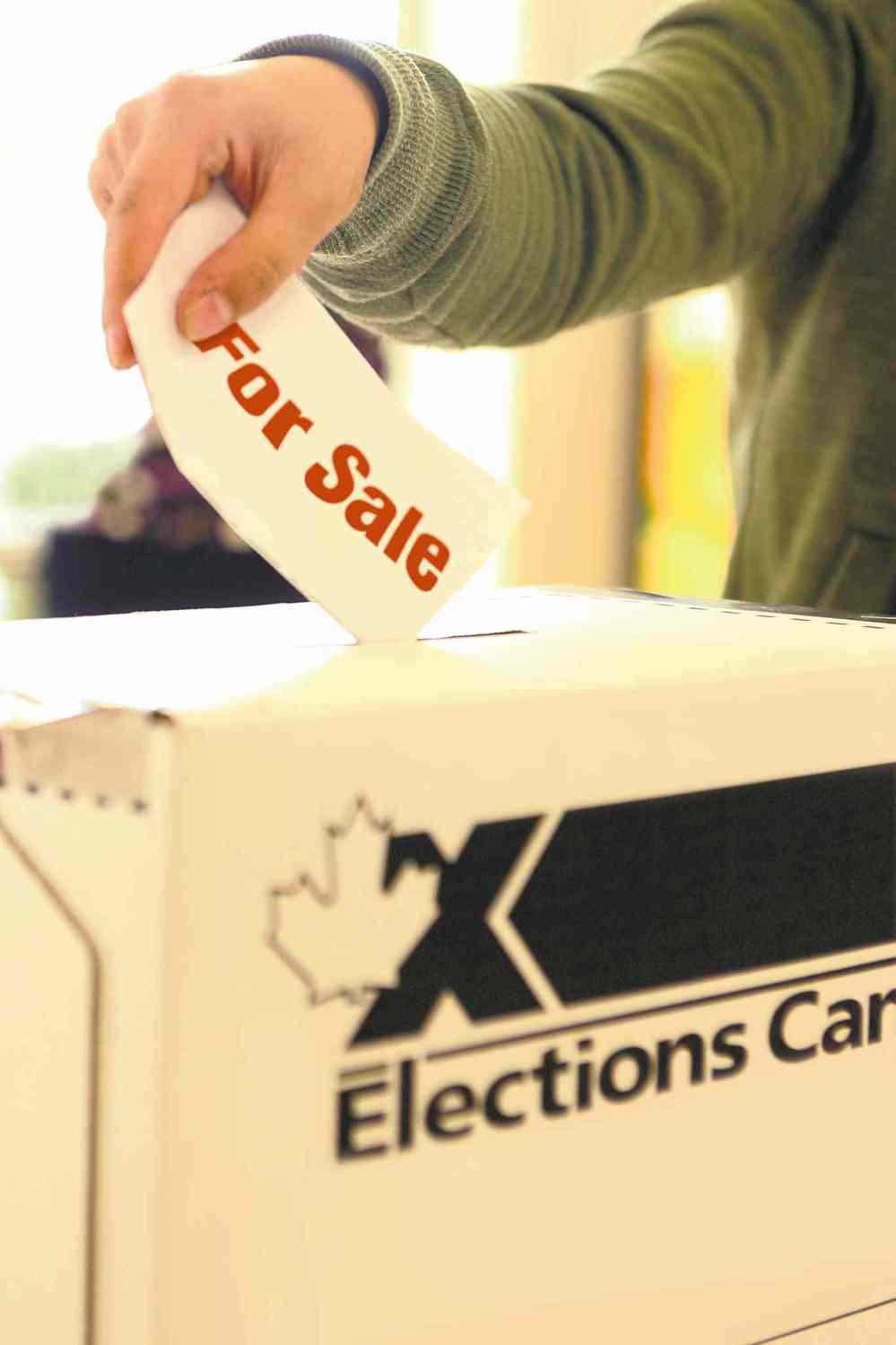
For example, John Laschinger, the national director of the Progressive Conservatives during the 1970s, purchased magazine subscriber lists, and found that Playboy readers were also PC voters. Subscribers were soon receiving PC party literature.
By the early 1980s, and leading up to Brian Mulroney’s 1984 federal election landslide victory, the PCs were working with a direct-mail marketing list of 80,000 names, which yielded $7 million in donations.
This was $1 million more than they spent in the entire 1984 campaign. Significantly, political observers were now talking about the “Big Blue Machine.”
Changes also occurred in the mass media. Prior to the 1990s, the CBC and CTV national news had large mainstream audiences, which became fragmented with the advent of the multichannel universe, which has now been followed by the Internet and social media.
As voters became increasingly harder to reach, political strategists had to become less reliant on mass media campaigns and develop new ways to reach voters, including developing sophisticated databases to track individual voters.
Now, when you speak at the door to a campaign worker, display a lawn sign, respond to a party-sponsored telephone call, send a letter to your member of Parliament, or sign a petition, odds are that the information is entered into a party’s database, and you will now be “graded” according to your support for a particular party.
Delacourt has been covering politics for the Toronto Star for 16 years. Prior to that she worked for the National Post, the Ottawa Citizen and the Globe and Mail.
She has penned three earlier books on political topics: Juggernaut: Paul Martin’s Campaign for Chrétien’s Crown (2003); Shaughnessy, about the late MP Shaughnessy Cohen (2000); and United We Fall: The Crisis of Democracy in Canada.
In 2012, the Ottawa-based Hill Times put her on its list of the top 100 most influential people in government and politics.
In Shopping for Votes, Delacourt shows how all three of the national parties are now using highly sophisticated data analysis and marketing techniques.
The earliest adopters were the Conservatives, with help from the U.S. Republican Party, which built what became known as the Constituent Information Management System (CIMS).
This database helps the party determine which household gets specific promotional materials, fundraising appeals, phone calls and visits from the candidate.
Delacourt is alarmed that information-gathering by some members of Parliament leads to a blurring between party politics and government. For example, it was alleged that names on a petition regarding gay and lesbian rights were used without permission in 2012 by federal Immigration Minister Jason Kenney’s office for a political direct marketing campaign to reach the same individuals.
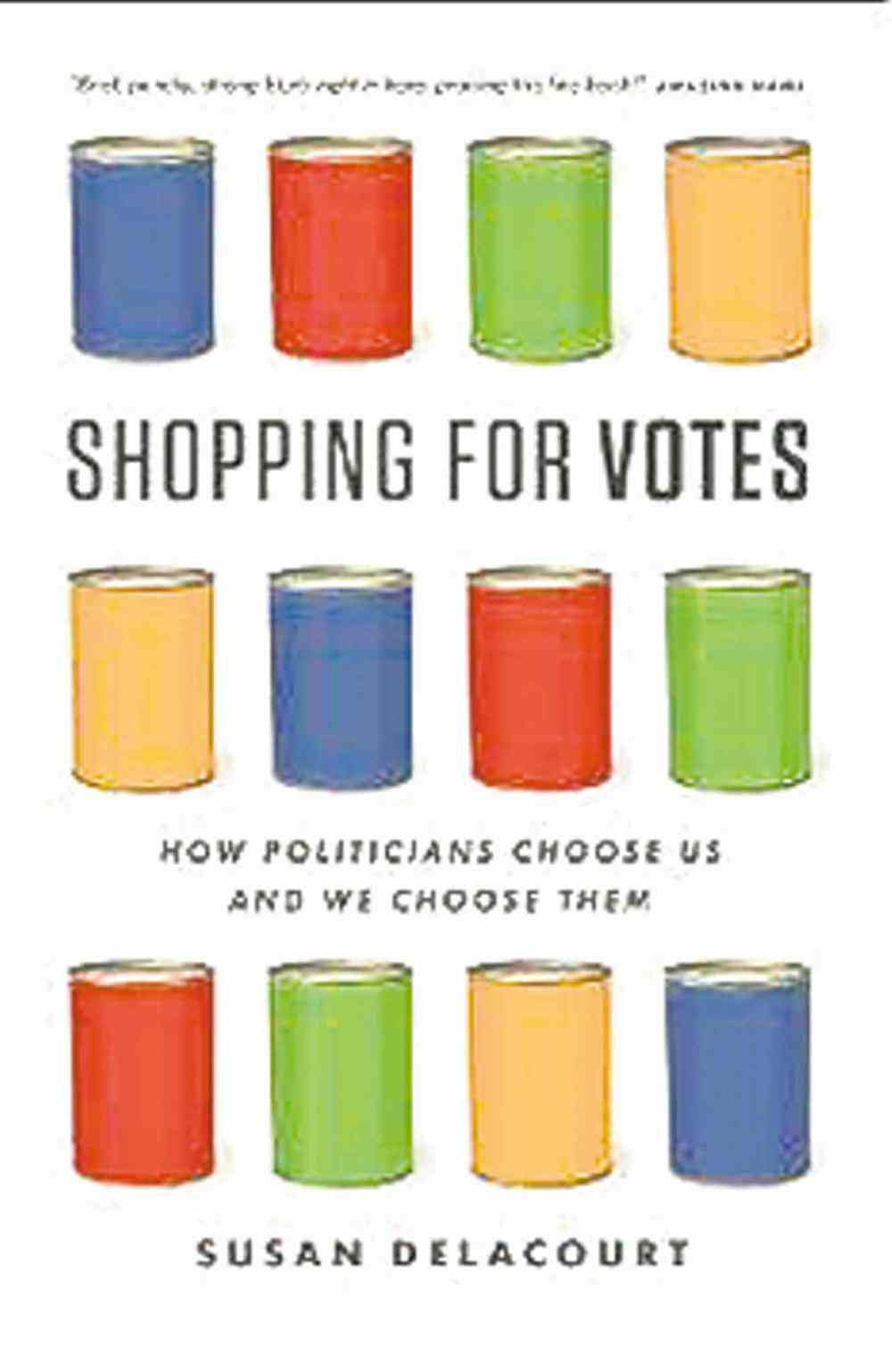
While the major parties are borrowing the same techniques used by Nike and Colgate to reach out to their “consumers,” our laws and electoral regulations exempt politicians from proper oversight. Unlike businesses, parties are free to launch attack ads to sully a competitor’s reputation, they are exempt from being placed on “do not call” telemarketing lists, and they are allowed to build highly detailed databases on private citizens without their knowledge or consent.
Delacourt asks: If businesses are prohibited from such activities, why should we allow political parties to behave this way?
One has to worry about what all this intensive data-gathering is having on our democratic system.
After reading Shopping for Votes, one might fear signing a petition on a contentious issue or putting up a sign for an opposition party’s candidate.
After all, whose hands will sensitive political information get into? For example, how might the awarding of a government grant to a community group be affected if it is known how its board members voted in the last election?

Delacourt points out the irony that the ruling Conservatives have dismantled the gun registry and the long-form census owing to privacy rights, while, at the same time, the privacy rights of Canadians are compromised each day by the data-gathering of our federal parties.
Shopping for Votes is an important and well-written political study for those who follow Canadian politics and the way our votes are now shaped.
It provides fresh, yet disturbing, insights into citizenship and political marketing.
Christopher Adams is a Winnipeg political scientist and author who worked in the polling industry for 18 years. He is currently the rector of St. Paul’s College at the University of Manitoba.