Displaced and orphaned, Somali’s traumatic tale traced across Africa

Advertisement

Advertise with us

In May 2008 Asad Abdullahi was attacked, his business was destroyed and he lost almost everything in a wave of bloody xenophobic attacks on African immigrants by local black South Africans.

Read this article for free:


or

Already have an account? Log in here »

To continue reading, please subscribe:

Subscribe and receive a limited-edition Free Press branded hat or tote.

Digital Subscription

One year of digital access for only $205*

  • Enjoy unlimited reading on winnipegfreepress.com
  • Read the E-Edition, our digital replica newspaper
  • Access News Break, our award-winning app
  • Play interactive puzzles

*First annual payment billed as $205.00 + GST for one year. This annual subscription will automatically renew at $233.00 + GST every 52 weeks (10% off the regular annual price of $259.35). Offer available to new and qualified returning subscribers only. Cancel any time.

To continue reading, please subscribe:

Add Free Press access to your Brandon Sun subscription for only an additional

$1 for the first 4 weeks*

  • Enjoy unlimited reading on winnipegfreepress.com
  • Read the E-Edition, our digital replica newspaper
  • Access News Break, our award-winning app
  • Play interactive puzzles
Start now

*Your next Brandon Sun subscription payment will increase by $1.00 and you will be charged $17.95 plus GST for four weeks. After four weeks, your payment will increase to $24.95 plus GST every four weeks.

Hey there, time traveller!
This article was published 07/03/2015 (4179 days ago), so information in it may no longer be current.

In May 2008 Asad Abdullahi was attacked, his business was destroyed and he lost almost everything in a wave of bloody xenophobic attacks on African immigrants by local black South Africans.

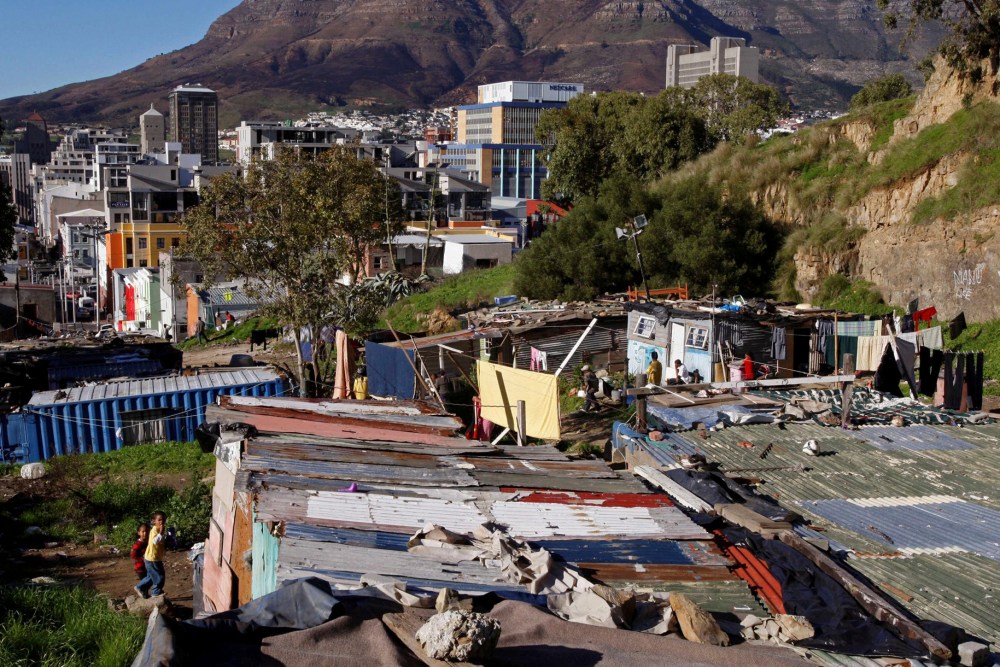
Asad was a Somali orphan from Somalia who had scratched and clawed his way to becoming a successful shop owner in the shantytowns of South Africa. The violence left him living in a refugee camp — again — and having to start over. Again.

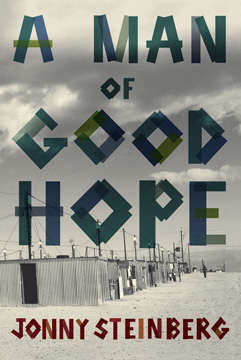
In his latest book of non-fiction, South African academic Jonny Steinberg digs deep to showcase Asad’s life against a backdrop of war, human trafficking and racism.
Schalk van Zuydam / The Associated Press files
Asad Abdullahi's story begins in Somali territory, making its way to the shantytowns of South Africa after he is orphaned.
Schalk van Zuydam / The Associated Press files Asad Abdullahi's story begins in Somali territory, making its way to the shantytowns of South Africa after he is orphaned.

The story is about Asad’s physical journey and, just as importantly, his psychological journey. When he was eight, soldiers shot and killed his mother, his father was kidnapped and he never saw his family again.

He grew up an orphan on the street, “a stone on the road anybody could just come along and kick.”

Steinberg’s fascination with Asad’s life, and their lengthy interview sessions, are an integral part of the story.

Asad would only do the interviews, over the space of months, in a car parked away from his home. He refused to have a white man draw unsavoury attention to his business and his family. In the car he could keep a 360-degree lookout for thugs with guns — a constant threat for Somalis running a neighbourhood store.

Steinberg breaks up Asad’s extremely compelling story with introspective moments where he questions his role as biographer. At one point in the car, Asad was recollecting the period where his wife had taken their children back home to family in Somaliland. Steinberg pushes Asad to admit he knew they were not his priority.

When Asad reacts angrily, Steinberg asks himself: “Who on earth am I to second-guess a man’s feelings about the woman and children he just lost? How can I presume to see that far into a person’s inner world?”

Those are pivotal questions for a biographer — and for readers. Again and again Steinberg reveals moments where the mere fact of having his story recorded is shaping the way Asad is telling it.

Steinberg travels to all the places Asad can remember on his long journey from Somali to South Africa. He walks the same streets, stops in the same café, and talks to the people who might remember the young orphan Asad.

Steinberg finds some inconsistencies — moments where he realizes Asad either does not accurately remember or is modifying his past as he goes.

Asad’s not alone. Recently, Shin Dong-hyuk, one of the most well-known North Korean defectors, admitted there were some inaccuracies in his bestselling memoir Escape from Camp 14. Some activists, readers and supporters were initially angry. But experts are defending Dong-hyuk, saying victims of trauma often recast details as a form of emotional protection.
It is eye-opening to see a biographer and his subject confront the effects of trauma and to see the interview process unfold on the page.

Steinberg gives the reader Asad’s perspective on his life, and then filters it through his own experience as a white South African who knows very little about the world of refugees and human trafficking.

And that world is huge. On one hand the book is Asad’s story: a very deeply personal look at life as a nationless orphan, bounced from refugee camp, to street hovels, to the homes of distant clan members, and his determination to make something of his life.

But Steinberg also puts Asad’s story in context of a world of displaced people struggling to survive war, poverty and corruption. Asad’s journey from Ethiopia to South Africa, at the mercy of human smugglers, is nail-biting. Then Steinberg zooms out the microscope for an incredibly well-researched big picture of life for migrants and refugees.

But ultimately, as the title implies, A Man of Good Hope is a book about the driving force of hope. And Asad’s life more than lives up to Steinberg’s fascination.


Joanne Kelly is a journalism instructor at Red River College. She talks books on CBC’s Weekend Morning Show and hosts a public book club at McNally Robinson. You can follow her on Twitter @joannemkelly.
Report Error Submit a Tip

More Stories

It’s one thing to climb aboard rail-relocation train, quite another to pay for the ride

Dan Lett 5 minute read Preview

It’s one thing to climb aboard rail-relocation train, quite another to pay for the ride

Dan Lett 5 minute read Wednesday, Aug. 12, 2026

Anyone who wants a brighter, safer, healthier future for the city of Winnipeg should really want the renewed hopes of rail relocation to finally become reality. And the sooner, the better.

Premier Wab Kinew announced Wednesday the province was going to forge a plan to relocate the Canadian Pacific Kansas City central yards and many of other the lines that run through Winnipeg to a bypass that runs around the city.

This “plan to design a plan” strategy was devised by a task force headed up by former federal MP and cabinet minister Lloyd Axworthy, who in 2024 was given a two-year mandate to find the best way to rid the city of some or all of its rail infrastructure.

For the record, Kinew and Axworthy said a relocation would likely take 20 years to complete, which makes this week’s announcement an important statement of intent, but little more. The sobering reality is that this promising idea has been proposed by political leaders, and then abandoned, for decades.

Read
Wednesday, Aug. 12, 2026

Coalition dismayed after U of M decides not to establish master’s in speech-language pathology

Maggie Macintosh 5 minute read Preview

Coalition dismayed after U of M decides not to establish master’s in speech-language pathology

Maggie Macintosh 5 minute read 4:46 PM CDT

A new coalition representing students who stutter, speak with a lisp and struggle with other speech challenges is decrying the University of Manitoba’s decision to shelve plans to train in-demand clinicians.

U of M recently scrapped a proposal to establish a master of speech-language pathology — a program that exists only outside the province.

“It’s hard to provide the support that students deserve and support teachers and school teams and families with our large caseloads,” said Allison Sexton, a speech-language pathologist who works in the public education sector.

Sexton is one of the organizers behind a campaign that is ramping up ahead of back-to-school season to raise awareness about a chronic shortage of experts in her field and related wait lists.

Read
4:46 PM CDT

Psychologist sentenced to house arrest after affair with patient

Dean Pritchard 4 minute read Updated: Yesterday at 5:31 PM CDT

A psychologist who didn’t disclose her sexual affair with a mental-health patient under her care when she testified on his behalf before the Criminal Code Review Board has been sentenced to 18 months house arrest.

Wyatt vows to ‘absolutely’ continue serving as city councillor despite latest sex-crime charges

Joyanne Pursaga 5 minute read Preview

Wyatt vows to ‘absolutely’ continue serving as city councillor despite latest sex-crime charges

Joyanne Pursaga 5 minute read Updated: Yesterday at 5:35 PM CDT

Transcona Coun. Russ Wyatt vowed Thursday to continue doing his job after more criminal charges were laid against him this week, while the mayor called for “better tools” to address elected officials who face serious allegations.

Wyatt, 56, was charged Monday with sexual assault and administering a noxious substance in an October 2023 incident. He was previously charged with sexual assault and administering a noxious substance in March, based on allegations tied to a 2025 gathering.

On Thursday, Wyatt arrived at city hall and quickly walked to his office at 10:20 a.m., nearly an hour after the East Kildonan-Transcona community committee meeting he planned to attend was scheduled to begin.

He answered few questions from reporters.

Read
Updated: Yesterday at 5:35 PM CDT

Safety upgrades at Whiteshell park to begin soon

Free Press staff 2 minute read Preview

Safety upgrades at Whiteshell park to begin soon

Free Press staff 2 minute read 7:06 PM CDT

Construction on safety improvements at a site where two boys drowned in Whiteshell Provincial Park will soon get underway.

The improvements, which include new barriers and fenced lookouts, signage and a new portage for kayakers and canoeists at Sturgeon Falls, was promised by the province after the deaths of brothers Maximo Au Ramirez, 10, and Aaron Au Ramirez, 13, who went missing in Nutimik Lake on July 18.

The province said in a news release Friday the upgrades would begin shortly.

“We have a responsibility to do everything we can to make this site safer and to prevent another family from going through this kind of heartbreak,” said Environment Minister Mike Moyes in the release. “These measures will make the Sturgeon Falls area safer and ensure that Manitobans and visitors are protected when the area reopens.”

Read
7:06 PM CDT

Around the NSL: Quarterfinal upset; Wild win; Rapid still human

Grace Anne Paizen 5 minute read Preview

Around the NSL: Quarterfinal upset; Wild win; Rapid still human

Grace Anne Paizen 5 minute read 7:50 PM CDT

Oh, the drama in the week that was.

The quarterfinals of the inaugural W Canadian Championship have been a wild ride since the Calgary Wild shut out CS Mont-Royal Outremont 4-0 on Aug. 5. The development this week? The NSL’s second-best team dropped a 1-0 decision to semi-pro Simcoe County Rovers FC on Wednesday in front of a hometown crowd at Stade Boréale.

Club backlash over the loss has been swift as the Montreal Roses promptly fired manager Robert Rositoui on Thursday. First assistant coach Maryse Bard-Martel has been placed as the interim bench boss until a new head coach is hired.

Rositoui was the club’s inaugural head coach, who led the Roses to a semifinal berth in Montreal’s inaugural season. It’s a shock that after a loss in a knockout tournament would amount to his firing — but the club claims a “new spark” is needed.

Read
7:50 PM CDT