

Divide and conquer
Conservatives playing to anti-Muslim fears to win election
Advertisement
Read this article for free:
or
Already have an account? Log in here »
To continue reading, please subscribe:

Digital Subscription
One year of digital access for only $205*
- Enjoy unlimited reading on winnipegfreepress.com
- Read the E-Edition, our digital replica newspaper
- Access News Break, our award-winning app
- Play interactive puzzles
*First annual payment billed as $205.00 + GST for one year. This annual subscription will automatically renew at $233.00 + GST every 52 weeks (10% off the regular annual price of $259.35). Offer available to new and qualified returning subscribers only. Cancel any time.
To continue reading, please subscribe:
Add Free Press access to your Brandon Sun subscription for only an additional
$1 for the first 4 weeks*
- Enjoy unlimited reading on winnipegfreepress.com
- Read the E-Edition, our digital replica newspaper
- Access News Break, our award-winning app
- Play interactive puzzles
*Your next Brandon Sun subscription payment will increase by $1.00 and you will be charged $17.95 plus GST for four weeks. After four weeks, your payment will increase to $24.95 plus GST every four weeks.
Read unlimited articles for free today:
or
Already have an account? Log in here »
Hey there, time traveller!
This article was published 10/10/2015 (3994 days ago), so information in it may no longer be current.
OTTAWA — It was supposed to be an election about change, leadership and the economy.
Instead Canadians have been treated to 10 weeks of political posturing, social media stupidity and a divisive debate about niqabs and “barbaric cultural practices” that have shone a light on a not-so-pleasant undercurrent of anti-Muslim sentiment.
Tim Powers, a Conservative strategist and vice-chairman of Summa Strategies, told the Free Press in an interview this week the election has been so long, a number of issues have dominated at different points. There was the fraud trial for Sen. Mike Duffy for a few weeks in August; the recession and then the surplus at the beginning of September; and the refugee crisis after the photo of a three-year-old lying dead on a beach in Turkey wrenched hearts around the globe.
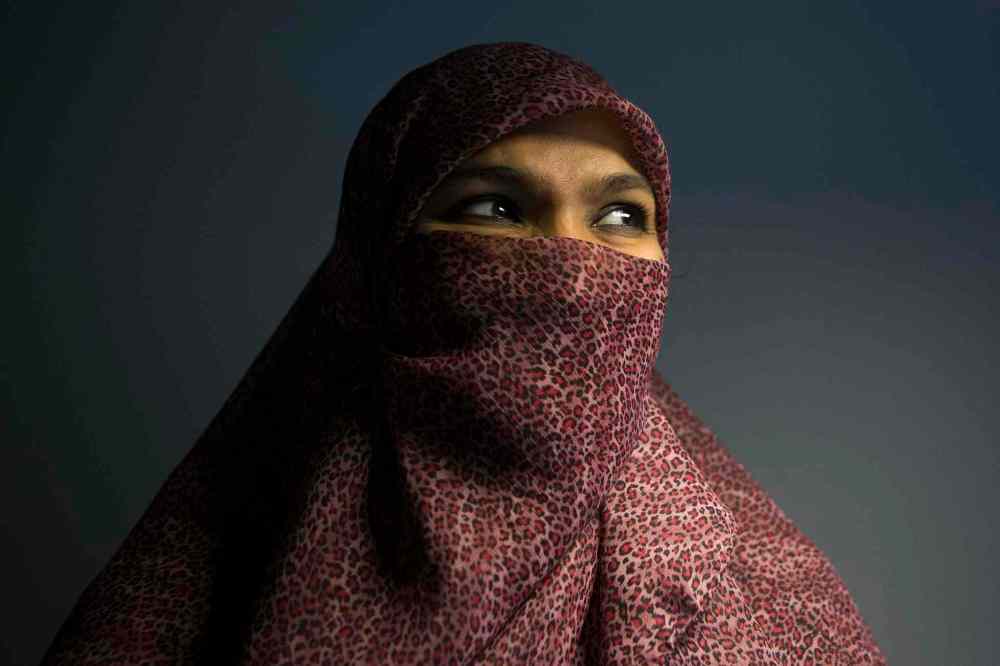
The wearing of the niqab is just one chapter, said Powers.
He acknowledges the Conservatives used this issue deftly to gain votes, but he said “The other parties didn’t shy away from it either.”
“This is posturing from all sides,” he said, driven by the fact voters are more easily swayed by emotion than logic.
And he said the Conservatives took the niqab issue out to play for one simple reason.
While no polls suggest a majority of Canadians agree with Harper on his tax policies or his economic management, more than eight in 10 agree women should have to remove the niqab at a citizenship ceremony. That number is 93 per cent in Quebec and comes from a Leger poll commissioned by Harper’s office last winter.
“It’s quite fascinating the public’s agreement on this,” said Powers.
Identity politics had already emerged as an issue in this election before the niqab and the Syrian refugee crisis, but it wasn’t until the Federal Court of Appeal ruled Sept. 15 Zunera Ishaq could wear her niqab to take her citizenship oath that things started to turn more divisive.
The Conservatives promptly promised to appeal to the Supreme Court to uphold a policy they put in place in 2011 barring niqabs from citizenship ceremonies. Within a week, the Conservatives had almost doubled their support in Quebec and had regained the ground they lost elsewhere in August over the Duffy affair and the recession.
The NDP and Tom Mulcair, on the other hand, began to slip. The NDP won 59 of Quebec’s 75 seats in 2011 and had dominated in Quebec polls ever since. They were more than 20 points up on their nearest opponent when the niqab issue arose. Now, most polls have the NDP down 20 points or more (although admittedly, it’s still a close race. However, polls indicate it’s increasingly a two-way, rather than a three-way race, like it was before the niqab issue).
Prime Minister Stephen Harper said it was the other parties, not him, who were fanning the niqab flames. However, even as he was claiming to not be the one pushing the subject, his party was launching a new attack ad against Liberal Leader Justin Trudeau, saying Trudeau is offside with Quebec values over the niqab issue.
Harper also promised a special RCMP unit in several cities, including Winnipeg, to investigate “barbaric cultural practices” such as female genital mutilation or forced marriages, and will create an RCMP tip line for people to report their neighbours for such crimes.
Earlier this week, he said he would look at replicating a Quebec law that seeks to bar public servants from wearing a niqab at work.
All of this has taken centre stage in his platform, yet it affects very few people. Only two women have ever asked to wear a niqab at a citizenship ceremony since 2011. Union leaders say there are no women at all who wear a niqab to work in the federal public service. The vast majority of Muslim women in Canada do not wear a niqab.
Karen Busby, director of the Centre for Human Rights Research at the University of Manitoba, said she sees these promises as a direct attempt to play on anti-Muslim feelings that clearly exist.
“We should expect our government to lead by example, and it’s just disgusting what they are doing,” she said.
In 2013, an Angus Reid poll showed two-thirds of Quebecers and more than half of those in the rest of Canada had an unfavourable view of Islam. There have been a number of anti-Islamic incidents, ranging from bricks thrown at mosques to women in hijabs being assaulted on the street.
Busby said this sentiment should be discouraged by a government, but that is not what is happening.
She noted this government two years ago created the Office of Religious Freedom, which has a mandate to “protect and advocate on behalf of religious minorities under threat, oppose religious hatred and intolerance and promote Canadian values of pluralism and tolerance abroad.”
“I mean, OK, come on you guys; walk the walk at home,” she said.
There are many who think the presence of Australian political strategist Lynton Crosby is at the root of the Conservative plan on this. Crosby, hired by the Conservatives last winter, has successfully used wedge issues, including fear of Muslims, to help propel his clients to victory in Australia and Great Britain.
But Powers said Crosby’s presence isn’t the only factor behind the choices the Conservatives have made.
“I’m sure Mr. Crosby welcomes the assessment that he’s a genius, but the Conservatives were focused on this before,” said Powers.
Powers also said the debate is not as simplistic as saying people who think niqabs don’t belong at citizenship ceremonies are anti-Muslim.
“To a lot of people, this isn’t a rights issue; it’s a common-sense issue,” said Powers.
To many Canadians, he said, it just seems nonsensical someone can swear an oath of citizenship without anyone being able to see them actually doing it.
But also interesting is while both opposition party leaders disagree with Harper, it has only hurt one of them. Mulcair’s numbers have tanked. Trudeau’s have not. In fact, his party is leading or tied in most polls heading into the final week, when it started out in third place.
Mulcair, said Powers, treated the issue like a legal conundrum, and while he said he doesn’t like the niqab, the courts have ruled. Trudeau, on the other hand, talked about it from a perspective of human rights and tolerance.
“No election is worth pitting Canadians against Canadians,” Trudeau said earlier this week at an event in London, Ont.
Powers said Trudeau has been more skilful than Mulcair at appealing to Canadians’ sense of equality and multiculturalism.
The other underlying dispute over the niqab isn’t about race, it’s about feminism. Harper has worked hard to bill this debate as one in which accepting niqabs is to accept the suppression of the women who wear them.
Last spring, he referred to niqabs as anti-Canadian and “anti-women.” During the first French leaders debate in September, Harper said “Never will I tell my young daughter a woman has to cover her face because she is a woman.”
Defence Minister Jason Kenney recently said niqabs represent “a misogynistic view of women.”
Busby said it has led to a difficult debate in Canada’s feminist community, but she said ultimately, most people think telling a woman what she can’t wear is no better than telling her what she has to wear.
“Almost all feminists in Canada take the viewpoint that women should be able to wear what they want,” she said.
Busby, herself, is conducting research on Muslim women in Winnipeg that has found very few Muslim women say they are oppressed, or know women who wear head coverings or face coverings because they are told to do so. In fact, most women choose to do so themselves.
“This whole debate is based on a faulty premise that Muslim men are violent, and Muslim women are subjugated,” she said.
A 2013 study for the Canadian Council of Muslim women, which surveyed women who wear niqabs, found the typical woman who wears a niqab is married, in her 20s or early 30s, born outside of Canada but didn’t start wearing a niqab until she arrived here. They are also highly educated and say they choose to wear a niqab because it gives them confidence and security.
Ishaq, the woman who sued the government to wear her niqab to swear her citizenship oath, last week said her family wanted her not to wear the niqab, but after reading about it and thinking about it, she decided she wanted to do so.
Nevertheless, this issue seems like it might be driving at least part of this election.
Powers said from his standpoint, he’d advise the Conservatives to quit while they’re ahead.
“If you continue to push buttons, you have the potential to get a reaction you don’t want,” he said. “You’ve made your point.”
mia.rabson@freepress.mb.ca
Related Articles
Liberals win 4th mandate as NDP vote collapses and Singh announces he will resign





Advertisement Advertise With Us
Advertisement Advertise With Us