WEATHER ALERT

Viola the vanguard

Desmond's plight highlights a history of segregation in Canada

Advertisement

Advertise with us

In 1946, Viola Desmond, a young Halifax beautician and businesswoman, walked into the Roseland Theatre in New Glasgow and sat downstairs in the "whites only" section. She was arrested.

Read this article for free:

or

Already have an account? Log in here »

To continue reading, please subscribe:

Subscribe and receive a limited-edition Free Press branded hat or tote.

Digital Subscription

One year of digital access for only $205*

  • Enjoy unlimited reading on winnipegfreepress.com
  • Read the E-Edition, our digital replica newspaper
  • Access News Break, our award-winning app
  • Play interactive puzzles

*First annual payment billed as $205.00 + GST for one year. This annual subscription will automatically renew at $233.00 + GST every 52 weeks (10% off the regular annual price of $259.35). Offer available to new and qualified returning subscribers only. Cancel any time.

To continue reading, please subscribe:

Add Free Press access to your Brandon Sun subscription for only an additional

$1 for the first 4 weeks*

  • Enjoy unlimited reading on winnipegfreepress.com
  • Read the E-Edition, our digital replica newspaper
  • Access News Break, our award-winning app
  • Play interactive puzzles
Start now

*Your next Brandon Sun subscription payment will increase by $1.00 and you will be charged $17.95 plus GST for four weeks. After four weeks, your payment will increase to $24.95 plus GST every four weeks.

Hey there, time traveller!
This article was published 06/02/2016 (3824 days ago), so information in it may no longer be current.

In 1946, Viola Desmond, a young Halifax beautician and businesswoman, walked into the Roseland Theatre in New Glasgow and sat downstairs in the “whites only” section. She was arrested.

Forcibly removed from the theatre by the male manager and a police officer, she was hauled to the county jail where she remained in a small cell overnight. Brought before a local judge the next day, she was found guilty of “not paying the one-cent difference in the tax between the seats in the two sections of the theatre.”

More than a half a century later, in 2010, Nova Scotia granted an apology and free pardon to Desmond, who died in 1964 at the age of 50.
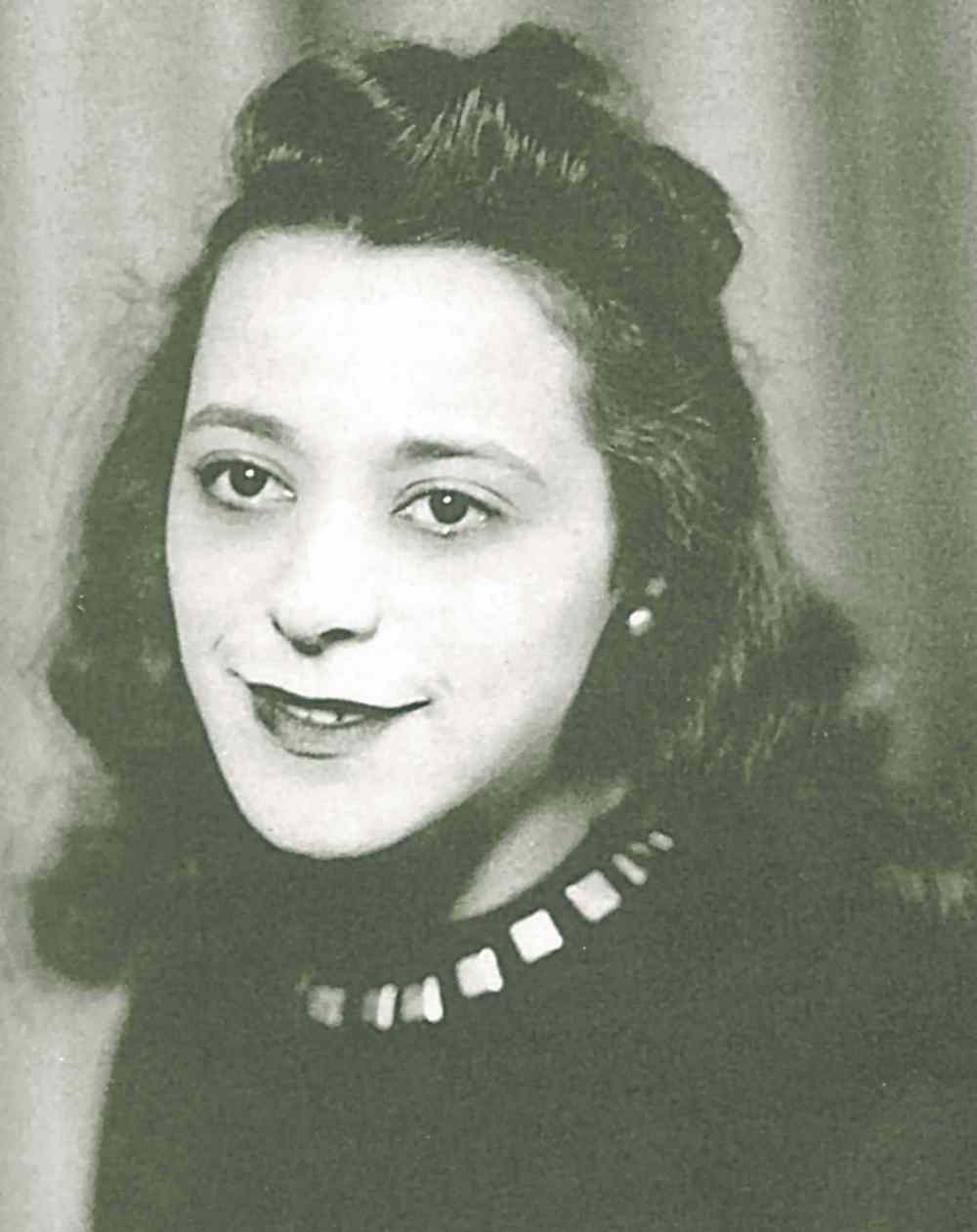
Supplied photo
Desmond's 1946 movie-theatre arrest came nine years before Rosa Parks' more famous U.S. bus protest.
Supplied photo Desmond's 1946 movie-theatre arrest came nine years before Rosa Parks' more famous U.S. bus protest.

Desmond’s refusal to move from the “whites only” section took place nine years before Rosa Parks’ famous refusal in the United States, but still today many Canadians are unfamiliar with Desmond’s story or even that racial segregation, the Ku Klux Klan and slavery existed in Canada.

That’s the gist of Graham Reynolds’ scholarly, informative contribution to African-Canadian history, which documents the segregated Canada that Desmond grew up in.

A professor of history at Cape Breton University, Reynolds collaborated with Desmond’s younger sister, Wanda Robson, whose personal story and the way it intertwines with her sister’s is also included.

The slender volume is being published just in time to coincide with Black History Month, celebrated in February in both Canada and the U.S.

Far from a light read, the first two chapters are fairly academic in tone, and are densely packed with facts and details. Each chapter is followed by copious notes, and numerous references are listed at the end.

Thankfully, an abundance of historic documents, old photos, letters and newspaper articles support and enhance the narrative.

“What Canadians do know is often the American example,” says Reynolds. Canadians may know of the Underground Railroad, for example, but “very little, if any, attention is given to the larger context of this history, particularly to the struggle among former slaves and other black immigrants” and the “discrimination and segregation that they experienced after arriving in Canada.”

Reynolds begins by tracing some of the history of slavery from its establishment “under French rule in the 18th century” to the Underground Railroad of the 19th century. “The French, along with the British, Dutch, Spanish and Portuguese were major players in the slave trade,” he says, with the importation of African slaves to Canada beginning in 1687.

Reynolds notes newspapers in Lower Canada, as early as 1752, carried advertisements for slaves. One ad that year listed six slaves for sale, among them young boys “healthy and well shaped” and a female “negro wench… Creole born.”

He describes the arrival of Loyalist slaveholders to Nova Scotia, discusses the defence of slavery in America and quotes Thomas Jefferson as saying that blacks were “inferior to the whites in the endowments of both body and mind.”
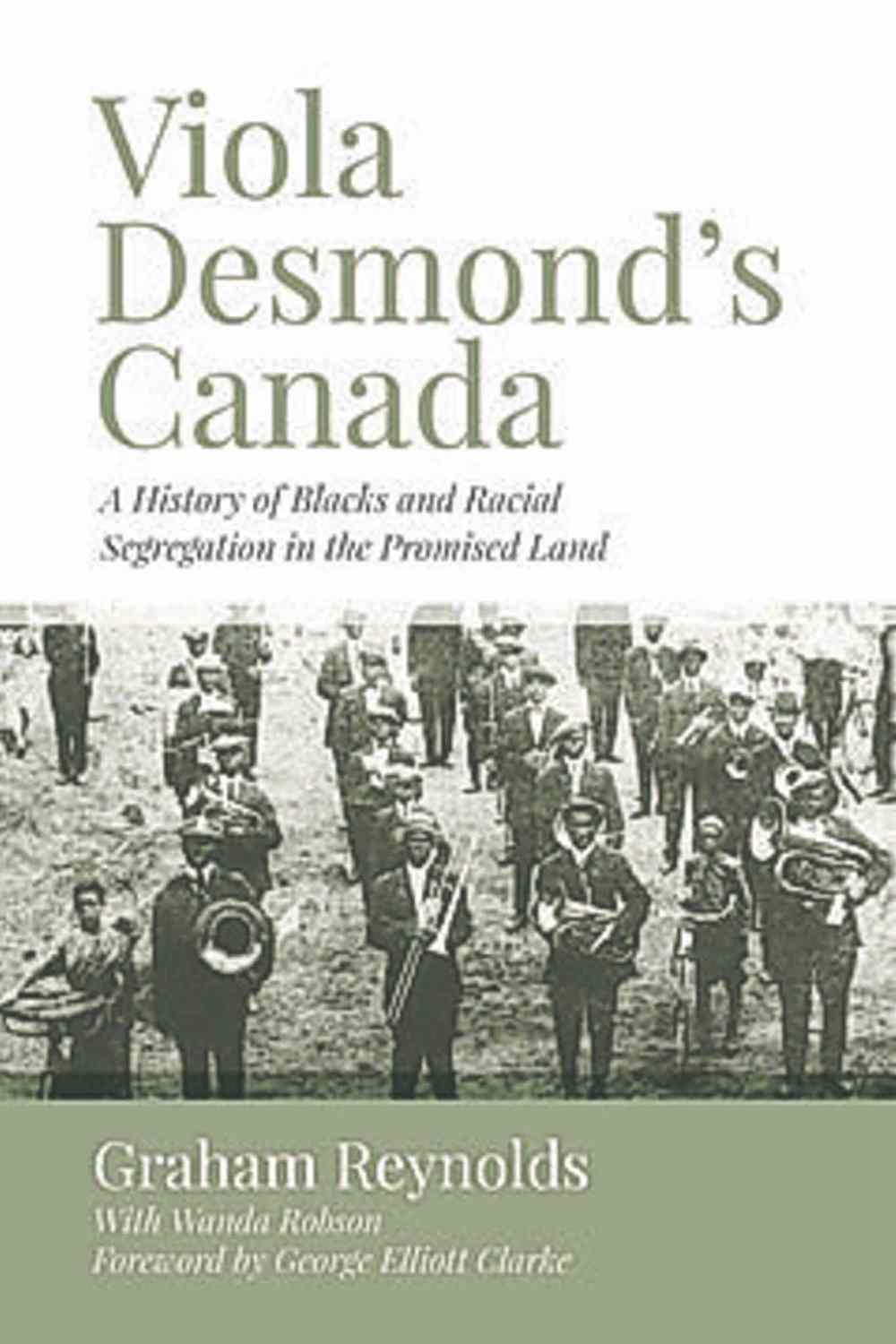
Slavery was abolished by the British Empire in 1834 but racism continued long after, he explains, with segregation being practised unevenly in Canadian schools, theatres, restaurants, hotels and many other public places.

He focuses to a large extent on Nova Scotia, where Viola Desmond and many African-Canadians lived, but also on parts of Ontario. Dresden, Ont., he notes, was the subject of an exposé by Maclean’s in 1949 and was “infamous as one of Canada’s most visibly racist communities.” In Dresden, Reynolds notes, blacks were not allowed to enter hotels, restaurants, regular barber shops or churches at all.

In later chapters Reynolds describes the “dramatic growth of the Ku Klux Klan which reached its peak during the late 1920s.” He also describes Pearleen Oliver and her pioneering efforts to allow black women into nursing schools in Canada.

Reynolds explores a dark chapter of Canada’s past, much of which is eye-opening and disturbing. The stories of Viola Desmond and Pearleen Oliver are perhaps the most accessible, but the book’s more scholarly beginning, once navigated, provides much valuable background to anyone interested in Canadian history.


Cheryl Girard is a Winnipeg writer.
Report Error Submit a Tip

More Stories

An eroding Winnipeg neighbourhood looks to new foundations

Ian Bickis, The Canadian Press 6 minute read Preview

An eroding Winnipeg neighbourhood looks to new foundations

Ian Bickis, The Canadian Press 6 minute read Updated: Yesterday at 8:32 PM CDT

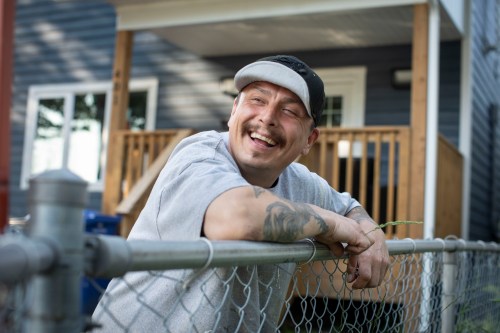
WINNIPEG - The lot Jesse Bettcher lives on in Winnipeg's north end used to be a pile of burnt rubble. Same with the one next door. And the one across the street.

But he's now the proud owner of a two-storey house with blue-grey siding and white trim, so new the orange construction fencing is still out front.

It's a dream home for Bettcher, and the latest hope for a city seeking to knock down, clean up and revitalize neighbourhoods that have seen hundreds of homes left vacant, leading to safety hazards and worries about the future.

He bought the house as part of a pilot project aimed at creating affordable home ownership. It let him and his family move out of a rental that he said was falling apart.

Read
Updated: Yesterday at 8:32 PM CDT

What are we teaching children at the rodeo?

Danae Tonge 5 minute read 2:01 AM CDT

Every summer in Manitoba, rodeo season brings thousands of children to local rodeos and the Manitoba Stampede. They arrive with cowboy hats and cotton candy in hand, excitement in their eyes.

Yet, as a mother who works in education, I can’t help but wonder: what are we teaching them in those stands?

Inside classrooms, we teach children that kindness matters. We encourage empathy, discourage bullying and ask students to consider how their actions affect others. Students are taught that animals experience fear, pain and distress, just like us. Yet when school ends, we celebrate events built around chasing, restraining, roping and riding animals for entertainment.

This contradiction is difficult to ignore.

Vacant Bay store on road to redevelopment, St. Vital Centre owner says

Gabrielle Piche 6 minute read Preview

Vacant Bay store on road to redevelopment, St. Vital Centre owner says

Gabrielle Piche 6 minute read Friday, Jul. 24, 2026

Entertainment attractions are coming to fill the former Hudson’s Bay space in St. Vital Centre.

Montreal-based real estate firm Leyad, the south Winnipeg mall’s owner, says it is finalizing an agreement for the vacant property. Further details should appear in the next couple months, said president Henry Zavriyev.

“We’re looking at what other types of experiences we can bring to the mall that aren’t just typical retail,” he said during a visit to Winnipeg this week.

“We want to create an experience where you can just come to the mall, hang out here for hours, no matter if you’re a kid, an adult, a retiree.”

Read
Friday, Jul. 24, 2026

Ref ‘dominates’ game in Sea Bears loss to Honey Badgers, says coach

Joshua Frey-Sam 7 minute read Preview

Ref ‘dominates’ game in Sea Bears loss to Honey Badgers, says coach

Joshua Frey-Sam 7 minute read Saturday, Jul. 25, 2026

Following a festive Christmas-in-July-themed Saturday afternoon inside Canada Life Centre, Winnipeg Sea Bears head coach Mike Raimbault didn’t mince words about who he thought was the Grinch in a hard-fought 88-86 loss to the visiting Brampton Honey Badgers that ended in controversy.

As the Sea Bears owned a one-point lead in Target Score Time, Brampton guard Sean East II was awarded three free throws — all of which he converted — after a questionable foul called on Teddy Allen by official Perry Stothart.

Raimbault, who has been known to bite his tongue on such topics, left nothing to the imagination about where he stood on the game-deciding judgment made in a game that had major post-season implications.

“I just felt like it was a fitting ending to the game where Perry Stothart had dominated the flow of the game from the start,” he said. “For him to call a bit of a guess foul and end the game on the foul, I felt like it’s disappointing that he can come in and dictate how the game’s going to be played and flow, and (that) continues to be a bit of an M.O. for him. So I think we’re disappointed with the fact that the league continues to let that happen.”

Read
Saturday, Jul. 25, 2026

Automation reaches new heights on farm

Laura Rance-Unger 4 minute read Preview

Automation reaches new heights on farm

Laura Rance-Unger 4 minute read Saturday, Jul. 25, 2026

LANGHAM, Sask. — The thousands of farmers from across the Prairies who flock to the annual Ag in Motion show every July seem oblivious to the possibility the technology on display could one day replace many of them.

Families with children in tow, Hutterite colony workers, grandparents and young couples just starting out roamed through the 600 or more exhibitor displays, amazed at how everything about farming just keeps getting bigger, more efficient and increasingly more automated.

It’s now possible to seed using a 100-foot-wide drill — a 12-foot jump over the widest available a few years ago — provided the farmer can afford a tractor with enough horsepower to pull it. Those sell for around $850,000 and up.

Granted, the number of farms with enough acres to justify that kind of width and drawing power is still relatively small, but farms continue to grow. And it’s no secret the number of people who have the interest, skills and financial wherewithal to run them continues to shrink.

Read
Saturday, Jul. 25, 2026

Viola the vanguard

Reviewed by Cheryl Girard 4 minute read Preview

Viola the vanguard

Reviewed by Cheryl Girard 4 minute read Saturday, Feb. 6, 2016

In 1946, Viola Desmond, a young Halifax beautician and businesswoman, walked into the Roseland Theatre in New Glasgow and sat downstairs in the "whites only" section. She was arrested.

Forcibly removed from the theatre by the male manager and a police officer, she was hauled to the county jail where she remained in a small cell overnight. Brought before a local judge the next day, she was found guilty of "not paying the one-cent difference in the tax between the seats in the two sections of the theatre."

More than a half a century later, in 2010, Nova Scotia granted an apology and free pardon to Desmond, who died in 1964 at the age of 50.

Desmond's refusal to move from the "whites only" section took place nine years before Rosa Parks' famous refusal in the United States, but still today many Canadians are unfamiliar with Desmond's story or even that racial segregation, the Ku Klux Klan and slavery existed in Canada.

Read
Saturday, Feb. 6, 2016