Humans are leading cause of wildfires in Canada: scientist

Advertisement

Advertise with us

Humans are the leading cause of wildfires in Canada, says a forest fire researcher who believes the latest blaze that has ripped through parts of Fort McMurray, Alta., is no exception.

Read this article for free:


or

Already have an account? Log in here »

To continue reading, please subscribe:

Subscribe and receive a limited-edition Free Press branded hat or tote.

Digital Subscription

One year of digital access for only $205*

  • Enjoy unlimited reading on winnipegfreepress.com
  • Read the E-Edition, our digital replica newspaper
  • Access News Break, our award-winning app
  • Play interactive puzzles

*First annual payment billed as $205.00 + GST for one year. This annual subscription will automatically renew at $233.00 + GST every 52 weeks (10% off the regular annual price of $259.35). Offer available to new and qualified returning subscribers only. Cancel any time.

To continue reading, please subscribe:

Add Free Press access to your Brandon Sun subscription for only an additional

$1 for the first 4 weeks*

  • Enjoy unlimited reading on winnipegfreepress.com
  • Read the E-Edition, our digital replica newspaper
  • Access News Break, our award-winning app
  • Play interactive puzzles
Start now

*Your next Brandon Sun subscription payment will increase by $1.00 and you will be charged $17.95 plus GST for four weeks. After four weeks, your payment will increase to $24.95 plus GST every four weeks.

Hey there, time traveller!
This article was published 04/05/2016 (3799 days ago), so information in it may no longer be current.

Humans are the leading cause of wildfires in Canada, says a forest fire researcher who believes the latest blaze that has ripped through parts of Fort McMurray, Alta., is no exception.

Mike Flannigan, a professor of wildland fires at the University of Alberta, says the fire’s proximity to the city, as well as data that shows there were no lightning strikes in the area, lead him to believe the cause of the fire was likely human.

“And in spring it’s heavily loaded on the side of people-caused fires,” Flannigan said.
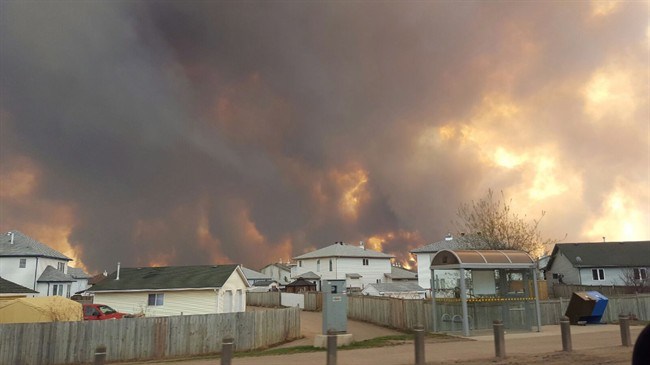
A wall of fire rages outside of Fort McMurray, Alta. Tuesday May 3, 2016 as a wildfire threatened the city. Raging forest fires whipped up by shifting winds sliced through the middle of the remote oilsands hub city of Fort McMurray Tuesday, sending tens of thousands fleeing in both directions and prompting the evacuation of the entire city. THE CANADIAN PRESS/ Mary Anne Sexsmith-Segato

An average of 1,200 wildfires are reported in Alberta each year, and half of those fires are caused by humans, according to the National Fire Database. Lightning is the second-leading cause with 47 per cent.

Officials were still investigating the cause of the latest fire, which remained out of control on Wednesday as it raged around Fort McMurray, a city of about 80,000 people located 435 kilometres northeast of Edmonton.

However, Flannigan said weather conditions in Western Canada have been perfect for wildfires as the warm, dry winter has led to an abundance of dead, dry leaves and wood ready to light up.

“It’s really extreme conditions,” he said, adding that the low humidity and lack of green vegetation combined with windy conditions contributed to the incredibly intense fire in the northern Alberta city.

“Spring fires are common after the snow melts and before things green up and get lush,” Flannigan said.

“There is a two- or three-week window where they occur.”

He said the biggest variable at this point is the wind, which gusted up to 40 km/h on Tuesday, the day the city was evacuated.

“Shifting winds is a challenging problem for fighting fires,” he said. “You want people to be safe and this includes the firefighters and you don’t want to put them in harm’s way.”

A pilot died in 2011 when his firefighting helicopter crashed near Slave Lake, Alta., and another pilot died last year in a water-bomber crash while fighting a wildfire near Cold Lake, Alta. However, there have been no civilian fatalities because of a forest fire since 1938, said Tim Lynham, a forest fire researcher with Natural Resources Canada.

Scientists, however, are worried about the future.

Forest fires are a natural phenomenon, Lynham said, and are beneficial ecologically, returning valuable nutrients to the soil that helps a natural rebirth. He said fires naturally occur in forests every 150 to 250 years.

“But the fires are happening more often so forests might not be able to cope with that and might not be able to regenerate properly,” Lynham said.

Scientists at Natural Resources Canada predict forest fires will double within 50 to 100 years.

Note to readers: This is a corrected story. A previous version had an incorrect surname for Mike Flannigan

Report Error Submit a Tip

More Stories

Humans leading cause of wildfires:scientist

Liam Casey, The Canadian Press 3 minute read Preview

Humans leading cause of wildfires:scientist

Liam Casey, The Canadian Press 3 minute read Thursday, May. 5, 2016

Humans are the leading cause of wildfires in Canada, says a forest fire researcher who believes the latest blaze that has ripped through parts of Fort McMurray, Alta., is no exception.

Mike Flannigan, a professor of wildland fires at the University of Alberta, says the fire's proximity to the city, as well as data that shows there were no lightning strikes in the area, lead him to believe the cause of the fire was likely human.

"And in spring it's heavily loaded on the side of people-caused fires," Flannigan said.

An average of 1,200 wildfires are reported in Alberta each year, and half of those fires are caused by humans, according to the National Fire Database. Lightning is the second-leading cause with 47 per cent.

Read
Thursday, May. 5, 2016

Is another goalie on Jets’ wish list?

Ken Wiebe 7 minute read Preview

Is another goalie on Jets’ wish list?

Ken Wiebe 7 minute read Yesterday at 6:59 PM CDT

Kevin Cheveldayoff and company are down to the short strokes.

With the opening-day roster due on Monday afternoon, the Winnipeg Jets took steps on the weekend to get down to the final number.

As it stood on Sunday, the Jets were down to 24 healthy players in training camp after centre Danny Zhilkin and defenceman Henry Thrun were placed on waivers.

With a maximum of 23 spots available, the only things left to determine are whether the Jets are interested in claiming a more experienced goalie to serve as the backup to Stuart Skinner and if centre Brayden Yager will break camp with the big club.

Read
Yesterday at 6:59 PM CDT

Uncaring hubby fell flat at first hurdle

Maureen Scurfield 4 minute read 2:00 AM CDT

DEAR MISS LONELYHEARTS: I re-rented my favourite summer cabin this fall because I’m trying to finish my thesis. My husband of just over a year was very annoyed with me for going on my own, but didn’t say much about it because I paid.

I thought we were both OK with this arrangement, until I got the flu up at the lake very badly and couldn’t keep anything down. I felt faint. I phoned him and he said he was at a party with the guys. I could hear music and girls laughing.

He wouldn’t come for me, so at 4 a.m. when I was getting even more sick and scared, I drove back to the city unannounced.

I went straight to my parents’ house and pretty much fell through the door. Mom said to me when she grabbed me: “This is not right. You could have died in the ditch. Where is your husband?”

Jets place two on waivers

1 minute read Yesterday at 1:12 PM CDT

The Winnipeg Jets are one step closer to being down to numbers.

On Sunday afternoon, centre Danny Zhilkin and defenceman Henry Thrun were placed on waivers.

That decision would suggest  defenceman Tyrel Bauer is in line to break camp with the NHL club for the first time in his career.

The final roster, with a maximum of 23 players, must be submitted on Monday afternoon.

Unhappy Dynacare staff refuse OT shifts; doors could be closed at clinics with Saturday hours

Carol Sanders 4 minute read Preview

Unhappy Dynacare staff refuse OT shifts; doors could be closed at clinics with Saturday hours

Carol Sanders 4 minute read Friday, Sep. 25, 2026

Some Winnipeg Dynacare sites normally open on Saturday were closed last week, and may continue to be because staff are refusing to pick up overtime shifts after they were forced back to work amid a labour dispute with the company.

Read
Friday, Sep. 25, 2026

Puzzles Palace

1 minute read Monday, Jul. 27, 2026

To solve our puzzles, please subscribe with this special offer: |