Knight in not-so-shining armour
Troubled chess coach strives to inspire kids
Advertisement
Read this article for free:
or
Already have an account? Log in here »
To continue reading, please subscribe:

Digital Subscription
One year of digital access for only $205*
- Enjoy unlimited reading on winnipegfreepress.com
- Read the E-Edition, our digital replica newspaper
- Access News Break, our award-winning app
- Play interactive puzzles
*First annual payment billed as $205.00 + GST for one year. This annual subscription will automatically renew at $233.00 + GST every 52 weeks (10% off the regular annual price of $259.35). Offer available to new and qualified returning subscribers only. Cancel any time.
To continue reading, please subscribe:
Add Free Press access to your Brandon Sun subscription for only an additional
$1 for the first 4 weeks*
- Enjoy unlimited reading on winnipegfreepress.com
- Read the E-Edition, our digital replica newspaper
- Access News Break, our award-winning app
- Play interactive puzzles
*Your next Brandon Sun subscription payment will increase by $1.00 and you will be charged $17.95 plus GST for four weeks. After four weeks, your payment will increase to $24.95 plus GST every four weeks.
Read unlimited articles for free today:
or
Already have an account? Log in here »
Hey there, time traveller!
This article was published 06/05/2016 (3806 days ago), so information in it may no longer be current.
IN this New Zealand drama from writer-director James Napier Robertson about a real-life Maori chess coach with mental illness, star Cliff Curtis is so heartbreakingly convincing in the lead role that he routinely frees you of the feeling you’re watching one more adversity saga with scrappy kids and a third-act tournament.
The Dark Horse is both more and less than its inspirational trappings. If its wobbliness doesn’t always serve its commanding central performance, the movie does mark a sensitive, low-key approach to outsiders of any kind, one that legitimizes their struggle without selling them as ready-made saints.
Curtis, a magnetic actor, plays Genesis (Gen) Potini, a onetime chess prodigy whose bipolar disorder ensured a life in and out of mental institutions. (He was the subject of a 2003 documentary that inspired this film.)
It opens with Gen having a worrisome public episode in his hometown, followed by a psych-ward stay. His brother Ariki (a superb Wayne Hapi), skeptical that his troubled sibling can right himself, reluctantly takes Gen to his ramshackle home, a gang hub, where Ariki’s son, Mana (James Rolleston), is intrigued by his uncle’s kindness and passion for chess but fearful of disobeying his dad’s authority.
Seeking stability and positivity, Gen begs a nearby friend to let him coach the Eastern Knights, a local chess club for the economically distressed town’s most troubled kids, and prepare them for the national championships in Auckland. Gen’s mentoring style is to teach the chessboard as a metaphor for a land protected, with the idea that a kid thinking many moves ahead in a game will do so in making a life.
It’s a bumpy road, though, with Gen eminently susceptible to pressures that exacerbate his illness and Curtis expertly putting across that teetering.
Rather than compartmentalize Gen’s issues into movie-friendly tics that separate “normal” from “crazy,” Curtis’ potency is in offering up a portrayal of concerted betterment built with the things that make us all human: a swirl of worry, joy, persistence, intelligence, confusion, sadness and responsibility. In a community riven with beaten-down lives, this childlike striver’s occasional breaks with decorum barely qualify as unusual and often seem understandable.
The movie, in fact, is almost hampered by the rudiments of the chess-tournament story. Robertson avoids band-of-misfits cheesiness, but never builds genuine suspense.
Though not a terribly artful filmmaker, Robertson is good with actors and at allowing his patiently agitating camera to show the grit of dead-end poverty that the brother’s gang world represents and Gen needs to escape.

The movie’s best scenes are the tense family exchanges between the nervously emboldened Gen and the hardened, defeatist Ariki, who has grimly violent initiation plans for Mana. In these moments, The Dark Horse is as effective as any movie in recent memory at depicting the terrible stranglehold that destitution and despair have on their prisoners.
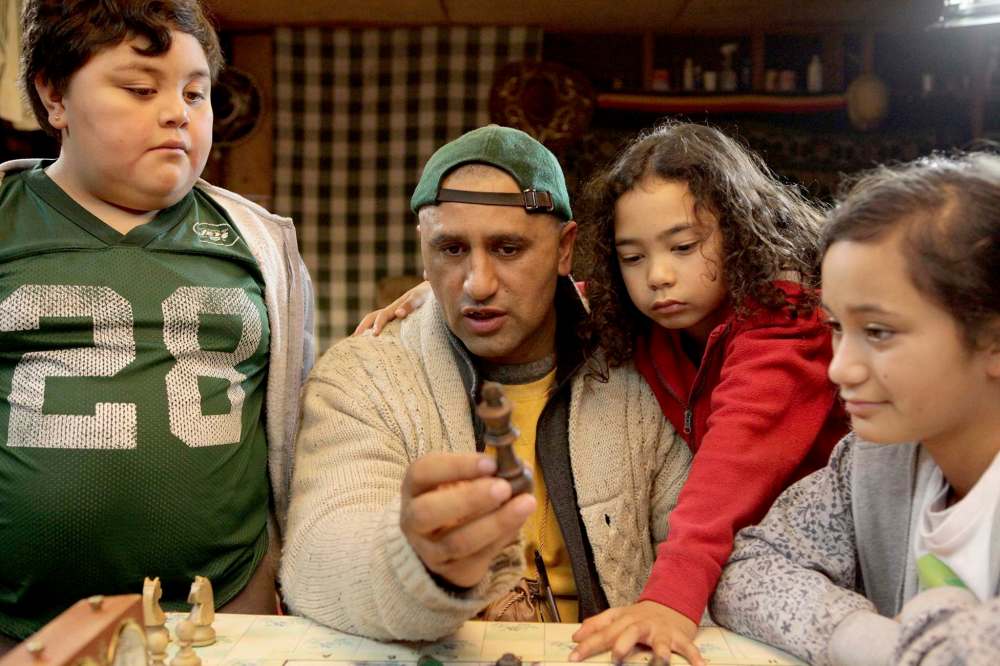
The Dark Horse is anchored by a deceptively lived-in performance that goes a long way toward conveying the hardship of trying to manage one’s weaknesses while nurturing and sharing the hidden strengths of the title.
— Los Angeles Times