

Developing a road map for growth
Growing up not out requires good communication and processes at city hall

Advertisement
Read this article for free:
or
Already have an account? Log in here »
To continue reading, please subscribe:
Monthly Digital Subscription
$1 per week for 24 weeks*
- Enjoy unlimited reading on winnipegfreepress.com
- Read the E-Edition, our digital replica newspaper
- Access News Break, our award-winning app
- Play interactive puzzles
*Billed as $4.00 plus GST every four weeks. After 24 weeks, price increases to the regular rate of $19.95 plus GST every four weeks. Offer available to new and qualified returning subscribers only. Cancel any time.
Monthly Digital Subscription
$4.99/week*
- Enjoy unlimited reading on winnipegfreepress.com
- Read the E-Edition, our digital replica newspaper
- Access News Break, our award-winning app
- Play interactive puzzles
*Billed as $19.95 plus GST every four weeks. Cancel any time.
To continue reading, please subscribe:
Add Free Press access to your Brandon Sun subscription for only an additional
$1 for the first 4 weeks*
- Enjoy unlimited reading on winnipegfreepress.com
- Read the E-Edition, our digital replica newspaper
- Access News Break, our award-winning app
- Play interactive puzzles
*Your next Brandon Sun subscription payment will increase by $1.00 and you will be charged $17.95 plus GST for four weeks. After four weeks, your payment will increase to $24.95 plus GST every four weeks.
Read unlimited articles for free today:
or
Already have an account? Log in here »
Hey there, time traveller!
This article was published 12/12/2016 (3433 days ago), so information in it may no longer be current.
A little 12-unit condominium project proposed by Ventura Developments for Winnipeg’s Crescentwood neighbourhood has caused quite a stir. The project’s rejection at a community committee meeting has once again sparked public debate about the challenges of trying to build in Winnipeg’s older neighbourhoods.
Infill development of this type is generally seen as a tool to reinvigorate established communities, create affordable housing options and provide cost-efficient use of existing infrastructure.
Over the last several decades, Winnipeg’s mature neighbourhoods have seen a significant population decline due to an aging demographic, higher real estate values that prevent younger residents from moving in and a nationwide trend to smaller household sizes.
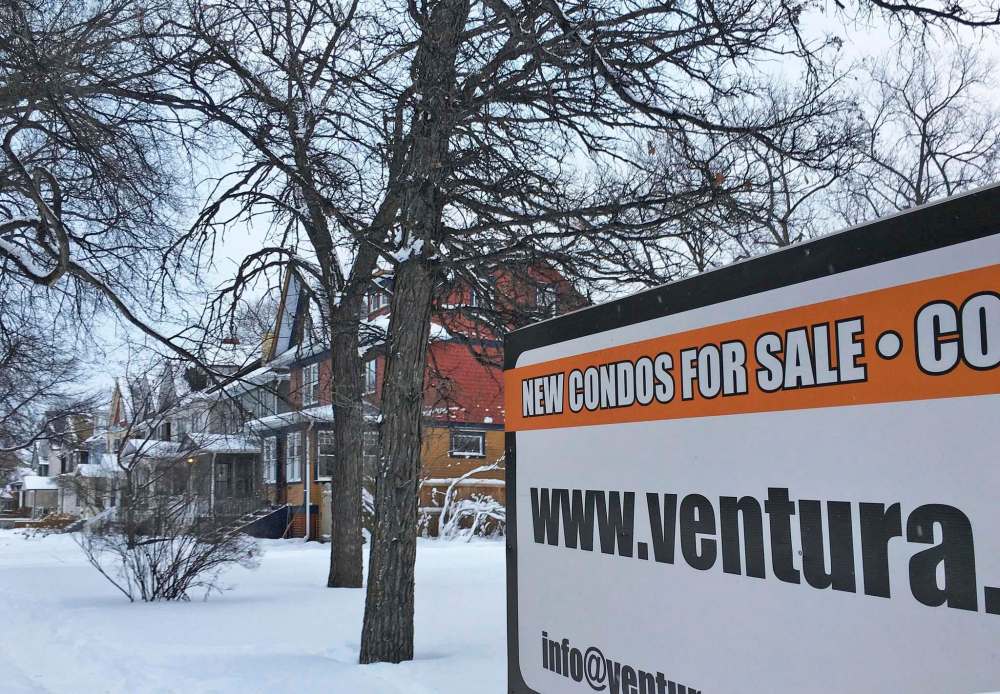
River Heights, Wolseley and St. Boniface have all seen a population loss of more than 20 per cent since the 1970s. Crescentwood, the neighbourhood of the Ventura project, today has nearly one-third fewer residents.
The challenge for the city is the infrastructure in these communities was built to support the historic higher density levels, meaning neighbourhood retail, schools, transit, community centres, parks, libraries and other city services are often under-supported because of declining and aging adjacent populations. At the same time, the city is required to invest in new infrastructure to support the growth of developments on the city’s periphery.
This economic model has become unsustainable and is one reason infill growth and higher-density development in mature neighbourhoods is a key political priority outlined in Our Winnipeg, the city’s 25-year growth blueprint, as well as in all local neighbourhood secondary plans.
The public policy is in place, but continual neighbourhood opposition to even the most innocuous change and an inconsistent political-approval process makes infill development an uncertain, costly and time-consuming challenge where developers are often painted as the enemy. This environment acts as further incentive for developers to seek open sites at the city’s edge where no opposition will occur and approvals will be rubber-stamped.
As the Ventura project has played out in the media, calls have come for clear infill guidelines to be adopted by council, so developers have a set of ground rules and expectations that will provide more consistency in the process. While this would be an important step forward, other cities have found effectively increasing infill growth takes an even greater political effort.
Recognizing the barriers to this type of development, Edmonton has launched an infill action initiative and set an aggressive goal of having 25 per cent of all new development occur in mature neighbourhoods.
To help achieve this, a progressive infill road map was adopted as a political work plan that lays out 23 action items. Many of the actions focus on public communication that attempts to change the negative perception of density, inviting residents to be involved in planning for growth in their communities long before a development is proposed.
A user-friendly website (cityofedmontoninfill.ca) offers easy access to neighbourhood plans and development information. It is also an important resource for public dialogue and education that helps alleviate surprises and fear of the unknown, often the root of public opposition. An annual design competition was even started to highlight the positive opportunities for infill projects.
The road map’s action items also include guidelines for infill design, changes in zoning regulations that promote development as well as the exploration of financial incentives to encourage infill. Winnipeg’s new growth fees present an important opportunity to develop such a program, if it is carefully designed to incentivize infill growth.
A final set of action items in Edmonton’s infill road map focuses on removing inconsistencies in the political approval process, an important consideration for Winnipeg.

Winnipeg’s approval process is unique in Canada, requiring developers to present proposals to a community committee, made up of three local ward councillors who become the de facto decision-makers for development. These meetings are often the scene of heated public opposition, putting councillors in the difficult position of being caught between opposing groups, both of which they are elected to represent. This can result in decisions being made on an emotional response or influenced by local ward dynamics that take a back seat to overarching civic priorities. Although projects ultimately go to a vote at city council, desires of the local ward councillor at the community committee are rarely overturned.
Winnipeg is the only major city in Canada and only municipality in Manitoba with a community committee process. In most jurisdictions, projects are voted on directly by council or a planning commission made up of urban designers, local citizens and appointed council representatives. This process typically alleviates lobbying and the inherent conflict of the local councillor. It helps to the dilute decision-making power by involving a larger group with a diversity of viewpoints, encouraging decisions with a broader perspective on the issues.
Public policies are only as effective as the processes used to implement them. A community committee is not a legal requirement and might be re-evaluated as part of an upcoming review of civic governance at city hall.
A new approval process could be an important component of a comprehensive, multi-faceted strategy that follows Edmonton’s lead to advance residential infill development in our own city. This would help to ensure that established neighbourhoods thrive as they evolve in the future, realizing efficient use of existing infrastructure, offering diverse housing options, supporting local business and amenities and moving Winnipeg toward overall economic sustainability.
Brent Bellamy is chairman of CentreVenture’s board and the creative director at Number Ten Architectural Group.
Brent Bellamy is creative director for Number Ten Architectural Group.
Our newsroom depends on a growing audience of readers to power our journalism. If you are not a paid reader, please consider becoming a subscriber.
Our newsroom depends on its audience of readers to power our journalism. Thank you for your support.
Brent Bellamy is creative director for Number Ten Architectural Group.
Our newsroom depends on a growing audience of readers to power our journalism. If you are not a paid reader, please consider becoming a subscriber.
Our newsroom depends on its audience of readers to power our journalism. Thank you for your support.
Related Articles
Executive policy committee votes against Crescentwood condo project
Advertisement Advertise With Us
Advertisement Advertise With Us