Restored classic retains its power
Film asks all-too-relevant questions about class, society

Advertisement
Read this article for free:
or
Already have an account? Log in here »
To continue reading, please subscribe:

Digital Subscription
One year of digital access for only $205*
- Enjoy unlimited reading on winnipegfreepress.com
- Read the E-Edition, our digital replica newspaper
- Access News Break, our award-winning app
- Play interactive puzzles
*First annual payment billed as $205.00 + GST for one year. This annual subscription will automatically renew at $233.00 + GST every 52 weeks (10% off the regular annual price of $259.35). Offer available to new and qualified returning subscribers only. Cancel any time.
To continue reading, please subscribe:
Add Free Press access to your Brandon Sun subscription for only an additional
$1 for the first 4 weeks*
- Enjoy unlimited reading on winnipegfreepress.com
- Read the E-Edition, our digital replica newspaper
- Access News Break, our award-winning app
- Play interactive puzzles
*Your next Brandon Sun subscription payment will increase by $1.00 and you will be charged $17.95 plus GST for four weeks. After four weeks, your payment will increase to $24.95 plus GST every four weeks.
Read unlimited articles for free today:
or
Already have an account? Log in here »
Hey there, time traveller!
This article was published 17/12/2016 (3564 days ago), so information in it may no longer be current.
When it comes to the theatrical re-release of the 1992 Merchant Ivory production Howards End, the question isn’t whether the colours of the restoration are newly clear and intense. (They are.)
The real issue is whether this almost 25-year-old E.M. Forster adaptation still speaks to us.
And it does.
Gorgeous, feeling and much funnier than I remember, Howards End might have more to say in these fraught times than it did when it first came out.
Projects by James Ivory and Ismail Merchant are often assumed to be costumed and emotionally corseted, overly literary and insufficiently cinematic. For some film fans, the Merchant Ivory moniker is synonymous with the sort of oppressively tasteful movie you get dragged to when you really just want to see Goodfellas.
A little distance gives a clearer, less clichéd sense of the producer-director team’s oeuvre, which was admittedly uneven but sometimes inspired. With Howards End, this appraisal coincides with a similar look back at Forster’s legacy, too often dismissed as milquetoasty and middlebrow, but recently re-examined by writers such as Zadie Smith and Damon Galgut.
Sure enough, Howards End is tougher than you might expect. On the surface, the film might seem like a Christmas gift for Downton Abbey lovers, with scones for tea, William Morris wallpaper, immaculate costume design (by Oscar-winner Jenny Bevan) and stylized dialogue. (Someone actually utters the sentence, “I say, I do think you’re a ripping girl,” but it’s within a rather witty, self-aware comic context.)
And underneath all the Edwardian trappings, this is a cutting, often cruel examination of social and economic inequality, that turn-of-the-20th-century-problem that is making a very depressing comeback.
Directed by Ivory and adapted by novelist Ruth Prawer Jhabvala from Forster’s 1910 work, the story follows three families. Level-headed Margaret Schlegel (Emma Thompson) and her intense, impetuous sister, Helen (Helena Bonham Carter), are young women committed to art, culture and progressive political causes.
The Wilcoxes, led by businessman Henry (Anthony Hopkins), are beef-eating empire builders.
Leonard Bast (Samuel West) is a lower-middle-class clerk hoping to better himself but so precariously positioned that one mistake could send him and his lover, the cheery, blowsy Jacky (Nicola Duffett), spiralling down into destitution.
All these people become entangled by love, money, class and conflict, and by the fate of a traditional English country house called Howards End. Mrs. Wilcox (Vanessa Redgrave) impulsively leaves the house to Margaret, a move thwarted by her adult children, who dislike the Schlegel sisters and their “artistic beastliness.”
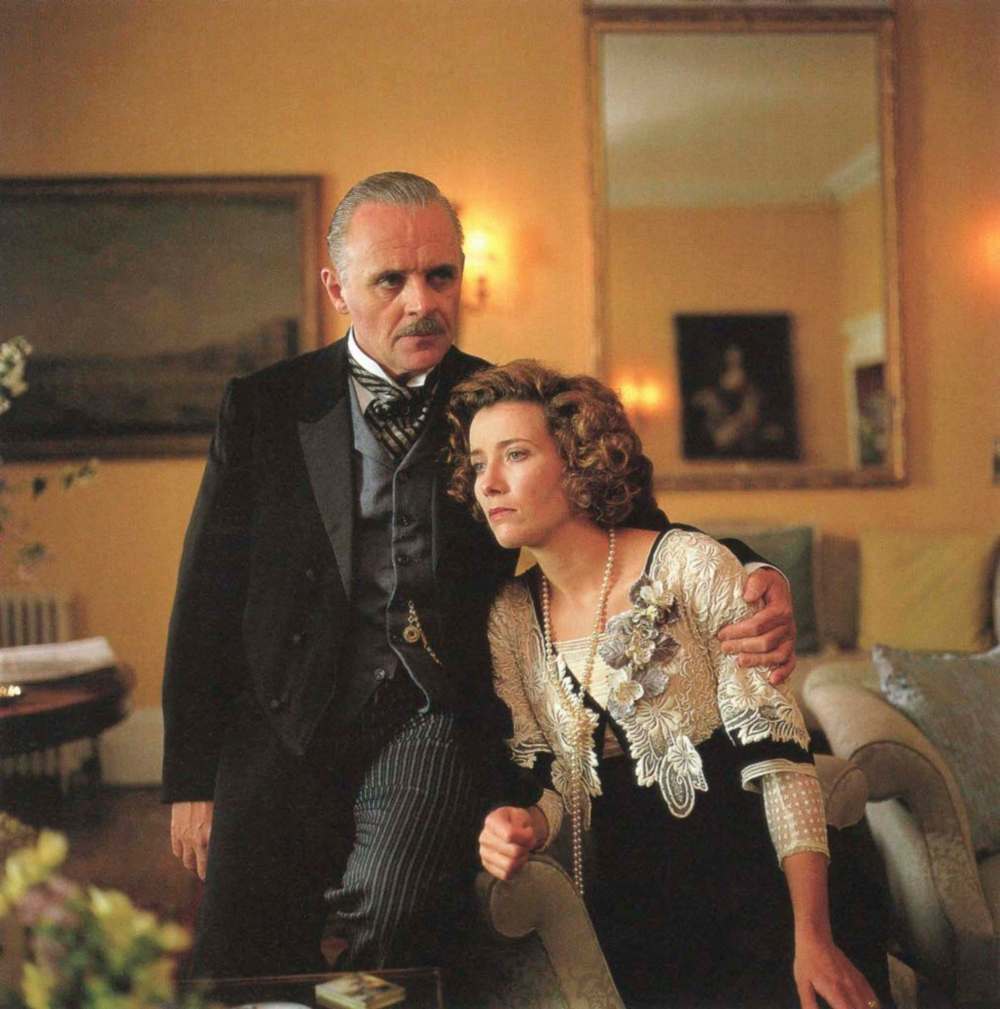

The story of the house becomes the story of who will inherit modern Britain — the cultured, liberal bourgeoisie, the hard-headed capitalists or the working classes?
The marvel of Howards End, both novel and film, is that this abstract question is worked out in such a concrete way, through full-blooded characters and a morally complex and emotionally layered story. Thompson, who won an Oscar and a BAFTA for her work, demonstrates an unrivalled ability to convey warmth and intelligence. She is the living embodiment of Forster’s ethical and personal imperative to “only connect.”
While clearly enjoying the pleasurable, affectionate company of the sisters, the drama asks difficult questions about whether the Schlegels’ well-meaning interference in Leonard’s life ends up being as destructive as the Wilcoxes’ callous indifference. It also examines the tricky role of culture. Leonard at first desperately pursues art and music and improving public lectures but later comes to believe “that’s all for rich people, to make them feel good after their dinners.”
Howards End hopes, desperately, that books and films can be more than that.
alison.gillmor@freepress.mb.ca
Studying at the University of Winnipeg and later Toronto’s York University, Alison Gillmor planned to become an art historian. She ended up catching the journalism bug when she started as visual arts reviewer at the Winnipeg Free Press in 1992.
Our newsroom depends on a growing audience of readers to power our journalism. If you are not a paid reader, please consider becoming a subscriber.
Our newsroom depends on its audience of readers to power our journalism. Thank you for your support.
Movie review
Howards End
Starring Emma Thompson and Anthony Hopkins
Cinematheque
PG
142 minutes
Four stars out of five
Studying at the University of Winnipeg and later Toronto’s York University, Alison Gillmor planned to become an art historian. She ended up catching the journalism bug when she started as visual arts reviewer at the Winnipeg Free Press in 1992.
Our newsroom depends on a growing audience of readers to power our journalism. If you are not a paid reader, please consider becoming a subscriber.
Our newsroom depends on its audience of readers to power our journalism. Thank you for your support.
Advertisement Advertise With Us
Advertisement Advertise With Us