Drama needs more history, less romance
Bland love triangle takes focus away from Armenian genocide

Advertisement
Read this article for free:
or
Already have an account? Log in here »
To continue reading, please subscribe:

Digital Subscription
One year of digital access for only $205*
- Enjoy unlimited reading on winnipegfreepress.com
- Read the E-Edition, our digital replica newspaper
- Access News Break, our award-winning app
- Play interactive puzzles
*First annual payment billed as $205.00 + GST for one year. This annual subscription will automatically renew at $233.00 + GST every 52 weeks (10% off the regular annual price of $259.35). Offer available to new and qualified returning subscribers only. Cancel any time.
To continue reading, please subscribe:
Add Free Press access to your Brandon Sun subscription for only an additional
$1 for the first 4 weeks*
- Enjoy unlimited reading on winnipegfreepress.com
- Read the E-Edition, our digital replica newspaper
- Access News Break, our award-winning app
- Play interactive puzzles
*Your next Brandon Sun subscription payment will increase by $1.00 and you will be charged $17.95 plus GST for four weeks. After four weeks, your payment will increase to $24.95 plus GST every four weeks.
Read unlimited articles for free today:
or
Already have an account? Log in here »
Hey there, time traveller!
This article was published 21/04/2017 (3420 days ago), so information in it may no longer be current.
Fact-based historical dramas are certainly in Terry George’s wheelhouse. The Irish writer/director snagged Oscar nominations for penning In the Name of the Father, about a man falsely accused of IRA bombings, and Hotel Rwanda, about a hotelier who saves Tutsis during the 1994 Rwandan genocide.
It’s unlikely he’ll garner the same accolades for The Promise, a well-meaning but turgid film that manages to give short shrift to both the horrors of the 1915 Armenian genocide and the love story at its centre.
It tacks a not-particularly-compelling romance onto a didactic history lesson, with neither taking precedence, resulting in a grand, sweeping snooze.
Oscar Isaac (Inside Llewyn Davis) plays Mikael Boghosian, an apothecary in a small town in historic Armenia, which in 1915 was part of the Ottoman Empire. Mikael wishes to become a doctor, but can’t afford the tuition for university in Constantinople.
To finance his dreams, he becomes betrothed to Maral, a local girl (saucer-eyed actress Angela Sarafyan, who plays saloon girl Clementine on HBO’s Westworld); with the help of her dowry, he is off to medical school.
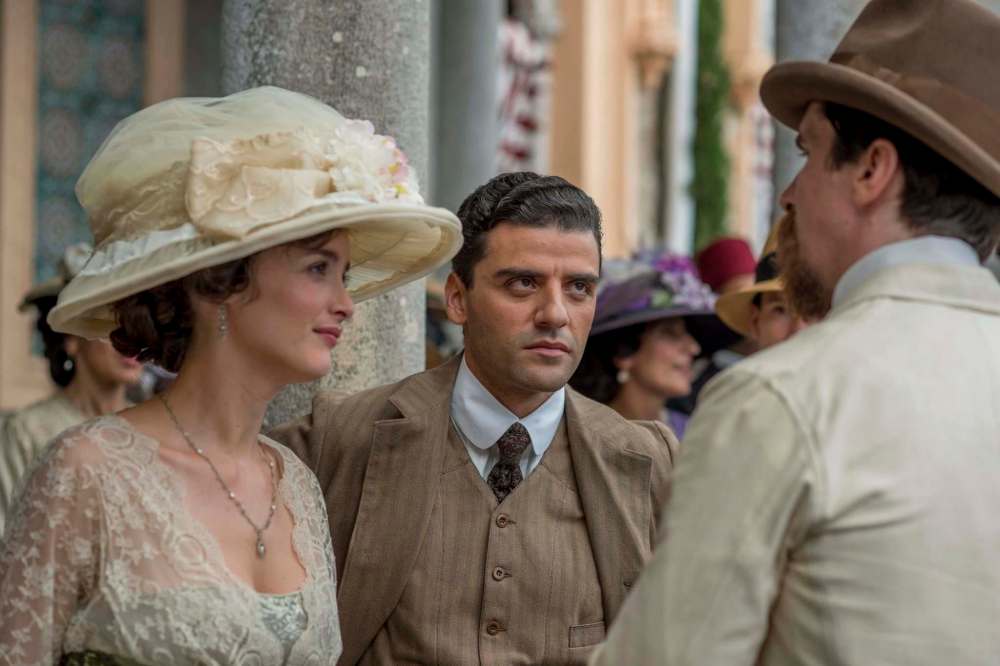
Despite some vaguely spelled-out indications that Christian Armenians are second-class citizens to the Muslim-majority Turks (for a historical drama, The Promise skimps quite a bit on background and context), Mikael takes to city life and his studies with alacrity.
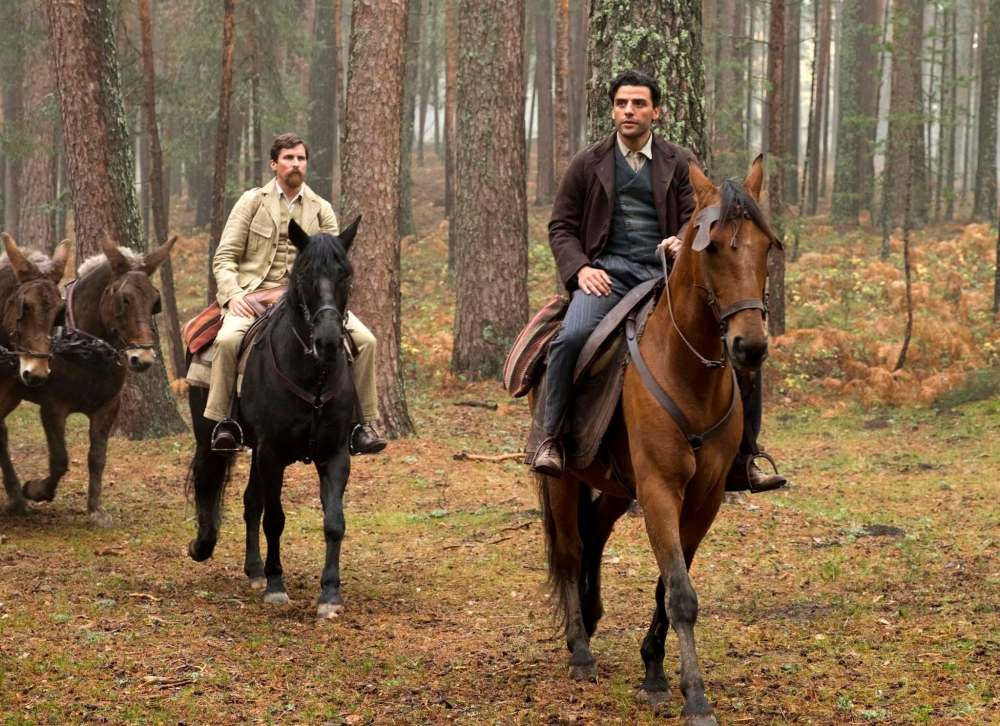
He soon falls in love with Ana (Charlotte Le Bon of The Hundred Foot Journey), a sophisticated Armenian woman who is in a relationship with Associated Press reporter Chris Myers (Christian Bale), in the region to report on the troubling alliance between the German and Ottoman empires as the First World War heats up.
Ana and Mikael’s fledgling romance is short-lived, however. His cousin, a businessman whose family he’s been living with, is taken away by the Ottoman government; violence erupts in the streets, where Turkish mobs are out for Armenian blood.
Even Mikael’s status as a medical student can’t keep him safe, and his attempts to rescue his cousin lead to his confinement in a labour camp.
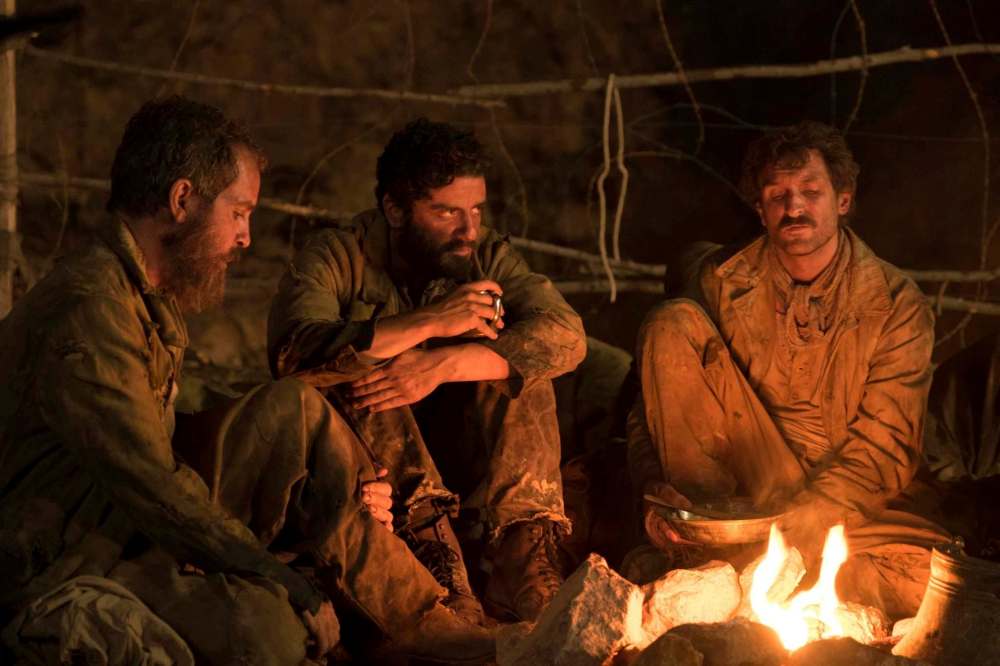
The story of the systemic mass extermination of the Armenian people hasn’t often been seen onscreen — Armenian-Canadian director Atom Egoyan took on the topic in the little-seen Ararat — and it’s worthy of dramatization.
It’s especially important since, to this day, the Turkish government (and many other world governments) refuses to call the event — which saw Armenian intellectuals and business leaders put in labour camps or killed, and thousands of others deported via death marches into the Syrian desert, if they weren’t massacred first — a genocide.
While George doesn’t shy away from showing us the horrors — whole villages slain by Turkish soldiers, cattle cars full of prisoners crying for water — he has the misguided notion of making the love triangle the movie’s focus. It’s impossible to deny Isaac’s soulful appeal and Le Bon’s graceful charms, but, as film wisdom has shown us, it doesn’t take much to see that the problems of three little people don’t amount to a hill of beans in this crazy world.
The writer/director piles on the tragedy — which sounds ridiculous, when we’re dealing with the genocide of 1.5 million people — and makes the larger atrocities play second fiddle to his characters’ personal dramas.

The Promise is also rife with cliché — war-weary reporter Chris is a khaki-clad hard drinker who puts a byline above his relationship, and every Turkish baddie (and that’s most of them in this rather unnuanced look at history) sports a villainous Saddam Hussein-style moustache.
There’s a moving, powerful movie to be made about the Armenian genocide, but The Promise is merely a beautiful piece of semi-propaganda, striving desperately for prestige.
jill.wilson@freepress.mb.ca
Twitter: @dedaumier
Jill Wilson is the editor of the Arts & Life section. A born and bred Winnipegger, she graduated from the University of Winnipeg and worked at Stylus magazine, the Winnipeg Sun and Uptown before joining the Free Press in 2003. Read more about Jill.
Jill oversees the team that publishes news and analysis about art, entertainment and culture in Manitoba. It’s part of the Free Press‘s tradition, since 1872, of producing reliable independent journalism. Read more about Free Press’s history and mandate, and learn how our newsroom operates.
Our newsroom depends on a growing audience of readers to power our journalism. If you are not a paid reader, please consider becoming a subscriber.
Our newsroom depends on its audience of readers to power our journalism. Thank you for your support.
Movie review

The Promise
Starring Oscar Isaac, Charlotte Le Bon and Christian Bale
● 132 minutes
★★ out of five
Other voices
This well-meaning epic about a rarely-dramatized tragedy — the Armenian genocide coinciding with the First World War — operates from the same sweep-with-suds playbook that’s turned many an important historical subject into facile timeline melodrama.
— Robert Abele, TheWrap
It’s a brutal war film, but it returns over and over to its ultimately unsatisfying romantic plot.
— Linda Holmes, NPR
There’s something to enjoy about its traditional brand of storytelling, devoid of any irony.
— Benjamin Lee, Guardian
Love triangle period pieces set against the backdrop of war all start out as Doctor Zhivago and wind up as The English Patient — or worse.
— Roger Moore, Movie Nation
Jill Wilson is the editor of the Arts & Life section. A born and bred Winnipegger, she graduated from the University of Winnipeg and worked at Stylus magazine, the Winnipeg Sun and Uptown before joining the Free Press in 2003. Read more about Jill.
Jill oversees the team that publishes news and analysis about art, entertainment and culture in Manitoba. It’s part of the Free Press‘s tradition, since 1872, of producing reliable independent journalism. Read more about Free Press’s history and mandate, and learn how our newsroom operates.
Our newsroom depends on a growing audience of readers to power our journalism. If you are not a paid reader, please consider becoming a subscriber.
Our newsroom depends on its audience of readers to power our journalism. Thank you for your support.
Advertisement Advertise With Us
Advertisement Advertise With Us