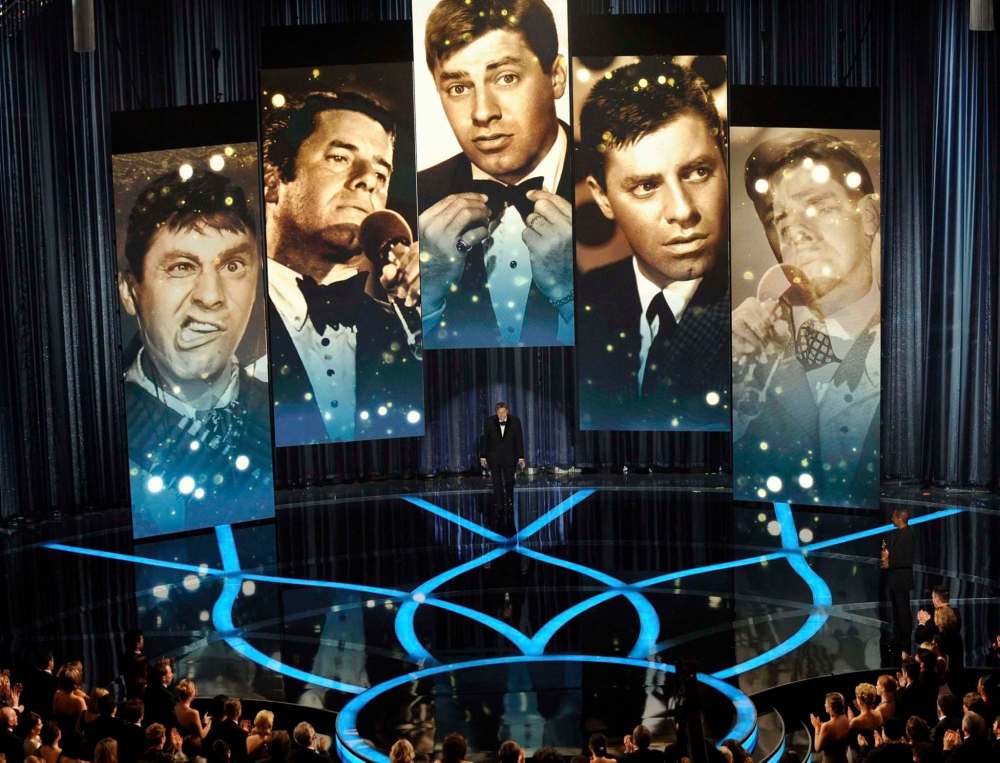
Behind all of Jerry Lewis’s mugging and shouting was one of Hollywood’s key innovators
Advertisement
Read this article for free:
or
Already have an account? Log in here »
To continue reading, please subscribe:

Digital Subscription
One year of digital access for only $205*
- Enjoy unlimited reading on winnipegfreepress.com
- Read the E-Edition, our digital replica newspaper
- Access News Break, our award-winning app
- Play interactive puzzles
*First annual payment billed as $205.00 + GST for one year. This annual subscription will automatically renew at $233.00 + GST every 52 weeks (10% off the regular annual price of $259.35). Offer available to new and qualified returning subscribers only. Cancel any time.
To continue reading, please subscribe:
Add Free Press access to your Brandon Sun subscription for only an additional
$1 for the first 4 weeks*
- Enjoy unlimited reading on winnipegfreepress.com
- Read the E-Edition, our digital replica newspaper
- Access News Break, our award-winning app
- Play interactive puzzles
*Your next Brandon Sun subscription payment will increase by $1.00 and you will be charged $17.95 plus GST for four weeks. After four weeks, your payment will increase to $24.95 plus GST every four weeks.
Read unlimited articles for free today:
or
Already have an account? Log in here »
Hey there, time traveller!
This article was published 22/08/2017 (3275 days ago), so information in it may no longer be current.
There’s probably an entire generation whose reaction to the passing of Jerry Lewis was something along the lines of “Oh, the guy from the telethons died.”
And there’s likely at least another generation beyond that one that paid no attention because it had simply never even heard of the guy.
But Lewis, who died Sunday at the age of 91, had a career in show business that is very much worth remembering. Mostly relegated to footnote mentions and French-culture punchlines during the past couple of decades, Jerry Lewis was one of the entertainment industry’s most influential and powerful stars in the 1940s and ‘50s.
After combining their middling nightclub acts in 1946 — one was a comedian doing a threadbare routine in which he mugged and flailed while lip-synching to records, the other a moderately successful crooner — Lewis and Dean Martin combined madcap humour with music became an almost-overnight sensation. Within a couple of years, they were the highest-paid entertainers in the world, even before they expanded their empire by becoming movie and TV stars.
After shifting from live performing to film work, and particularly after his split with Martin in 1956, Lewis became one of the Hollywood’s most important innovators, working on both sides of the camera and inventing the video-assist technology that allows directors to view immediate playback of scenes to determine whether they’ve achieved the shots they require.
It revolutionized the way motion pictures were made, and the technique remains a vital part of moviemaking today.
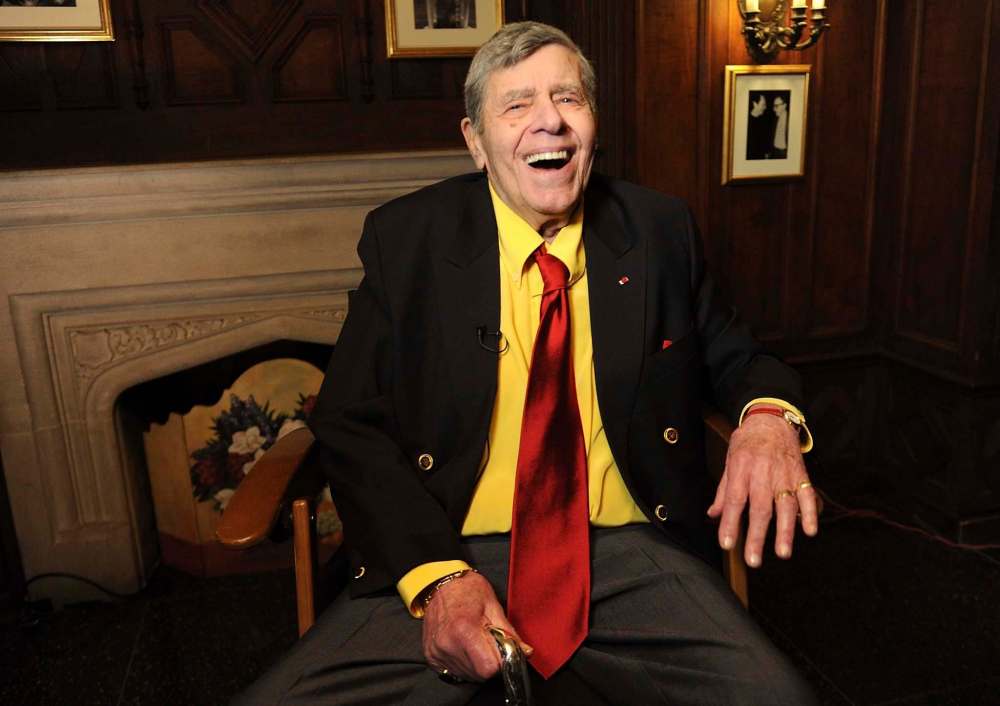
A notoriously difficult figure who demanded control and craved credit, Lewis became very successful as a comedy actor and director in the late ‘50s and early ‘60s. His 1963 hit The Nutty Professor marked the pinnacle of his Hollywood career. He had a few re-starts and comebacks, most notably as a talk-show host stalked by an obsessive fan (Robert De Niro) in 1982’s The King of Comedy and as the devil in a 1995 Broadway revival of the musical Damn Yankees, but from the 1970s onward Lewis was known mostly as the driving force behind the annual Labour Day telethon in support of muscular dystrophy research.
Between 1955 and 2011, Lewis’s efforts helped raise nearly $2.5 billion for the charity.
It could fairly be said that as an entertainer, Lewis never quite got the respect he deserved. His comedic style, especially during his partnership with Martin and in his early movies, was loud and abrasive, and therefore easy to dismiss, but he was a bankable star in Hollywood for nearly two decades.
His popularity waned quickly in the ‘60s when a more subtle generation of comedians led by Woody Allen, George Carlin and Richard Pryor rose to prominence.
Truculent in interviews and often dismissive of his fans during his later years, Lewis continued to write and make occasional live appearances until shortly before his death. He was officially recognized as a “towering figure in cinema” at the 2013 Cannes Film Festival — which was fitting, because France was and is the country that most deeply appreciated his genius.
Looking back from 2017, it’s difficult to regard any of Lewis’s movies as particularly memorable. But the next time you settle in for an evening with Netflix, it is worth remembering that because of the innovation inspired by his attention to behind-the-camera detail and overpowering need for control, anything you watch onscreen has a little bit of Jerry Lewis in it.
brad.oswald@freepress.mb.caTwitter: @BradOswald