Tips and tricks to give frostbite the cold shoulder

Advertisement

Advertise with us

Staying warm during our Manitoba winters is not just about comfort — it’s also required for safety.

Read this article for free:


or

Already have an account? Log in here »

To continue reading, please subscribe:

Subscribe and receive a limited-edition Free Press branded hat or tote.

Digital Subscription

One year of digital access for only $205*

  • Enjoy unlimited reading on winnipegfreepress.com
  • Read the E-Edition, our digital replica newspaper
  • Access News Break, our award-winning app
  • Play interactive puzzles

*First annual payment billed as $205.00 + GST for one year. This annual subscription will automatically renew at $233.00 + GST every 52 weeks (10% off the regular annual price of $259.35). Offer available to new and qualified returning subscribers only. Cancel any time.

To continue reading, please subscribe:

Add Free Press access to your Brandon Sun subscription for only an additional

$1 for the first 4 weeks*

  • Enjoy unlimited reading on winnipegfreepress.com
  • Read the E-Edition, our digital replica newspaper
  • Access News Break, our award-winning app
  • Play interactive puzzles
Start now

*Your next Brandon Sun subscription payment will increase by $1.00 and you will be charged $17.95 plus GST for four weeks. After four weeks, your payment will increase to $24.95 plus GST every four weeks.

Hey there, time traveller!
This article was published 05/01/2018 (3143 days ago), so information in it may no longer be current.

Staying warm during our Manitoba winters is not just about comfort — it’s also required for safety.

Even lifelong Manitobans have been known to underestimate the potential for cold-weather injuries.

That’s why it is very important for everyone to have a good understanding of the potential dangers associated with being unprepared for being outside in the cold.
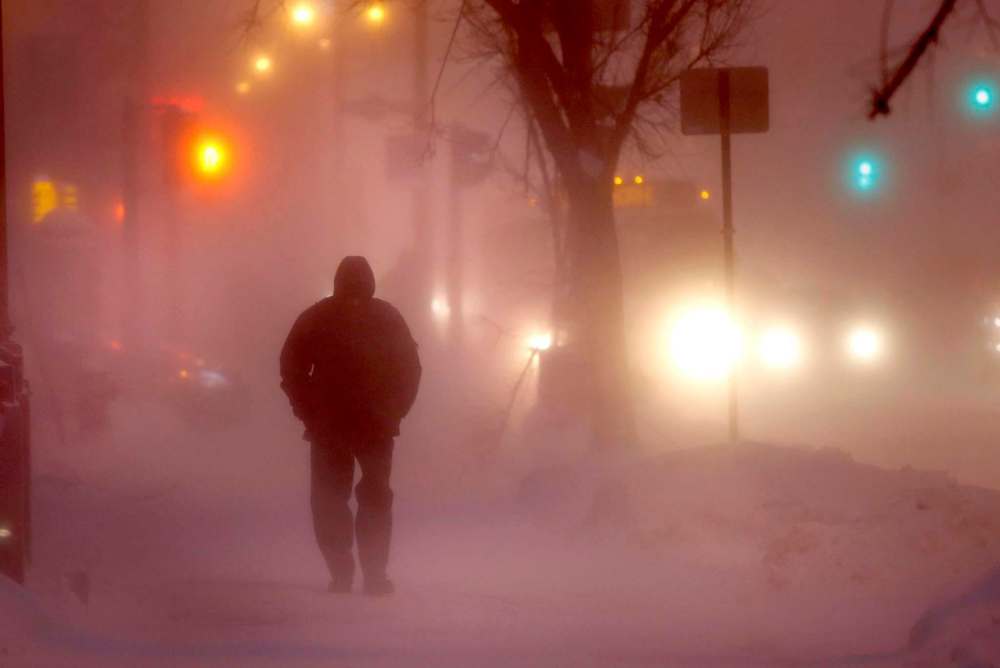
WAYNE GLOWACKI / WINNIPEG FREE PRESS files
It’s common to underestimate the potential for cold-weather injuries such as frostbite, a potentially serious condition that occurs when skin freezes.
WAYNE GLOWACKI / WINNIPEG FREE PRESS files It’s common to underestimate the potential for cold-weather injuries such as frostbite, a potentially serious condition that occurs when skin freezes.

That’s particularly true when it comes to frostbite, a potentially serious condition that occurs when skin freezes.

Frostbite is caused by a combination of factors, including temperature, wind chill, altitude, how warmly you are dressed and whether your clothing is wet or dry. Health issues — such as diabetes, thyroid problems or a stroke — can also increase the risk of frostbite.

Generally speaking, the chances of developing frostbite increase as the mercury drops. A person exposed to temperatures of -10 C to -27 C for a long period of time can experience decreased blood flow and freezing of skin and tissue just below the skin.

Environment Canada notes skin exposed to temperatures between -28 C and -39 C with wind chill can freeze in 10 to 30 minutes.

The first signs of frostbite include numbness and tingling. More severe symptoms include skin that is pale (grey, white or blue) and cold or feels hard to the touch. In the most severe cases, skin can blister, swell or turn black.

As you might expect, the key to protecting yourself against frostbite is to dress warmly and avoid prolonged periods in frigid temperatures. But there are many ways people can get caught unprepared for the cold.

For example, a person might get stranded with only light clothing after their car breaks down on a rural road. Or, someone might head out for a skate or a walk without proper headwear and mittens.

The lesson, of course, is to be prepared.

Wear several loose layers of clothing rather than a single, thick layer to provide good insulation and keep moisture away from your skin. Materials that do this include polypropylene, polyesters and wool. The outer garment should breathe but be waterproof and windproof, with an inner thermal layer.

Retain body heat with a hat and scarf. Mittens are warmer than gloves. Be sure your clothing protects your head, ears, nose, hands and feet, especially for children.

If you do get frostbite, it is important to take quick action.

Most cases of frostbite can be treated by rapidly warming the exposed area in quite warm (but not hot) water (40 C to 42 C). Use a warm, wet washcloth on a frostbitten nose or earlobes. Do not warm the area with dry heat — such as a heating pad, heat lamp or electric heater — because frostbitten skin is easily burned.

Immersion in warm water should continue for 20 to 30 minutes until the exposed area starts to turn pink, indicating the return of blood circulation. At this point, the numbness should disappear.

If you don’t have access to warm water, place your hands under your armpits or your feet against a warm person’s skin. Dry and cover the area with warm clothes and then layers of blankets or anything warm.

Warming up can take up to an hour and can be painful, especially near the end of the process as circulation returns. Acetaminophen or ibuprofen may help with the discomfort.

It is a good idea to drink hot fluids — such as hot chocolate, coffee or tea — when warming, but there are a number of things you should not do.

For example, do not rub frostbitten areas, drink alcohol or walk on your feet or toes if they are frozen. You should also not massage or put snow on frostbitten areas. Both can cause serious damage.

In severe cases — such as when exposed skin is blackened, a large area is frostbitten or the colour and sensation of the skin don’t return to normal after one hour of warming — go to the emergency department for immediate care.

In most cases, frostbite can be treated fairly easily with no long-term effects.

But it can also lead to serious injury, including permanent numbness or tingling, joint stiffness or muscle weakness. In extremely severe cases it can lead to amputation of the extremities.

It always pays to take the cold weather seriously.

Diana Doyle-Zebrun is a registered nurse and clinical- and quality-initiatives manager at Health Links, a telephone health-information service with the Provincial Health Contact Centre at Misericordia Health Centre.
Report Error Submit a Tip

More Stories

Europe anxious as ever about immigration

Kyle Volpi Hiebert 5 minute read 2:00 AM CDT

It was only a matter of time before immigration would again panic Europe. The issue has roiled the continent’s politics ever since its 2015 migrant crisis, when 1.3 million unauthorized migrants crossed its borders that summer. They exposed a broken immigration system in the process, triggering a populist backlash that hasn’t dimmed.

All those same tensions were reignited in late July, when 72,000 migrants converged on the Spanish exclave of Ceuta in just 24 hours. The city — a holdover from Spain’s colonial era — is Europe’s only land border with Africa, nestled next to Morocco. It was almost instantly overrun.

Dozens of people died in the chaos, while the reasons for the sudden influx remain unknown. However, virtually all the arrivals were sent back to Morocco almost immediately; some spent a few days in makeshift holding centres. None were recorded as finding their way to mainland Europe.

Still, the episode inflamed divisions in a region caught in existential limbo. Ultranationalist political parties are ascendant — yet low birth rates and stagnant productivity mean Europe’s future largely hinges on accepting more newcomers.

You’re not alone on journey of self-discovery

Maureen Scurfield 5 minute read Yesterday at 2:01 AM CDT

DEAR MISS LONELYHEARTS: I am bisexual. I was in love with another woman for half the summer, and now I’m not. How can that be? I thought she was perfect for me, and now a great guy has come along, and I’m in love with him.

I don’t mean to sound weird, but that’s how my crazy feelings are. I’m 17 now and in Grade 12 this fall. Maybe I’ll be totally different when I’m older. My parents just shake their heads and smile — they are no help at all. They are open-minded people, but they don’t totally get me, and they don’t seem to worry about it. I’m a weirdo with a new idea about who I should be every month.

My grandma, an old hippie, says she loves me the way I am, and with all my changes. The problem is I just don’t “get” me either, and I can’t talk to anybody else about me. She says it will “all come clear” in the end, but I’m not so sure about that.

— Totally Confused, West Kildonan

Nola chef earns national award

Eva Wasney 2 minute read Preview

Nola chef earns national award

Eva Wasney 2 minute read 2:01 AM CDT

Celebrated Winnipeg chef Emily Butcher has another feather to add to her toque. The executive chef and owner of Nola and Bar Accanto in St. Boniface has received the Culinary Award of Excellence from Restaurants Canada, a national foodservice advocacy organization.

Read
2:01 AM CDT

‘No CUSMA, no booze-ma’: Kinew

Malak Abas 4 minute read Preview

‘No CUSMA, no booze-ma’: Kinew

Malak Abas 4 minute read Wednesday, Aug. 12, 2026

With the next round of tariffs set to hit Canadian goods next week, and a new report suggesting Manitobans could be severely impacted if the Canada-U.S.-Mexico agreement on trade breaks down, Premier Wab Kinew pledged Wednesday to keep working with the U.S. ambassador — and keep American booze off Manitoba shelves, for now.

Read
Wednesday, Aug. 12, 2026

Opaskwayak restorative justice court to give offenders opportunity to ‘heal’

Erik Pindera 5 minute read Preview

Opaskwayak restorative justice court to give offenders opportunity to ‘heal’

Erik Pindera 5 minute read Yesterday at 6:00 AM CDT

The Manitoba government, provincial court and Opaskwayak Cree Nation are signing a memorandum of understanding today to establish a community-led court focused on Indigenous restorative justice principles.

Justice Minister Matt Wiebe is in the northern First Nation, which neighbours The Pas, to attend this week’s Opaskwayak Indigenous Days summer festival, ahead of the signing of the nation-to-nation agreement after a pipe ceremony today.

“This is really a pivotal marker on the path to reconciliation for our justice system and an incredible opportunity to begin the process of reconciling the two systems of justice, that being the traditional Indigenous justice system with our colonial system,” Wiebe told the Free Press on Wednesday.

“I’m just excited to be here to have the opportunity to formally mark the collaboration, but really to listen and to hear from community about the best ways, the best path forward.”

Read
Yesterday at 6:00 AM CDT

Rainbow Stage star relates to Elle Woods’ perseverance

Ben Waldman 4 minute read Preview

Rainbow Stage star relates to Elle Woods’ perseverance

Ben Waldman 4 minute read Yesterday at 5:00 AM CDT

Nearly 9,000 aspiring barristers and solicitors cross their fingers and send in their LSAT scores to Harvard University each year, but less than 10 per cent of applicants wind up on campus in Cambridge, Mass.

In Legally Blonde, the musical opening tonight at Rainbow Stage, Elle Woods (Claire Mac Master) defies the undercutting judgment of her blue-blood boyfriend Warner (Duncan Cox) to earn a spot in the Ivy League, leaving her doubters aghast and crimson-faced.

“What?” asked Elle — played by Reese Witherspoon in the 2001 film version — “Like it’s hard?”

The New York-born Mac Master never had any aspirations to pursue a law career, but can relate to her character’s plucky self-determination based on her experience at Toronto Metropolitan University’s undergraduate acting program, which accepts 25 applicants each year from an international pool of hundreds.

Read
Yesterday at 5:00 AM CDT