Britain’s Beetle alternative ‘a joy to drive’

Morris Minor the first English car to sell a million units

Advertisement

Advertise with us

The Morris Minor began production in 1948. Built in Britain and designed by Alec Issigonis, the styling was all-new, as was the all-steel, unibody construction incorporating a full-steel floor pan.

Read this article for free:


or

Already have an account? Log in here »

To continue reading, please subscribe:

Subscribe and receive a limited-edition Free Press branded hat or tote.

Digital Subscription

One year of digital access for only $205*

  • Enjoy unlimited reading on winnipegfreepress.com
  • Read the E-Edition, our digital replica newspaper
  • Access News Break, our award-winning app
  • Play interactive puzzles

*First annual payment billed as $205.00 + GST for one year. This annual subscription will automatically renew at $233.00 + GST every 52 weeks (10% off the regular annual price of $259.35). Offer available to new and qualified returning subscribers only. Cancel any time.

To continue reading, please subscribe:

Add Free Press access to your Brandon Sun subscription for only an additional

$1 for the first 4 weeks*

  • Enjoy unlimited reading on winnipegfreepress.com
  • Read the E-Edition, our digital replica newspaper
  • Access News Break, our award-winning app
  • Play interactive puzzles
Start now

*Your next Brandon Sun subscription payment will increase by $1.00 and you will be charged $17.95 plus GST for four weeks. After four weeks, your payment will increase to $24.95 plus GST every four weeks.

Hey there, time traveller!
This article was published 10/08/2018 (2920 days ago), so information in it may no longer be current.

The Morris Minor began production in 1948. Built in Britain and designed by Alec Issigonis, the styling was all-new, as was the all-steel, unibody construction incorporating a full-steel floor pan.

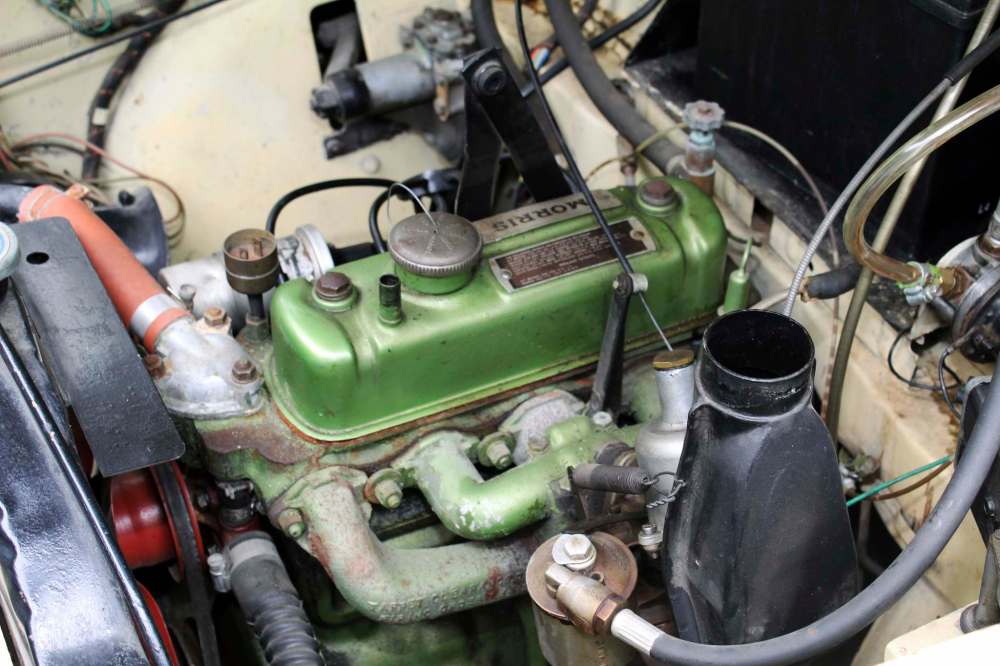
Rack-and-pinion steering and torsion bar front suspension gave the Minor what was billed as “Lull-Above” ride, and handling that was well beyond what one could expect from a roomy family car. For power, the 918.6-cubic-centimetre L-head four-cylinder engine, developing 27.5 horsepower at 4,400 rpm was a prewar carry-over, but by 1956, the Minor would see a new engine. The Minor, wearing the 1,000 designation badging featured an A-series 948-cubic-centimetre, overhead-valve four-cylinder engine, would produce 30 horsepower. The car was available in two-door sedan or four-door sedan body styles, as well as the now much-loved and collectible Traveller “woodie” two-door station wagon and two-door convertible.

Although the 1950s is remembered as the decade of the chrome-laden large car era in North America, there were those buyers who were seeking out more austere vehicles for their motoring needs. The import market opened the door for buyers seeking roomy, small sedans, with good handling, ample trunk room and fuel-efficient engines. These cars were a real alternative for families on a budget.
By 1958, the Morris Minor 100 was a common sight on the road in Europe, Asia and North America. A true family-capable vehicle, now boasting 37 horsepower thanks to a modest increase in compression, its top speed was nearing 112 kilometres per hour with a zero-to-96-kilometres-per-hour time of 31 seconds. Selling nearly 150,000 units per year, it was typically purchased by those wanting a well-engineered small car with familiar mechanicals, without the idiosyncrasies of the air-cooled Volkswagen Beetle.

For George Siamandas of Winnipeg, the Morris Minor was the car he first learned to drive. “At age 16, while I was working at the Hollow Mug Cabaret at the International Inn, I learned to drive on a Morris Minor owned by a fellow busboy,” Siamandas says. “As we got off late, past the time the buses ran, he often let me drive the car home.”

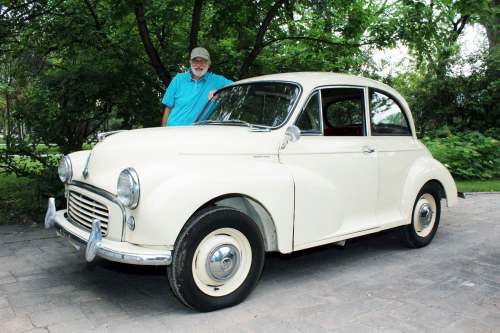
The Morris remained a powerful memory for Siamandas, and in 1986, he found one poking out of a lean-to in a River Heights back lane. The young man who owned the car had received it from his grandfather and really wanted to sell it and buy his dream Firebird. Siamandas purchased the Morris with 43,529 original kilometres on the engine, and spent the summer bringing it back to life. A basic tune-up, thorough cleaning and general maintenance got the car back on the road.

Primrose in colour, the two-door Minor had received a repaint in the late 1960s, otherwise it is complete and mostly original. Almost entirely rust-free with acceptable chrome trim and bumpers, it has a very nicely kept red-leather bucket-seat interior. With a four-speed manual transmission, manual choke and pull-start switch on the dash, it’s an extremely bare-bones vehicle in comparison to any newer models. It even has a small access hole in the grille to insert the metal crank handle, to start it in the event of a dead battery.

Over the years, Siamandas has maintained the car and used it sparingly as a summer driver. It now has about 64,373 kilometres on the odometer. “It’s a joy to drive and very easy to work on as everything is simple and accessible,” says Siamandas, who admits his Mazda Miata convertible takes him most places during the summer, so he doesn’t have many occasions to drive the little Morris Minor coupe anymore.

The Morris Minor was a milestone of automotive accomplishment — not only Great Britain, but for the world. It was Britain’s first million-unit seller, making it a true “people’s car,” with more than 1.5 million built before production ceased.
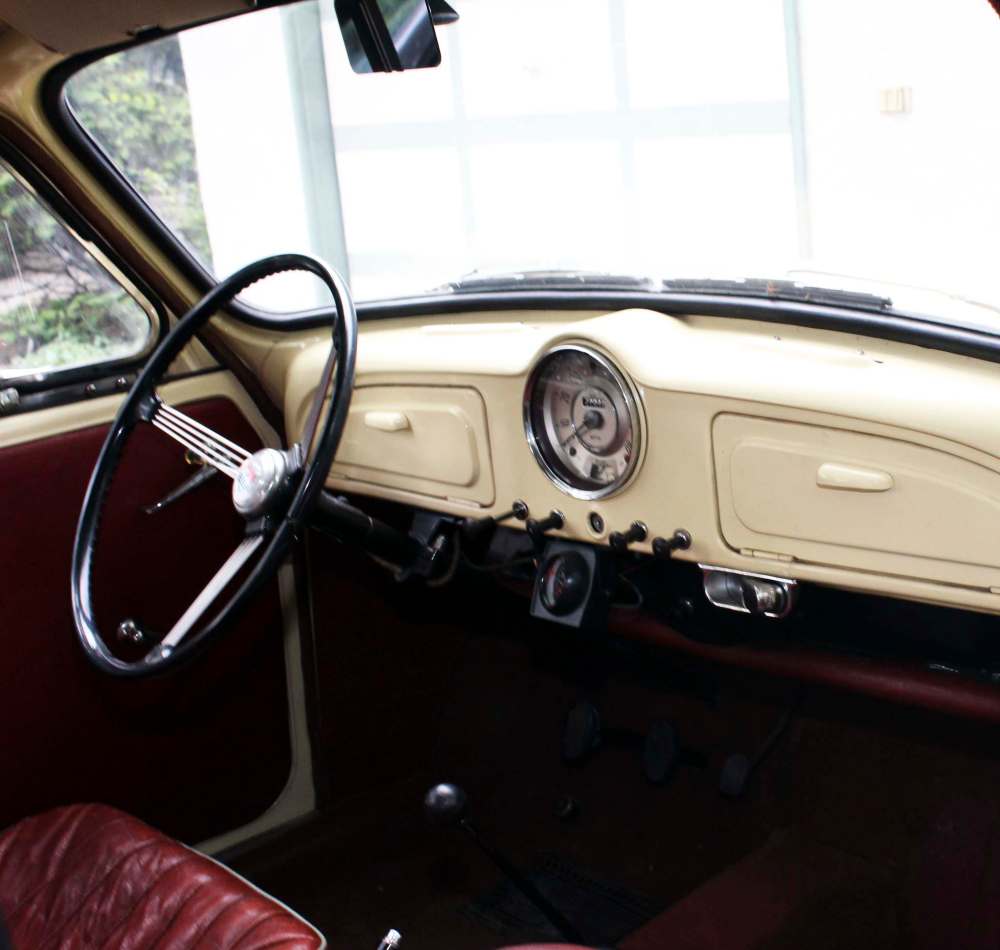
The Minor has a classic feel with red-leather bucket seats and a pull-start switch on the dash.

A final engine upgrade occurred in 1962, when a 49-horsepower A-series 1,098-cubic-centimetre engine became standard. The badging remained 1,000, however, in a bid for familiarity with prospective customers.

With the Morris Minor now enjoying its 70th anniversary since its introduction, it’s ubiquitous at collector car events in Britain, in much the same way 1955 to 57 Chevrolets or early Mustangs are in North America. Though much less common in the U.S. and Canada, there is still a following for these exclusive imports.

57ford@mymts.net
Report Error Submit a Tip

More Stories

Champion curler Meleschuk never lost his passion for the game

Joshua Frey-Sam 9 minute read Preview

Champion curler Meleschuk never lost his passion for the game

Joshua Frey-Sam 9 minute read 3:00 AM CDT

At the height of his curling career, Orest Meleschuk balanced ferocity and finesse like almost no one else.

The Winnipeg product was a fierce competitor skilful enough to thread a rock through a window and find the button.

Known as “The Big O,” he curled competitively for over six decades, finding success at the local, provincial, national and global level, and his longevity on the pebble was notable before lengthy careers became the norm.

Meleschuk is still tied with his good friend John Usackis for the most appearances in the Manitoba men’s provincial playdowns, at 30.

Read
3:00 AM CDT

New sci-fi/fantasy bookstore a welcome addition

Ben Sigurdson 5 minute read Preview

New sci-fi/fantasy bookstore a welcome addition

Ben Sigurdson 5 minute read Thursday, Aug. 6, 2026

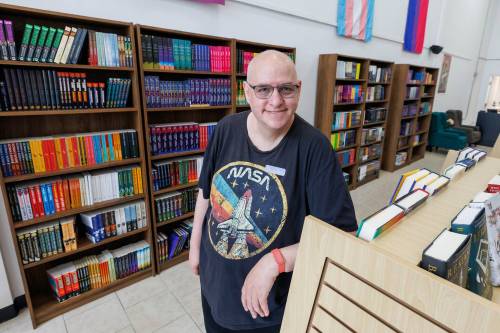
A new chapter has begun in Winnipeg’s literary landscape with the opening of science fiction and fantasy bookstore Other Places Books.

Located at 436 Graham Ave., the queer-owned and operated shop is the latest in a host of genre bookstores to have opened in the city over the last few years. In addition to longtime mainstay Whodunit? Mystery Bookstore (163 Lilac St.), the local scene now also features a horror bookstore (Raven’s End Books, which opened at 1859 Portage Ave. in 2024) and a shop focused on romance (Bound to Please, which opened at 995 McPhillips St. earlier this year).

The 900 titles currently in stock at Other Places, which opened Tuesday, span a range of sci-fi and fantasy sub-genres, with a particular focus on queer writers and storylines. The bookstore is the brainchild of Didi Chanoch, who moved to Winnipeg from Israel in 2025 after the Canadian federal government began offering work permits to those in Israel and Palestine looking to leave the area due to the conflict.

Winnipeg ended up on Chanoch’s radar in large part due to a more reasonable cost of living than other Canadian cities.

Read
Thursday, Aug. 6, 2026

Britain’s Beetle alternative ‘a joy to drive’

Larry D'ArgisClassic Cruising 4 minute read Preview

Britain’s Beetle alternative ‘a joy to drive’

Larry D'ArgisClassic Cruising 4 minute read Friday, Aug. 10, 2018

The Morris Minor began production in 1948. Built in Britain and designed by Alec Issigonis, the styling was all-new, as was the all-steel, unibody construction incorporating a full-steel floor pan.

Rack-and-pinion steering and torsion bar front suspension gave the Minor what was billed as “Lull-Above” ride, and handling that was well beyond what one could expect from a roomy family car. For power, the 918.6-cubic-centimetre L-head four-cylinder engine, developing 27.5 horsepower at 4,400 rpm was a prewar carry-over, but by 1956, the Minor would see a new engine. The Minor, wearing the 1,000 designation badging featured an A-series 948-cubic-centimetre, overhead-valve four-cylinder engine, would produce 30 horsepower. The car was available in two-door sedan or four-door sedan body styles, as well as the now much-loved and collectible Traveller “woodie” two-door station wagon and two-door convertible.

Although the 1950s is remembered as the decade of the chrome-laden large car era in North America, there were those buyers who were seeking out more austere vehicles for their motoring needs. The import market opened the door for buyers seeking roomy, small sedans, with good handling, ample trunk room and fuel-efficient engines. These cars were a real alternative for families on a budget.

By 1958, the Morris Minor 100 was a common sight on the road in Europe, Asia and North America. A true family-capable vehicle, now boasting 37 horsepower thanks to a modest increase in compression, its top speed was nearing 112 kilometres per hour with a zero-to-96-kilometres-per-hour time of 31 seconds. Selling nearly 150,000 units per year, it was typically purchased by those wanting a well-engineered small car with familiar mechanicals, without the idiosyncrasies of the air-cooled Volkswagen Beetle.

Read
Friday, Aug. 10, 2018

Israel: the new political divide?

David McLaughlin 5 minute read Preview

Israel: the new political divide?

David McLaughlin 5 minute read 2:01 AM CDT

Abdul won and Avi is thrilled.

Federal NDP Leader Avi Lewis emerged from electoral hiding to tell us how it is “exhilarating to witness” a “wave of progressive populism” in the United States. He was referring to the upset winner of Tuesday’s heavily-watched Michigan Senate primary race, Abdul El-Sayed, who barely prevailed over his establishment opponent for the Democratic nomination.

Premier Wab Kinew’s favourite New Democrat (after himself) steadfastly hesitates to take a risk and run for a House of Commons seat in a byelection to kickstart Canada’s version of progressive populism. No hesitation, though, in Lewis immediately basking in the reflected glory of those international comrades and fellow travellers who do.

Writing about the state of Canada’s New Democrats feels like a hate crime — you hate wasting your time — and this is no exception. A better story is what’s driving this modest but undeniable political movement in U.S. politics and whether it might gain traction here in Canada.

Read
2:01 AM CDT

City puts Osborne Village lot up for sale third time

Joyanne Pursaga 5 minute read Preview

City puts Osborne Village lot up for sale third time

Joyanne Pursaga 5 minute read Thursday, Aug. 6, 2026

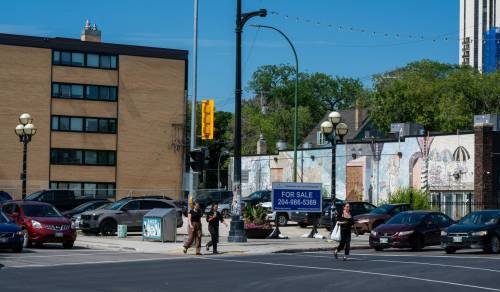
The city is making a third attempt to sell a seemingly prime Osborne Street property, after an offer for the surface parking lot fell through earlier this year.

The 772-square-metre space at 145 Osborne St., which formerly operated as an official paid city parking lot, has been posted for sale once again.

It may puzzle some Winnipeggers to see the site in the heart of Osborne Village remain empty so long after the city declared it surplus in 2020.

However, a few different challenges may limit its appeal to potential buyers, alocal real estate agent said.

Read
Thursday, Aug. 6, 2026

Local medical scrubs retailer feeling abandoned by U of M, RRC Polytech nursing programs

Maggie Macintosh 4 minute read Preview

Local medical scrubs retailer feeling abandoned by U of M, RRC Polytech nursing programs

Maggie Macintosh 4 minute read Thursday, Aug. 6, 2026

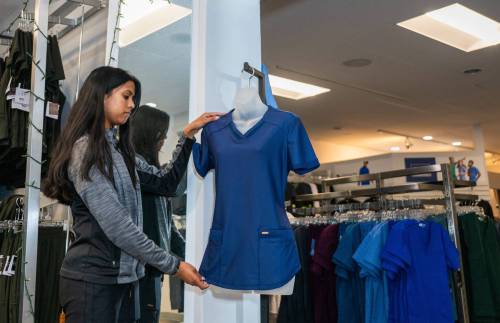
A Winnipeg uniform store is appealing to medical students to shop locally for scrubs this back-to-school season as it grapples with growing competition online and an apparent shutout by local campuses.

Unimor Healthwear has long ordered uniforms in bulk in navy blue, burgundy and pewter, as nurses-in-training are required to wear those colours based on where they’re enrolled in the province.

“It’s not like it used to be,” Evan Schwartz said about customer traffic to his store at 98 Sherbrook St.

The company’s director estimated he spent about $15,000 to stock up on scrubs in pewter in preparation for the launch of Red River College Polytechnic’s upcoming nursing intake.

Read
Thursday, Aug. 6, 2026