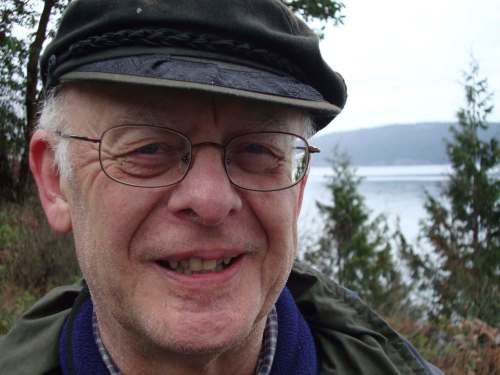
In Conversation with W.D. Valgardson

Advertisement

Advertise with us

Gimli-born, Winnipeg-raised writer W.D. Valgardson has published novels, short-story collections, poetry and even books for kids over his long career.

Read this article for free:


or

Already have an account? Log in here »

To continue reading, please subscribe:

Subscribe and receive a limited-edition Free Press branded hat or tote.

Digital Subscription

One year of digital access for only $205*

  • Enjoy unlimited reading on winnipegfreepress.com
  • Read the E-Edition, our digital replica newspaper
  • Access News Break, our award-winning app
  • Play interactive puzzles

*First annual payment billed as $205.00 + GST for one year. This annual subscription will automatically renew at $233.00 + GST every 52 weeks (10% off the regular annual price of $259.35). Offer available to new and qualified returning subscribers only. Cancel any time.

To continue reading, please subscribe:

Add Free Press access to your Brandon Sun subscription for only an additional

$1 for the first 4 weeks*

  • Enjoy unlimited reading on winnipegfreepress.com
  • Read the E-Edition, our digital replica newspaper
  • Access News Break, our award-winning app
  • Play interactive puzzles
Start now

*Your next Brandon Sun subscription payment will increase by $1.00 and you will be charged $17.95 plus GST for four weeks. After four weeks, your payment will increase to $24.95 plus GST every four weeks.

Hey there, time traveller!
This article was published 25/08/2018 (2947 days ago), so information in it may no longer be current.

Gimli-born, Winnipeg-raised writer W.D. Valgardson has published novels, short-story collections, poetry and even books for kids over his long career.

But In Valhalla’s Shadows, released this summer, is Valgardson’s first mystery novel.

He will be launching it Wednesday night at McNally’s as part of the Winnipeg International Writers Festival’s Fall Literary Series with Stefan Jonasson. The event is also sponsored by Icelandic community newspaper Lögberg-Heimskringla.

Author W. D. Valgardson
photo by Janis O’Magnusson
Author W. D. Valgardson photo by Janis O’Magnusson

FP: What do you want people to know about In Valhalla’s Shadows?

Valgardson: I want them to know many things. The RCMP has serious problems because of the military structure that is at its foundation. Male, rigid, sexist. The costs to society are high, but the cost to the members is higher. Successive attempts at substantial change have failed so far. The same is true for our military and first responders. The number of suicides and mental breakdowns are astounding. That is just one issue I tried to deal with inside a murder mystery. Our communities, not just our cities, but even the smallest communities, are fraught with tragedy because of illegal drugs. I believe that stability and happiness depend on a basis of knowledge of who we are. When who we are is taken away from us, the underpinning of pride and respect crumbles and is often replaced by an identity that is destructive. There may well be problems with the Ten Commandments, but are Jordan Peterson’s 12 rules more likely to help people prosper and be happy? Will joining a gang rather than a church or an ethnic organization lead to happiness? The most shocking case we have is the deliberate destruction of the identity of Aboriginal people across Canada. The results are all around us.

FP: What are your goals for this book?

Valgardson: I would like it to succeed as a mystery, but I would like it to do more than that. I hope it deals with PTSD, with the relationship of the RCMP and the communities they police, with the need to belong, to have an identity beyond oneself. There were about another hundred pages but I cut them. They slowed down the book too much. In them, I tried to deal with the question of diversity. We have a PM who keeps saying diversity is our strength, which it has become, but only because 100 years of learning how to live together have passed. We’ve had to learn how to become Canadian. Read back copies of the Free Press and see how vociferous editorial writers were against Ukrainians. Japanese internment. Ukrainian internment. Internment of German Canadians. The barring of black people emigrating from (the United States) to Alberta. The unbelievable exploitation of the Chinese. There are costs to diversity, but we have to learn how to be Canadian. Valhalla, in spite of its name and origin, is a mix of people of various backgrounds. Like most Canadian towns are.

FP: You’ve lived in Victoria for many years but still return to Gimli in the summers and in your fiction. What is it about the Icelandic community in Manitoba you find so generative?

Valgardson: I grew up in Gimli. In the ’40s and ’50s, it was a very small town, only set apart from other similar small towns, Riverton, Arborg, Lundar, etc., by it having had the good fortune of the (Second World War) airbase built (a few kilometres) out of town. That created a unique culture. It was still very Icelandic. Icelandic was not just a kitchen language but was spoken in business establishments, on the street, in the church. Summer campers had started coming just about right away after the railway arrived in 1906. That’s why I’m here. My mother’s parents had a cottage built at Gimli and hired my father’s father. My mother’s parents both came from Ireland, my grandfather before (the First World War) and my grandmother after (the First World War). The Ukrainians had started arriving at the beginning of the 1900s. The Icelanders had first arrived in 1875 and 1876 and had taken up land along Lake Winnipeg so they could fish. The Ukrainians had to go west into the swamps and gravel ridges, however. By the time I arrived in 1939, Ukrainians had moved into town. Many cottagers were Jewish. This created opportunities but also tensions. Brawls over men courting, flirting with women not in their particular group, were common. As a kid, I found the mix fascinating. We got ballroom dance lessons from a couple of Air Force trainee pilots, danced the polka at the Farmer’s Hall, ate vinarterta and skyr, learned a few words of Yiddish. And made friends.

Islendingadagurinn (the Iclandic Festival of Manitoba) seems to be the focal point for many of the people, who, like me, return year after year. I’ve come every summer except one since 1957. The lake, the beach, the berry picking, the pickerel fillets, the hot summer days, but most of all, the people. There is a culture and it isn’t just “Icelandic Canadian” culture. It is the culture created by all these people.
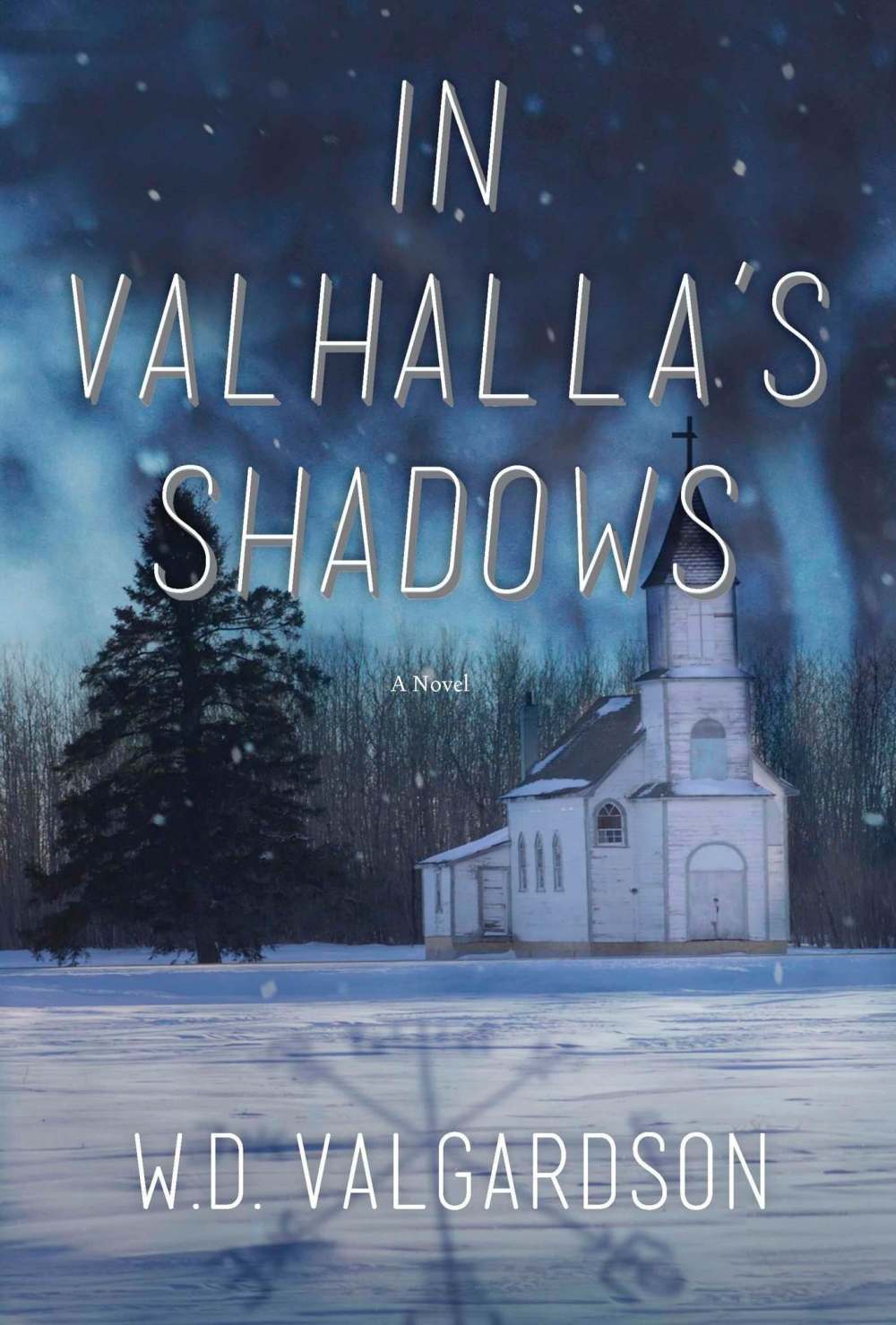
Cover art of “In Valhalla’s Shadows”
by W. D. Valgardson
Cover art of “In Valhalla’s Shadows” by W. D. Valgardson

FP: Your main character, Tom Parsons, is ex-RCMP and recently separated. Throughout this book, he seems to be trying to combat the loneliness that seems has been his lot in life, but also seeking it out. What does loneliness do to people do you think?

Valgardson: People die from loneliness. The lack of social connections often leads to alcoholism, drug use, makes a person more and more non-functional, leads to suicide. I think it takes away security and hope. It takes away a sense of community and the ability to identify with others. People often pay a great price not to be lonely, join inappropriate groups, groups that exploit them. Group identity creates security, whether it is religious or secular. One of the terrible effects of bullying in school is that it blocks an individual’s ability to be part of a group and to learn social skills. More than once, Tom is mentioned as watching the world go by from his parents’ apartment window. He fears he could become like the homeless people he sees on the street. He wishes he belonged to a large family, so that there were doors that would open to him, places where he had the security of knowing that he was always welcome. It is why it is so painful to him when he sees various people who have no place.

Ariel Gordon is a Winnipeg writer.
Report Error Submit a Tip

More Stories

Family account spiced with magic realism, geopolitical intrigue and a ghost story

Reviewed by Zilla Jones 4 minute read Preview

Family account spiced with magic realism, geopolitical intrigue and a ghost story

Reviewed by Zilla Jones 4 minute read 2:01 AM CDT

Tom Lin’s second novel Babylon, South Dakota moves beyond a historical account of an immigrant family’s struggle, delightfully blending and bending genres.

Lin is a Chinese-born novelist whose family emigrated to the U.S. when he was four years old. His debut novel, The Thousand Crimes of Ming Tsu, won the 2022 Andrew Carnegie Medal for Excellence in Fiction, making him the youngest ever recipient of that award. He earned a PhD in English from the University of California Davis and is currently an assistant professor of English and creative writing at the University of Iowa.

Babylon, South Dakota takes place in an unspecified time period that can be understood to be during the Mao era — likely the 1950s or ’60s. A young Chinese couple, the Hsuis, immigrate to the rural community that gives the book its title. They take the names Saul and Mei and settle on a 160-acre homestead left to them by a distant relative.

Saul’s dream is to breed and sell chrysanthemums from seeds he brought from China, while Mei wants to raise livestock. They speak no English, know nothing of life in the United States, are unprepared for the harshness of winter and the isolation of the farm and bring nothing with them except some gold, which Mei hides around the house for emergencies. Their only link to the outside world is a discarded and marginally functioning TV set, which Saul rescues and rigs up.

Read
2:01 AM CDT

Siloam Mission, WFPS discussing on-site paramedic to reduce staggering number of emergency calls

Scott Billeck 4 minute read Preview

Siloam Mission, WFPS discussing on-site paramedic to reduce staggering number of emergency calls

Scott Billeck 4 minute read Yesterday at 2:00 AM CDT

Winnipeg’s fire-paramedic service and its largest homeless-serving organization are discussing what it would look like to station at least one paramedic at Siloam Mission, as emergency calls to the downtown facility surge.

The ongoing discussions come as Winnipeg Fire Paramedic Service crews were dispatched 1,771 times during the first eight months of the year to the two adjacent Siloam properties at 303 Stanley St. and 300 Princess St.

WFPS said most of the calls were related to overdoses or other consequences of substance use, with the total nearly double the 854 calls recorded over the same period last year. By comparison, there were 831 calls during the same span in 2024, and 591 in 2023.

“The number of emergency calls isn’t sustainable for us as a service, but it’s certainly not sustainable for them as an agency trying to provide services,” WFPS chief Ryan Sneath told the Free Press. “And they recognize that they’re impacting emergency services, not them specifically, but the site in a significant way.”

Read
Yesterday at 2:00 AM CDT

Gillingham in lead with decided voters

Nicole Buffie 6 minute read Preview

Gillingham in lead with decided voters

Nicole Buffie 6 minute read Yesterday at 6:55 PM CDT

A cloud of uncertainty is hanging over Winnipeg as October’s municipal election nears.

Three months after a poll showed more than 40 per cent of Winnipeggers wanted to see someone other than current mayor Scott Gillingham elected, a new Abacus Data poll indicates more than half of Winnipeg voters are undecided heading into next month’s civic election.

Of decided voters, 55 per cent favour Gillingham compared to 23 per cent for former councillor and provincial cabinet minister Kevin Klein and 11 per cent for funeral director Mike Vogiatzakis.

Of all respondents, just over 50 per cent said they were unsure while 13 per cent said they will not vote.

Read
Yesterday at 6:55 PM CDT

Grieving child builds backyard rocket ship

Harriet Zaidman 4 minute read 2:01 AM CDT

I Built a Rocket Ship (Kids Can Press, 32 pages, hardcover, $22) by Winnipegger Anna Lazowski is a tender story for children ages 4-8 about a little girl trying to make sense of her mother’s death. The child engages in conversation with her late mom, agreeing and disagreeing about things said as she carries objects (and of course, the cat) to the backyard. There, she is building a rocket ship she will pilot into the skies to find her mom again.

Jennica Lounsbury’s varied perspectives show the range of emotions the little girl experiences.

● ● ●

Northwoods Lullaby by Mary Casanova (University of Minnesota Press, 32 pages, hardover, $25) is a bedtime book for readers up to age eight, perfect to bring a busy, happy day to a close. Just like children who are listening to adults reading the book, all the animal babies are being tucked into their nests and burrows by loving parents: “Thump and scamper,/nimble clover./ Soon it’s time to rest. Baby loon/ nestles in/as Papa floats along.”

In Conversation with W.D. Valgardson

Ariel Gordon 6 minute read Preview

In Conversation with W.D. Valgardson

Ariel Gordon 6 minute read Saturday, Aug. 25, 2018

Gimli-born, Winnipeg-raised writer W.D. Valgardson has published novels, short-story collections, poetry and even books for kids over his long career.

But In Valhalla’s Shadows, released this summer, is Valgardson’s first mystery novel.

He will be launching it Wednesday night at McNally’s as part of the Winnipeg International Writers Festival’s Fall Literary Series with Stefan Jonasson. The event is also sponsored by Icelandic community newspaper Lögberg-Heimskringla.

FP: What do you want people to know about In Valhalla’s Shadows?

Read
Saturday, Aug. 25, 2018

Cabernet Sauvignon star of wine festival

Ben Sigurdson 5 minute read Preview

Cabernet Sauvignon star of wine festival

Ben Sigurdson 5 minute read 3:00 AM CDT

The Winnipeg Wine Festival will celebrate the king of red wine grapes next weekend — the theme of this year’s festival, which takes place Sept. 25 and 26 at the RBC Convention Centre, is Cabernet Sauvignon.

Cab Sauv, as it’s also known, is the world’s most widely planted wine grape of any colour, first coming to prominence in the 1800s in France’s Bordeaux region, where the grape is still popular. Rather than single-variety wines, Bordeaux reds tend to be blends, with those coming from the left bank of the Gironde estuary being Cabernet-dominant, while right-bank wines are Merlot-dominant, with Cabernet Sauvignon playing a supporting role. Cabernet and Merlot work well together and many other countries have followed suit in blending the two.

A team at University of California Davis put Cabernet Sauvignon through a DNA test in 1996 and discovered its parent grapes are Cabernet Franc and Sauvignon Blanc — it’s likely that at some point the two varieties, planted next to each other in some vineyard, crossed and mutated and became the grape we know today. (Someone growing grapes in the 19th century must have had an inkling of what was up, as the grape has been called Cabernet Sauvignon since long before the DNA test.)

Flavour-wise, most Cabernet Sauvignon wines are big and bold, with a core of deep dark berry flavours, some graphite and spice notes and relatively bright acidity. It’s a grape that is well-suited to barrel aging, with most examples seeing at least some time in wood.

Read
3:00 AM CDT