Companies make room for the office power nap, recognizing need for rest

Advertisement

Advertise with us

TORONTO - Snoozing on the job isn't just permitted at Bob Vaez's software company, it's encouraged.

Read this article for free:

or

Already have an account? Log in here »

To continue reading, please subscribe:

Subscribe and receive a limited-edition Free Press branded hat or tote.

Digital Subscription

One year of digital access for only $205*

  • Enjoy unlimited reading on winnipegfreepress.com
  • Read the E-Edition, our digital replica newspaper
  • Access News Break, our award-winning app
  • Play interactive puzzles

*First annual payment billed as $205.00 + GST for one year. This annual subscription will automatically renew at $233.00 + GST every 52 weeks (10% off the regular annual price of $259.35). Offer available to new and qualified returning subscribers only. Cancel any time.

To continue reading, please subscribe:

Add Free Press access to your Brandon Sun subscription for only an additional

$1 for the first 4 weeks*

  • Enjoy unlimited reading on winnipegfreepress.com
  • Read the E-Edition, our digital replica newspaper
  • Access News Break, our award-winning app
  • Play interactive puzzles
Start now

*Your next Brandon Sun subscription payment will increase by $1.00 and you will be charged $17.95 plus GST for four weeks. After four weeks, your payment will increase to $24.95 plus GST every four weeks.

Hey there, time traveller!
This article was published 10/02/2019 (2732 days ago), so information in it may no longer be current.

TORONTO – Snoozing on the job isn’t just permitted at Bob Vaez’s software company, it’s encouraged.

The Toronto boss of EventMobi describes himself as “the only CEO that promotes people to sleep at work,” insisting the policy boosts productivity and company morale.

To that end, EventMobi’s open-concept waterfront office features a private nap room where workers can grab a few Zs if they feel sluggish, or just get some alone time in a dark space if they have a headache or don’t feel well.
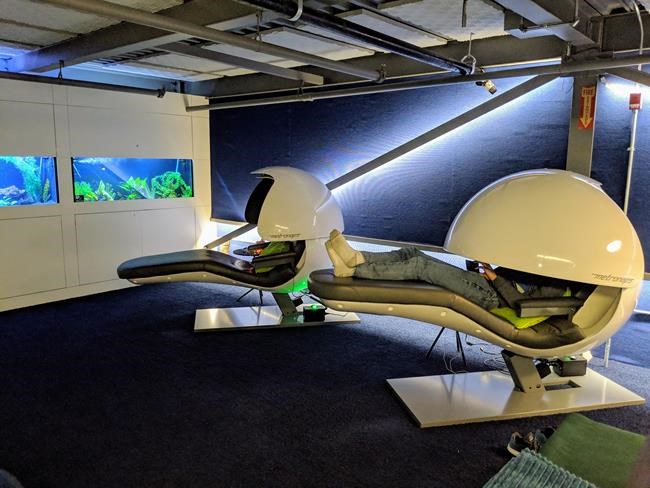
A Google Canada employee reclines on one of two nap pods at its offices in Kitchener, Ont., in this undated handout photo. Google Canada spokesman Aaron Brindle says nap rooms can be found in the tech giant's offices around the world, including the Toronto office where a wellness space for nursing mothers can be reserved for taking a break, or taking a nap. Another space at their engineering headquarters in Kitchener, Ont., features two high-tech recliners with large spherical privacy visors for extra-tired employees looking to grab some shut-eye. THE CANADIAN PRESS/HO - Google Canada

“It’s just from my own experience,” Vaez says of his reasons for setting up the quiet space.

“As (with) any other tech professional worker, you work really odd hours and your brain just sometimes shuts off. Especially after lunch you just can’t work and I’ve been to other offices (where) people sleep at their desk and it’s really frowned upon. If you can’t work, what’s the point?”

The benefits of adequate sleep are well-established, but Vaez’s willingness to address tired staffers in such a direct way is relatively rare.

Still, he’s not the only one.

Google Canada spokesman Aaron Brindle says nap rooms can be found in the tech giant’s offices around the world, including the Toronto office where a wellness space for nursing mothers can be reserved for taking a break, or taking a nap.

Another space at their engineering headquarters in Kitchener, Ont., features two high-tech recliners with large spherical privacy visors for extra-tired employees looking to grab some shut-eye.

Meanwhile, management consulting firm Accenture says its three-floor Toronto office features a wellness room where staffers can snooze. That’s in addition to various inclusivity initiatives — gender neutral and accessible washrooms, a room for nursing mothers, and a meditation/prayer room with a foot-washing station.

It’s a phenomenon that seems primarily centred in technology and marketing sectors, says Alina Owsianik, director of talent acquisition, diversity and inclusion at Randstad Canada.

Owsianik knows of at least five Randstad clients with nap rooms, and credits their existence to a new generation of workers who increasingly blur the line between their home and work lives.

“Millennials are spending much more time than our parents did at work. They also work crazy hours, different hours, and we want to adjust the work style and the balance to their needs,” she says.

“(That includes) a lot of development shops, technology shops, where maybe there are crazy deadlines or people like to work in the evenings (and) have a nap during the daytime. That’s why we see employers actually adapting the workspace and creating a dedicated space to take a nap.”

She believes it’s more than just a fad, insisting “they are becoming more and more popular” as an added tool to recruit top talent.

Owsianik says Randstad began testing its own version of the nap room, dubbed the “recharge room,” after an employee committee suggested the measure as a way to address mental-health issues.

It has a couch, diffuser with essential oils, a salt lamp, mats for stretching, and a couch for resting and napping.

“There are a lot of people that are not declaring disability or mental disability,” she notes.

“And we are working in a highly sales-driven environment where there is a lot of stress so we really wanted to create a space where people can relax, have a nap.”

For job-seekers weighing multiple offers, a healthy workplace can win them over, she adds, believing many workers want more than just a good salary.

“Millennials and the younger talent and the younger generation are looking more for the rewarding career (and) self-development rather than just the pay.”

Universities, too, are recognizing that some of their students are exhausted by long commutes, awkward class schedules, jobs and personal commitments.

Two years ago, the student union that jointly serves Humber College and the University of Guelph-Humber created two sleep lounges for its two Toronto campuses, and then doubled the number of beds at one of them last September.

The expanded lounge now has 12 beds while the second hosts eight. Together, they’ve drawn about 4,000 users this school year, well surpassing the 3,000 that dropped by during the entire school year in 2017-2018, says the union, known as Ignite.

“We are a commuter school and a lot of our students, they don’t get to go home until maybe eight or nine hours after they’ve had a whole day on campus,” says union president Monica Khosla, who represents students at both schools, which includes a satellite campus for the University of Guelph.

Over at Toronto’s Centennial College, the student union bought four so-called “EnergyPods” by the U.S. company MetroNaps last August, adds spokesman Brad Beamish. One has been installed next to the cafeteria, another in the library.

Their many features include a retractable privacy visor, speakers that whisper relaxation music and pre-programmed relaxation guides, wake alarms, lights and vibration controls.

“There were basically people jumping in them before they were finished being set up. The demand was almost immediate,” Beamish recalls.

Productivity expert Lisa Belanger is glad to see such initiatives afoot, noting that other countries seem to understand the need for work/life balance far better than Canada.

She points to Finnish sauna culture and the Swedish coffee break known as Fika.

“Europe is doing better on this for sure with valuing vacation, respite, weekends,” says Belanger, a post-doc researcher at the University of Calgary whose work includes looking at effective break strategies.

Historically, labour breaks were introduced to boost efficiency, she notes. These days, they are eliminated in the belief they slow us down.

“Coffee breaks were designed in the industrial era so that it increased productivity, reduced safety concerns and injuries and errors,” says Belanger, also CEO of the consulting firm ConsciousWorks, which looks at how brain health, nutrition and sleep affect performance.

“It’s gotten to the point where we kind of skipped over them. We put our coffee in a to-go mug and just get it in us as quickly as possible and forget that our brain requires breaks.”

Report Error Submit a Tip

More Stories

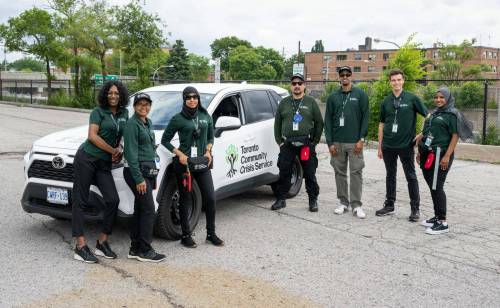
Toronto’s alternative crisis response model deemed a success

Scott Billeck 4 minute read Preview

Toronto’s alternative crisis response model deemed a success

Scott Billeck 4 minute read 2:01 AM CDT

A Toronto emergency response program that helped inspire Winnipeg’s proposed alternative crisis response model has already expanded city-wide, just four years after launching as a pilot project.

The Toronto Community Crisis Service, launched in 2022, has become the city’s fourth emergency service, providing a 24-7, community-based response to people experiencing mental health crises. The service has handled nearly 50,000 calls through 911 and 211, dispatched mobile crisis teams to more than 41,000 incidents, made more than 11,600 referrals to health and social services and resolved the majority of eligible 911 calls without police involvement.

Winnipeg Mayor Scott Gillingham last week proposed creating a similar “fourth crisis response pathway” that would allow 911 calls that aren’t violent or criminal in nature to be transferred to community-based crisis teams.

Under the proposal, which has support from both the Winnipeg Police Service and the Winnipeg Fire Paramedic Service, a centralized crisis dispatch and co-ordination hub would receive triaged calls and match them with citywide response teams, staffed in part through existing community organizations, including the Downtown Community Safety Partnership and The Link’s mobile crisis teams. The goal is to divert appropriate calls away from the WPS and WFPS.

Read
2:01 AM CDT

Today’s horoscope

Georgia Nicols 4 minute read Preview

Today’s horoscope

Georgia Nicols 4 minute read Yesterday at 2:00 AM CDT

MOON ALERT: There are no restrictions to shopping or important decisions today. The moon is in Aries.

ARIES (March 21-April 19)

This is a lovely day for you! The moon is in Aries dancing beautifully with lucky Jupiter and the sun. It is also lined up with gentle Neptune making you empathetic and tuned into your surroundings. You feel warm and friendly toward everyone, and are concerned for their welfare.

TAURUS (April 20-May 20)

Read
Yesterday at 2:00 AM CDT

240 WestJet flight attendants picket in Winnipeg

Malak Abas 6 minute read Preview

240 WestJet flight attendants picket in Winnipeg

Malak Abas 6 minute read Sunday, Aug. 2, 2026

Winnipeg’s WestJet flight attendants took to the picket line outside of Richardson International Airport on the first day of nationwide strikes Sunday, while inside, frustrated flyers scrambled to re-route cancelled long-weekend flights.

The Canadian Union of Public Employees’ Ontario arm and the airline announced the strike would commence after the strike deadline was passed without a deal early Sunday morning. WestJet attendants have been without a contract since Dec. 31, 2025.

Hours later, the 240 WestJet flight attendants based in Winnipeg had walked off the job and were marching outside of the airport terminal, some carrying signs with slogans including “Tired with WestJet? So are We!” and “Unpaid Work Won’t Fly.”

Key issues causing the stalemate are wages and pay for work on the ground: the union says flight attendants are not being paid for some of that work, while the company says they pay for the work through a “credit hour” system rather than an hourly rate.

Read
Sunday, Aug. 2, 2026

Stampeding to Starlette’s

David Sanderson 7 minute read Preview

Stampeding to Starlette’s

David Sanderson 7 minute read Saturday, Aug. 1, 2026

ELMA — Build it and they will come.

Lee and Star Giesbrecht are the owners of Starlette’s Burger Saloon, a western-themed, outdoor eating spot situated on the married couple’s 40-acre spread, immediately north of Elma.

Seated at one of a half-dozen picnic tables that dot the grounds, Star recalls a conversation she and Lee had prior to the May 2025 grand opening of their locale, which, with its weathered-wood exterior and rustic swinging doors, wouldn’t look out of place in an episode of Yellowstone.

Because they are “literally in the middle of nowhere,” Star says Lee thought it would be advantageous to mount a TV in one corner of the kitchen, for those occasions when they’d be twiddling their thumbs for hours on end, with little to do.

Read
Saturday, Aug. 1, 2026

18-year-old woman shot by Winnipeg police officer

1 minute read Updated: Yesterday at 12:28 PM CDT

A police officer shot and injured an 18-year-old woman early Monday morning while investigating a College Avenue shooting.

A north district unit officer was in the area of Aikins Street and College Avenue at 2:27 a.m. Aug. 3 when he heard multiple gunshots nearby, the Winnipeg Police Service stated in a news release Monday.

The officer went to investigate and "was confronted by a woman and a 16-year-old youth." The officer discharged his gun and the young woman was injured, the police service stated. The woman was taken to hospital in unstable condition and was later upgraded to stable.

Police recovered a gun from the suspects and investigators later linked the 18-year-old woman and 16-year-old male to a shooting that occurred outside of a home in the 300 block of College Avenue. The 16-year-old was arrested.

Meeting the needs of disabled Indigenous children

Sherry Gott 5 minute read 2:00 AM CDT

Navigating Manitoba’s disability services is difficult under the best circumstances. For Indigenous families, access is further constrained by geography, poverty, jurisdictional confusion, and culturally-inappropriate systems that do not reflect Indigenous approaches to raising and supporting children. Culturally-insensitive intakes, assessments, and treatments in Manitoba also contribute to misunderstanding, misdiagnosis, and inappropriate service responses across the province.

The consequences for Indigenous children with disabilities and their families are profound — they are forced into a system that does not recognize who they are, how they are understood in their communities or what they need to thrive.

Many First Nations families, particularly in remote and northern communities, are faced with the choice of living in their home community with limited or no resources for their child with a disability or relocating to an urban centre to access necessary supports. This further disconnects families from family and community support, connectedness to shared values and teachings and a child’s right to a sense of belonging.

Additionally, First Nations families living with a disabled child experience significant over-involvement with the child welfare system compared to non-Indigenous Manitobans. This is due to a couple of key factors, namely the differing perspectives regarding disabilities between the Western clinical and many First Nations world views and the prevailing systemic default that families be pressured to surrender their disabled child to child and family services care in order to access resources that are otherwise unavailable.