London man seems to be free of HIV in second such case

Advertisement

Advertise with us

SEATTLE - A London man appears to be free of the virus that causes AIDS after a stem cell transplant, the second success including the "Berlin patient," doctors reported.

Read this article for free:


or

Already have an account? Log in here »

To continue reading, please subscribe:

Subscribe and receive a limited-edition Free Press branded hat or tote.

Digital Subscription

One year of digital access for only $205*

  • Enjoy unlimited reading on winnipegfreepress.com
  • Read the E-Edition, our digital replica newspaper
  • Access News Break, our award-winning app
  • Play interactive puzzles

*First annual payment billed as $205.00 + GST for one year. This annual subscription will automatically renew at $233.00 + GST every 52 weeks (10% off the regular annual price of $259.35). Offer available to new and qualified returning subscribers only. Cancel any time.

To continue reading, please subscribe:

Add Free Press access to your Brandon Sun subscription for only an additional

$1 for the first 4 weeks*

  • Enjoy unlimited reading on winnipegfreepress.com
  • Read the E-Edition, our digital replica newspaper
  • Access News Break, our award-winning app
  • Play interactive puzzles
Start now

*Your next Brandon Sun subscription payment will increase by $1.00 and you will be charged $17.95 plus GST for four weeks. After four weeks, your payment will increase to $24.95 plus GST every four weeks.

Hey there, time traveller!
This article was published 04/03/2019 (2722 days ago), so information in it may no longer be current.

SEATTLE – A London man appears to be free of the virus that causes AIDS after a stem cell transplant, the second success including the “Berlin patient,” doctors reported.

The therapy had an early success with Timothy Ray Brown, a U.S. man treated in Germany who is 12 years post-transplant and still free of HIV. Until now, Brown is the only person thought to have been cured of infection with HIV, the virus that causes AIDS.

Such transplants are dangerous and have failed in other patients. They’re also impractical to try to cure the millions already infected.
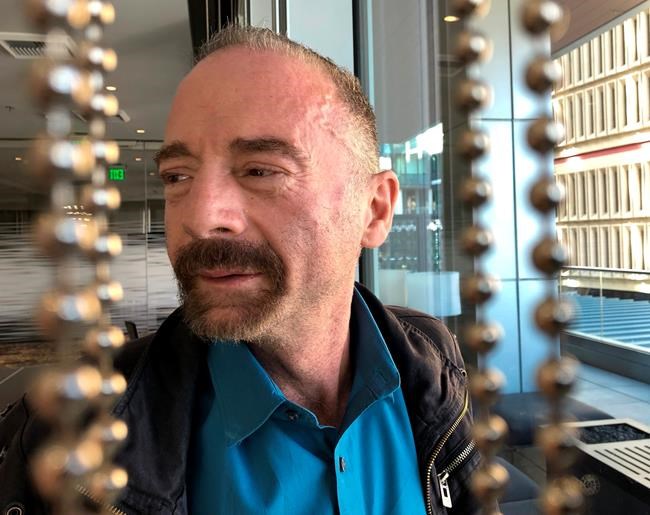
Timothy Ray Brown poses for a photograph, Monday, March 4, 2019, in Seattle. Brown, also known as the
Timothy Ray Brown poses for a photograph, Monday, March 4, 2019, in Seattle. Brown, also known as the "Berlin patient," was the first person to be cured of HIV infection, more than a decade ago. Now researchers are reporting a second patient has lived 18 months after stopping HIV treatment without sign of the virus following a stem-cell transplant. But such transplants are dangerous, cannot be used widely and have failed in other patients. (AP Photo/Manuel Valdes)

The latest case “shows the cure of Timothy Brown was not a fluke and can be recreated,” said Dr. Keith Jerome of Fred Hutchinson Cancer Research Center in Seattle who had no role. He added that it could lead to a simpler approach that could be used more widely.

The case, published online Monday by the journal Nature, was presented Tuesday at an HIV conference in Seattle.

Brown sat in the front row, stood for a round of applause and shook hands with lead researcher Ravindra Gupta of University College London after Gupta presented details on the London patient.

The patient has not been identified. He was diagnosed with HIV in 2003 and started taking drugs to control the infection in 2012. It’s unclear why he waited that long. He developed Hodgkin lymphoma that year and agreed to a stem cell transplant to treat the cancer in 2016.

With the right kind of donor, his doctors figured, the London patient might get a bonus beyond treating his cancer: a possible HIV cure.

Doctors found a donor with a gene mutation that confers natural resistance to HIV. About 1 per cent of people descended from northern Europeans have inherited the mutation from both parents and are immune to most HIV. The donor had this double copy of the mutation.

That was “an improbable event,” said Gupta. “That’s why this has not been observed more frequently.”

The transplant changed the London patient’s immune system, giving him the donor’s mutation and HIV resistance.

The patient voluntarily stopped taking HIV drugs to see if the virus would come back.

Usually, HIV patients expect to stay on daily pills for life to suppress the virus. When drugs are stopped, the virus roars back, usually in two to three weeks.

That didn’t happen with the London patient. There is still no trace of the virus after 18 months off the drugs.

Researchers from eight countries are tracking 45 patients with cancer and HIV who have or will soon have stem cell transplants. One of them, a Dusseldorf, Germany, man, is showing no signs of HIV several months after stopping treatment drugs, but it is too soon to tell if he, too, could be in remission.
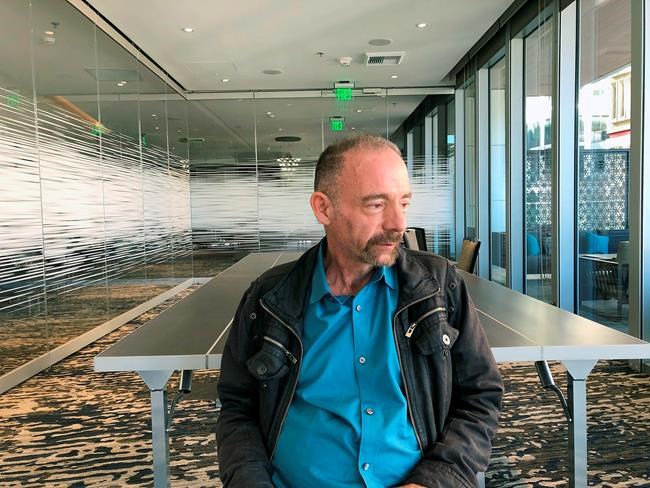
Timothy Ray Brown poses for a photograph, Monday, March 4, 2019, in Seattle. Brown, also known as the
Timothy Ray Brown poses for a photograph, Monday, March 4, 2019, in Seattle. Brown, also known as the "Berlin patient," is the first person to be cured of HIV infection. Now researchers are reporting a second patient has lived 18 months after stopping HIV treatment without sign of the virus following a stem-cell transplant. But such transplants are dangerous, cannot be used widely and have failed in other patients. (AP Photo/Manuel Valdes)

Calling the London patient “cured” is tricky, Gupta said, because there is no standard definition for how long someone must remain free of virus and off treatment drugs. “We are being cautious” to call it remission for now, he said.

Brown said he would like to meet the London patient and would encourage him to go public because “it’s been very useful for science and for giving hope to HIV-positive people, to people living with HIV,” he told The Associated Press Monday.

Stem cell transplants typically are harsh procedures which start with radiation or chemotherapy to damage the body’s existing immune system and make room for a new one. There are complications too. Brown had to have a second stem cell transplant when his leukemia returned.

Compared to Brown, the London patient had a less punishing form of chemotherapy to get ready for the transplant, didn’t have radiation and had only a mild reaction to the transplant.

Dr. Gero Hutter, the German doctor who treated Brown, called the new case “great news” and “one piece in the HIV cure puzzle.”

___

AP video journalists Manuel Valdes in Seattle and Havovi Todd in London contributed.

___

The Associated Press Health and Science Department receives support from the Howard Hughes Medical Institute’s Department of Science Education. The AP is solely responsible for all content.


Report Error Submit a Tip

More Stories

Could renewed interest in strategically critical rare earth elements finally make sub-sector profitable?

Joel Schlesinger 6 minute read Preview

Could renewed interest in strategically critical rare earth elements finally make sub-sector profitable?

Joel Schlesinger 6 minute read Yesterday at 3:00 AM CDT

Rare earth elements are among the most critical of mined resources for modern economies.

They’re essential in manufacturing specialized magnets used in a host of technologies from wind turbines and electric vehicles to hard drives, smartphones, television screens, and fibre optics. Most notably, however, rare earth minerals are increasingly vital to the defence industry.

These 17 elements — closely related chemically and usually found all together in mineral deposits — have indeed been growing in geopolitical importance as the United States, Canada and other Western nations recognize their dependence on production from China.

It is the world’s largest producer and processor of rare earths, including the most in-demand elements neodymium and praseodymium used to manufacture very light and powerful magnets for an array of technologies, including the most advanced weapons of modern warfare.

Read
Yesterday at 3:00 AM CDT

Development turning long-vacant gas station in Selkirk into commercial hub

By Tiago Resko 2 minute read Preview

Development turning long-vacant gas station in Selkirk into commercial hub

By Tiago Resko 2 minute read Thursday, Aug. 13, 2026

A plot of land that has sat vacant in Selkirk for 30 years is being redeveloped to host new businesses in the heart of the city.

The former gas station site on Main Street — between Rosser and Pacific avenues — will be turned into a commercial hub that will be home to six local businesses, and will be a big stepping stone for economic growth in Selkirk, Mayor Larry Johannson said Thursday.

“For decades this site has been a reminder of what once was. Today, it represents what is possible when investors see the potential of our community and choose to be a part of its future,” he said in a news release announcing the project and Thursday’s groundbreaking.

“This development reflects confidence in Selkirk, our economy and the direction we are heading.”

Read
Thursday, Aug. 13, 2026

Men’s recovery home dedicated to ‘homeless hero’ Faron Hall’s memory

Scott Billeck 14 minute read Preview

Men’s recovery home dedicated to ‘homeless hero’ Faron Hall’s memory

Scott Billeck 14 minute read Friday, Aug. 14, 2026

Faron Hall never got the chance to begin recovery. Once heralded as Winnipeg’s “homeless hero” after twice plunging into the Red River to save strangers from drowning, Hall told St. Boniface Street Links executive director Marion Willis shortly before his death in 2014 that he wanted help for his alcoholism.

Read
Friday, Aug. 14, 2026

Bombers manage to hand Redblacks another loss

Taylor Allen 7 minute read Preview

Bombers manage to hand Redblacks another loss

Taylor Allen 7 minute read Updated: Yesterday at 8:35 AM CDT

It looked bad. Real bad.

Winnipeg Blue Bombers quarterback Zach Collaros made his return to the lineup on Friday night against the Ottawa Redblacks, and he was once again the victim of a blindside hit.

The one he suffered in Hamilton on July 5 appeared relatively modest in comparison and yet, it sidelined him for a month with a neck injury.

So when Redblacks linebacker Lucas Cormier came around the edge unblocked and hammered Collaros from behind in the second quarter, you could hear a pin drop inside Princess Auto Stadium.

Read
Updated: Yesterday at 8:35 AM CDT

Firefighter’s death fuels cancer fight

Zoe Pierce 5 minute read Preview

Firefighter’s death fuels cancer fight

Zoe Pierce 5 minute read Yesterday at 2:01 AM CDT

The United Fire Fighters of Winnipeg is mourning the loss of Winnipeg firefighter Darrel Maynard while continuing its work to raise awareness of occupational cancer and improve health protections for firefighters.

Maynard, a senior firefighter II and acting lieutenant with the Winnipeg Fire Paramedic Service, died Aug. 5 at age 41 after a three-year battle with occupational cancer.

He served Winnipeg for nearly two decades and leaves behind his wife Francine and sons Colin and Christian.

“Darrel was an incredible, incredible person, an incredible firefighter, and really, really special to all of us,” said Nick Kasper, president of UFFW.

Read
Yesterday at 2:01 AM CDT

West Kildonan Industrial residents call for speed bumps after child hit by truck

Morgan Modjeski 3 minute read Preview

West Kildonan Industrial residents call for speed bumps after child hit by truck

Morgan Modjeski 3 minute read Updated: Yesterday at 3:09 PM CDT

Residents in the West Kildonan Industrial neighbourhood are calling on the city to install speed bumps in their area after a child was hit and dragged by a vehicle Thursday.

Katelyn Bemister lives near the area where the child — who was hospitalized as a result of the incident and has been upgraded to stable condition — was struck. She says people frequently speed in the area.

“They’re going really fast, and they’re not really paying attention at all to the pedestrians in the area,” says Bemister.

In video supplied to the Free Press by a resident, the child can be seen riding a bike down a sidewalk along the 500 block of North Point Boulevard.

Read
Updated: Yesterday at 3:09 PM CDT