WEATHER ALERT

Exhibit on US Latina ‘cholas’ opens in Albuquerque

Advertisement

Advertise with us

ALBUQUERQUE, N.M. - A national Hispanic centre is displaying a unique art exhibit on the chola — the working class, Mexican-American urban female often associated with gangs.

Read this article for free:

or

Already have an account? Log in here »

To continue reading, please subscribe:

Subscribe and receive a limited-edition Free Press branded hat or tote.

Digital Subscription

One year of digital access for only $205*

  • Enjoy unlimited reading on winnipegfreepress.com
  • Read the E-Edition, our digital replica newspaper
  • Access News Break, our award-winning app
  • Play interactive puzzles

*First annual payment billed as $205.00 + GST for one year. This annual subscription will automatically renew at $233.00 + GST every 52 weeks (10% off the regular annual price of $259.35). Offer available to new and qualified returning subscribers only. Cancel any time.

To continue reading, please subscribe:

Add Free Press access to your Brandon Sun subscription for only an additional

$1 for the first 4 weeks*

  • Enjoy unlimited reading on winnipegfreepress.com
  • Read the E-Edition, our digital replica newspaper
  • Access News Break, our award-winning app
  • Play interactive puzzles
Start now

*Your next Brandon Sun subscription payment will increase by $1.00 and you will be charged $17.95 plus GST for four weeks. After four weeks, your payment will increase to $24.95 plus GST every four weeks.

Hey there, time traveller!
This article was published 07/03/2019 (2701 days ago), so information in it may no longer be current.

ALBUQUERQUE, N.M. – A national Hispanic centre is displaying a unique art exhibit on the chola — the working class, Mexican-American urban female often associated with gangs.

The National Hispanic Cultural Center in Albuquerque opened the “Que Chola Exhibition” on Friday with pieces by artists from New Mexico, Arizona, California, Texas, and Colorado.

The displays feature the evolution of the chola from the World War II-era to the contemporary figure trying to survive in poor neighbourhoods. Using paintings, photography and sculptures, the exhibit attempts to cover images of the chola as an urban warrior, a mentor, a mother and political figure.
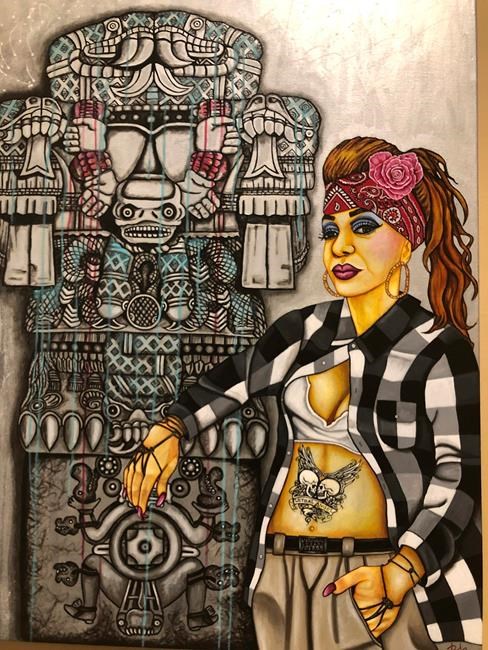
In this Wednesday, March 6, 2019 photo of the painting entitled
In this Wednesday, March 6, 2019 photo of the painting entitled "Coatlicue Lopez" by artist Pola Lopez hangs at the National Hispanic Cultural Center in Albuquerque, before the opening of a exhibit on the chola _ a working-class, Mexican-American female often associated with urban gangs. The "Que Chola Exhibition" opens on Friday, March 8, 2019, with pieces by artists from New Mexico, Arizona, California, Texas, and Colorado. (AP Photo/Russell Contreras)

Cholas, or homegirls, often refers to a particular Latina subculture in the U.S. characterized by a tough demeanour and distinctive style. They are identified by their clothing ranging from flannel shirts and khaki pants to their dark eye makeup and indigenous-theme tattoos.

The image of the chola gained popularity in the late 1980s and early 1990s with movies like “Colors” and “Mi Vida Loca” (My Crazy Life).

In recent years, scholars have countered that the chola represents more than just gang activity. Latina scholars have argued that the chola’s image is a commentary of poverty in urban U.S. cities and symbolized a working-class Latina seeking to battle sexism.

Some Latina academics have playfully said on social media that “you can’t spell scholar without the word ‘CHOLA’.”

Curator Jadira Gurule said she agreed that the chola is more than a so-called dangerous female gang member linked to criminal activity. For many Latinas, Gurule said the chola also represents strength and perseverance.

“Many within our communities either were, or admired and wanted to emulate, the chola growing up,” Gurule said. “She also represents real people with real experiences. The chola is a persona developed in response to racism and sexism. To reduce her to a gang member is shallow.”

Pola Lopez, a Las Vegas, New Mexico, born artist who now lives in Los Angeles, said she was excited when she was asked to participate in the exhibit. “The chola…you can’t mess with her,” said Lopez. “She’s beautiful and represents us in many ways.”

Her painting, “Coatlicue and Chola,” features a homegirl leaning against a statue of an Aztec goddess.

Nanibah Chacon, a Navajo and Hispanic artist from Arizona, said she wanted to create an image of a chola if she had been represented in midcentury advertisements. Her painting, “Xicana Classic,” depicts a chola from the 1970s sitting on a red circle and smiling with confidence.

The exhibit, which runs until Aug. 4, is the latest attempt to create a new image around the chola and expand her meaning.

The Los Angeles-based gang intervention group Homeboy Industries, for example, sells clothing designed by former cholas and runs Homegirl Cafe — a restaurant with food prepared by former gang members gaining new skills. The hip cafe is an offshoot of social enterprises founded by Jesuit priest Greg Boyle.

And Art Laboe, a 93-year-old DJ based in Palm Springs, California, allows cholas every Sunday on his syndicated oldies show “The Art Laboe Connection Show” to call in and give dedications to their loved ones serving time in prison. Scholars and activists say the radio show helps humanize cholas since it allows listeners to hear cholas express emotions of love and pain.

___

Associated Press Writer Russell Contreras is a member of The Associated Press’ race and ethnicity team. Follow Contreras on Twitter at http://twitter.com/russcontreras

___

This story corrects a previous version with the quote “you can’t spell scholar without the word ‘CHOLA’.”
Report Error Submit a Tip

More Stories

Ex’s stubborn persistence no laughing matter

Maureen Scurfield 4 minute read Yesterday at 2:00 AM CDT

DEAR MISS LONELYHEARTS: When I got into a bank lineup recently, I had no idea who queued up behind me, because I was too busy checking my phone. Then I heard this guy say down my neck, “Just as beautiful as ever!”

I whirled around and saw my ex-boyfriend grinning at me. I waited for him to finish at the bank, so we could go for coffee at a breakfast place and catch up. But that was it for me — coffee and a chat! Unfortunately, he wants more of “us” and he’s been calling me every night since. The guy’s in sales now, and he’s using his new techniques, but he’s going overboard and really annoying me now!

How do you tell a past boyfriend to cease and desist? To be fair, he’s said nothing overly inappropriate, except how he’s really loving my new look and that he wants to see me again. Why isn’t he getting the hint when I refuse all his suggestions to do more together?

— Getting Fed Up, East Kildonan

The alternative is in the ground

Stuart Williams 5 minute read 2:00 AM CDT

The cheapest 750 megawatts isn’t a methane plant. It’s our own furnaces.

Manitoba Hydro wants to build up to $3 billion worth of additional methane turbines near Brandon — 750 megawatts of fossil-fuelled power, to get us through the coldest winter evenings and the driest years.

As the Public Utilities Board weighs the plan this summer, Manitobans should ask a simple question — is burning methane really the cheapest way to keep the lights on and the furnaces running?

The evidence says no.

Exhibit on US Latina 'cholas' opens in Albuquerque

Russell Contreras, The Associated Press 4 minute read Preview

Exhibit on US Latina 'cholas' opens in Albuquerque

Russell Contreras, The Associated Press 4 minute read Friday, Mar. 8, 2019

ALBUQUERQUE, N.M. - A national Hispanic centre is displaying a unique art exhibit on the chola — the working class, Mexican-American urban female often associated with gangs.

The National Hispanic Cultural Center in Albuquerque opened the "Que Chola Exhibition" on Friday with pieces by artists from New Mexico, Arizona, California, Texas, and Colorado.

The displays feature the evolution of the chola from the World War II-era to the contemporary figure trying to survive in poor neighbourhoods. Using paintings, photography and sculptures, the exhibit attempts to cover images of the chola as an urban warrior, a mentor, a mother and political figure.

Cholas, or homegirls, often refers to a particular Latina subculture in the U.S. characterized by a tough demeanour and distinctive style. They are identified by their clothing ranging from flannel shirts and khaki pants to their dark eye makeup and indigenous-theme tattoos.

Read
Friday, Mar. 8, 2019

Leave lonely lake life and get back to busy

Maureen Scurfield 5 minute read 2:00 AM CDT

DEAR MISS LONELYHEARTS: I’m going crazy! My husband and I are living up at a lake for the first summer after buying a beautiful new cabin. I thought it was going to be heaven, but it’s been hell for me.

I’m not retired, but I’m able to work at my office job remotely for the summer. The problem is, I’m already lonely and bored while my husband is out fishing. My man goes off in the boat with his buddies in the early morning, often for the whole day and the early evening, too. Now he says he’s “in fisherman’s heaven” with his retired buddies who go explore the many great angling lakes around us.

If it goes on all summer and into early fall, and I’ll be out of my mind by then. Most of the other guys’ wives stay back in the city now. They learned early on it’s a drag to be a fisherman’s “widow.”

I called my boss this morning after my husband left to go fishing. My manager says they’re really busy right now, and could use me there ASAP. Yay! I can come back to the office as soon as I want, but I feel guilty about leaving my husband alone. What should I do?

CMHR ‘fans flames of antisemitism,’ Asper says, ending support from family that led effort to create it

Carol Sanders 7 minute read Preview

CMHR ‘fans flames of antisemitism,’ Asper says, ending support from family that led effort to create it

Carol Sanders 7 minute read Monday, Jul. 27, 2026

The Winnipeg family that led the effort to build the Canadian Museum for Human Rights will not provide support going forward, philanthropist and honorary board member Gail Asper says.

Read
Monday, Jul. 27, 2026

Supervised consumption site to open Aug. 11

Scott Billeck 2 minute read Preview

Supervised consumption site to open Aug. 11

Scott Billeck 2 minute read Yesterday at 9:29 AM CDT

The province’s first supervised consumption site is set for an official launch on Aug. 11, a provincial spokesperson has confirmed.

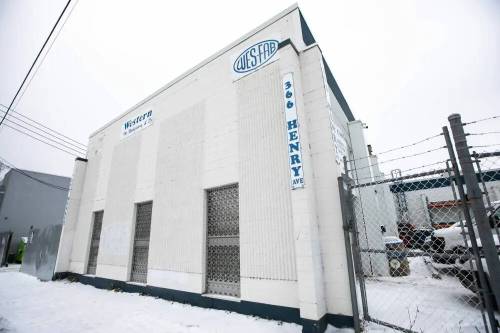
The 366 Henry Ave. site, which is being run by the Aboriginal Health and Wellness Centre of Winnipeg, will have two days of training for staff members later this week, before opening for full operation in the parking lot in two weeks.

The building is still undergoing renovations, and operations will eventually be moved inside the former Western Fabrics building.

In the interim, mobile units will be set up in the parking lot, which has been fenced off for privacy reasons.

Read
Yesterday at 9:29 AM CDT