Shopping to reduce food waste is easy on the wallet too

Advertisement

Advertise with us

An expired date on an egg carton. Browning avocados. The Chinese takeout from last week. They're all foods likely destined for the trash.

Read this article for free:


or

Already have an account? Log in here »

To continue reading, please subscribe:

Subscribe and receive a limited-edition Free Press branded hat or tote.

Digital Subscription

One year of digital access for only $205*

  • Enjoy unlimited reading on winnipegfreepress.com
  • Read the E-Edition, our digital replica newspaper
  • Access News Break, our award-winning app
  • Play interactive puzzles

*First annual payment billed as $205.00 + GST for one year. This annual subscription will automatically renew at $233.00 + GST every 52 weeks (10% off the regular annual price of $259.35). Offer available to new and qualified returning subscribers only. Cancel any time.

To continue reading, please subscribe:

Add Free Press access to your Brandon Sun subscription for only an additional

$1 for the first 4 weeks*

  • Enjoy unlimited reading on winnipegfreepress.com
  • Read the E-Edition, our digital replica newspaper
  • Access News Break, our award-winning app
  • Play interactive puzzles
Start now

*Your next Brandon Sun subscription payment will increase by $1.00 and you will be charged $17.95 plus GST for four weeks. After four weeks, your payment will increase to $24.95 plus GST every four weeks.

Hey there, time traveller!
This article was published 19/03/2019 (2708 days ago), so information in it may no longer be current.

An expired date on an egg carton. Browning avocados. The Chinese takeout from last week. They’re all foods likely destined for the trash.

If you’re hoping to reduce household food waste, experts say there are two key things to do: Eat what you have, and buy only what you need.

Practicing smarter shopping is not only green for its environmental impact; it saves you money.
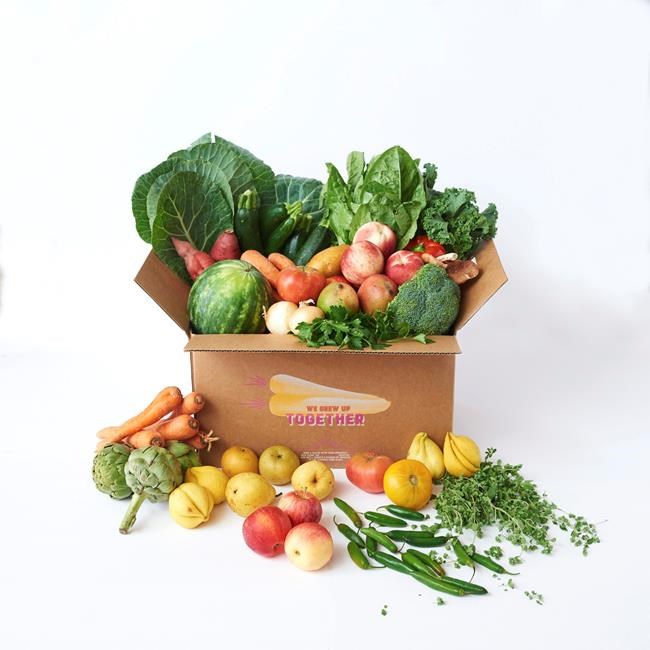
This photo provided by San Francisco-based food delivery company Imperfect Produce, shows a typical box of
This photo provided by San Francisco-based food delivery company Imperfect Produce, shows a typical box of "ugly" fruits and veggies customers can buy through an online subscription. Experts say there are two basic rules to reducing household food waste: Eat what you have, and buy only what you need. Also, be willing to buy ''ugly'' fruits and vegetables -- ones that don't look perfect but are otherwise fine. (Imperfect Produce via AP)

“People need to really think through whether they need to be buying as much food as they are,” said Jonathan Deutsch, a professor of culinary arts and food science at Drexel University in Philadelphia and author or editor of six books on food management.

We can rethink what we define as waste, Deutsch pointed out. A bruised apple or the green leaves encasing a head of cauliflower can be easily repurposed into a sauce or side dish.

“A good cook can make a good meal out of what’s already in most people’s houses,” he said.

“Make sure you’re buying only what you need, and then be sure to use it.”

The world’s food waste problem is well-documented and multi-faceted. Some estimates put global waste at 30 per cent of all food. This is in spite of the 795 million people suffering from chronic hunger, according to numbers from the United Nations. Food waste that isn’t composted piles up in landfills.

Fortunately, there are ways to make your grocery shopping more environmentally friendly.

Buying expired or “last chance” produce at the supermarket is one way 38-year-old Jule Eisendick reduces waste. Eisendick has been practicing a low- to zero-waste lifestyle while travelling, and writes about it on her blog, The Happy Choices .

“I only buy fresh produce when the old one is gone,” she said, adding she tries to use every part of a fruit or vegetable. She might make chips with leftover potato peels, or throw remaining carrot and beet tops into a salad. “What I don’t use goes into compost.”

Much of the food waste problem starts in the supply chain. Tons of misshapen, small or bruised produce is left in the field. Sometimes, markets have too much of one particular food so the rest could get tossed by the wholesaler. And it’s common for grocery stores to reject foods that don’t look like what the customer expects.

In the last few years, however, a secondary market for these “rejects” has arisen. Now they can be donated or sold.

Two such companies are Misfits Market , based in Philadelphia, and Imperfect Produce , from San Francisco. Both have partnered with farmers to rescue rejected produce. Customers sign up online for a delivered box of funny-looking fruits or veggies. The box is then delivered to their front doorsteps.

Misfits Market, which opened last October, sells “ugly produce” boxes in the Northeast. Customer sign-ups have grown 10-fold in the first five months of business, according to Abhi Ramesh, Misfits Market’s chief executive officer.
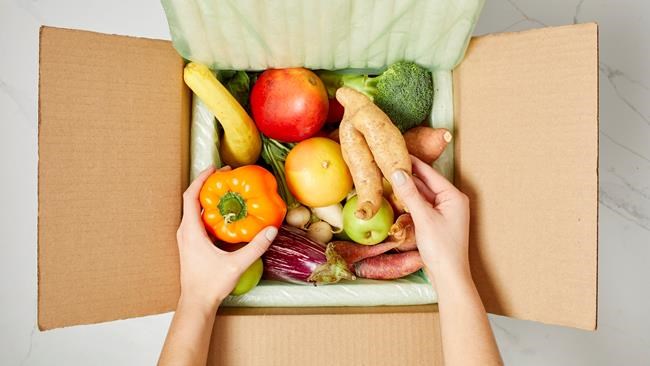
This photo provided by Philadelphia-based produce delivery company Misfits Market, shows one box of fruits and veggies customers can sign up for online. Experts say there are two basic rules to reducing household food waste: Eat what you have, and buy only what you need. Also, be willing to buy ''ugly'' fruits and vegetables -- ones that don't look perfect but are otherwise fine. (Misfits Market via AP)

“There’s a tremendous interest in doing something to reduce food waste,” Ramesh said. “People know it’s a huge problem.”

By comparison, the Imperfect Produce website touts some 40 million pounds of produce saved through its business model since the company was founded in 2015. The boxes of rejected produce are currently available in 15 cities, but the company plans to expand service to 12 more areas by the end of the year.

“There are some really funny-looking fruits and vegetables,” said Ben Simon, CEO and co-founder of Imperfect Produce. “Some are really anthropomorphic . a potato that looks like a teddy bear.”

Still, this food is fine to eat, Simon said.

“Maybe there’s an orange that is slightly smaller than one you’d find at a grocery store,” he said.

The convenience of these home delivery services appeals to busy professionals. Customers can choose the size of the box and frequency of delivery.

Zucu Ingersoll, a 36-year-old San Francisco Bay Area resident, has subscribed to Imperfect Produce for almost a year, and said the most unusual piece of food she recalls getting was an oversized head of cabbage. Getting the deliveries has cut down on time spent going to buy food.

“I don’t shop at the grocery store much now,” she said.

Report Error Submit a Tip

More Stories

Rise of social media reflects rise of self-promotion — to the detriment of genuine storytelling

Reviewed by Matt Henderson 4 minute read Preview

Rise of social media reflects rise of self-promotion — to the detriment of genuine storytelling

Reviewed by Matt Henderson 4 minute read Saturday, Aug. 15, 2026

A conversation is overheard between two people; one congratulates the other on their success, evident through countless posts on LinkedIn, but the other confesses the prolific aggrandizement is due to slumping success.

A young man on an airplane spends three hours poring over selfies taken on a vacation, zooming in on his biceps and using AI to retouch photos before posting on Instagram.

Anonymous and cowardly trolls on Reddit attempt to end another person’s career.

All this “storytelling” was observed in one day by this reviewer.

Read
Saturday, Aug. 15, 2026

RCMP searching for missing 34-year-old woman

1 minute read Saturday, Aug. 15, 2026

Police are asking for the public’s help locating a 34-year-old woman last heard from almost a week ago.

Tamara Stevens, who also goes by Tammy, was last heard from on Sunday last weekend and was reported missing Tuesday morning, said a Thompson RCMP news release Saturday.

RCMP and family are worried for her well-being.

Stevens is believed to be in Thompson and is described as 5'7, with a slender build and long red hair, said RCMP. She also has a piercing on her lip and was last seen wearing black T-Shirt featuring the Twilight character Jacob, pants and work boots.

Lasting legacy or pining for a pipe dream?

Laura Cameron 5 minute read 2:00 AM CDT

The federal government is investing in major infrastructure, promising to expedite “projects of national interest” and pitching them to private investors at a summit in September.

The Manitoba government has its sights set on a pipeline and LNG export terminal at Churchill. Instead, Manitoba should be putting forward feasible, future-facing infrastructure proposals that would leave a positive lasting legacy of energy affordability, independence and security for Manitobans.

A pipeline and LNG terminal at Churchill are not viable for several reasons — the technical challenges of building a pipeline over thawing permafrost; the prohibitive cost of ice-breaking tankers to move LNG through the Arctic; and a forecasted global oversupply of LNG and uncertain long-term export markets.

Given these challenges, a private company coming out of the woodwork to invest seems exceptionally unlikely. Private proponents are also not interested in building oil pipelines to the west, and Prime Minister Mark Carney has now made clear his priority to work with Premier Danielle Smith on a West Coast pipeline, which would cost upwards of $35 billion (on top of the over $34 billion in public funds already spent on the Trans Mountain pipeline). It would seem this pours more cold water on the idea of a third publicly funded pipeline to Hudson Bay.

Manitoba family finalist for cattle producers environmental award

Aaron Epp 4 minute read Preview

Manitoba family finalist for cattle producers environmental award

Aaron Epp 4 minute read Saturday, Aug. 15, 2026

A family in western Manitoba is one of seven finalists for a national environmental award honouring beef cattle producers.

Connor and Kyla English, alongside Connor’s parents, Brian and Leanne English, are nominated for the Canadian Cattle Association’s Environmental Stewardship Award. The 30-year-old award is presented to beef farmers and ranchers who explore innovative ways to protect, preserve and enhance their operations and the environment simultaneously.

This year’s recipient will be announced on Wednesday during a banquet at the Canadian Beef Industry Conference in Winnipeg.

The English family’s roots near Bradwardine — about 265 kilometres west of Winnipeg — date back to 1898. Today, Connor, Kyla, Brian and Leanne manage a herd of about 320 breeding cows on nearly 445 hectares (1,100 acres) of owned and rented pasture and forage land.

Read
Saturday, Aug. 15, 2026

Firefighter’s death fuels cancer fight

Zoe Pierce 5 minute read Preview

Firefighter’s death fuels cancer fight

Zoe Pierce 5 minute read Saturday, Aug. 15, 2026

The United Fire Fighters of Winnipeg is mourning the loss of Winnipeg firefighter Darrel Maynard while continuing its work to raise awareness of occupational cancer and improve health protections for firefighters.

Maynard, a senior firefighter II and acting lieutenant with the Winnipeg Fire Paramedic Service, died Aug. 5 at age 41 after a three-year battle with occupational cancer.

He served Winnipeg for nearly two decades and leaves behind his wife Francine and sons Colin and Christian.

“Darrel was an incredible, incredible person, an incredible firefighter, and really, really special to all of us,” said Nick Kasper, president of UFFW.

Read
Saturday, Aug. 15, 2026

Indigenous peoples are deeply invested in Canada

Niigaan Sinclair 5 minute read Preview

Indigenous peoples are deeply invested in Canada

Niigaan Sinclair 5 minute read 6:00 AM CDT

Elections Canada released a report this week that stated that, in the 2025 federal election, approximately 41 per cent of eligible First Nations, Inuit and Métis voters cast a ballot and contributed significantly to the federal Liberals and Prime Minister Mark Carney making a political comeback.

For anyone curious about how Manitoba fared, the numbers in this province were slightly lower — but still very strong, with 34 per cent participation.

This is a far cry from the highest rate of Indigenous participation in a federal election — that would be the 60 per cent who cast a ballot in 2015, when Justin Trudeau’s Liberals defeated Stephen Harper’s Conservatives — but it’s still higher than the abysmal numbers seen in decades previous.

First Nations voters have only been allowed the legal right to cast a ballot in Canadian elections since 1960, but many in the past — perhaps rightly — felt a sense of complicity in the country’s colonization or, worse, that voting didn’t make a difference.

Read
6:00 AM CDT