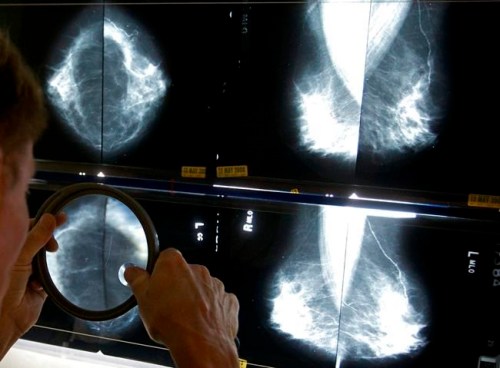
US to require breast density information after mammograms
Advertisement
Read this article for free:
or
Already have an account? Log in here »
To continue reading, please subscribe:

Digital Subscription
One year of digital access for only $205*
- Enjoy unlimited reading on winnipegfreepress.com
- Read the E-Edition, our digital replica newspaper
- Access News Break, our award-winning app
- Play interactive puzzles
*First annual payment billed as $205.00 + GST for one year. This annual subscription will automatically renew at $233.00 + GST every 52 weeks (10% off the regular annual price of $259.35). Offer available to new and qualified returning subscribers only. Cancel any time.
To continue reading, please subscribe:
Add Free Press access to your Brandon Sun subscription for only an additional
$1 for the first 4 weeks*
- Enjoy unlimited reading on winnipegfreepress.com
- Read the E-Edition, our digital replica newspaper
- Access News Break, our award-winning app
- Play interactive puzzles
*Your next Brandon Sun subscription payment will increase by $1.00 and you will be charged $17.95 plus GST for four weeks. After four weeks, your payment will increase to $24.95 plus GST every four weeks.
Read unlimited articles for free today:
or
Already have an account? Log in here »
Hey there, time traveller!
This article was published 27/03/2019 (2679 days ago), so information in it may no longer be current.
WASHINGTON – All U.S. women getting mammograms would receive information about breast density, which can sometimes make cancer harder to spot, under a government proposal released Wednesday.
The Food and Drug Administration’s proposed rules would standardize the information given to millions of women following scans to detect breast cancer. Some states already require the notices.
More than half of women over age 40 have dense breasts, with less fatty tissue and more connective and glandular tissue. That tissue appears white on X-rays, the same colour as growths in the breast, making mammograms harder to read. Dense breast tissue is one of the factors that can increase a woman’s chances of developing cancer.
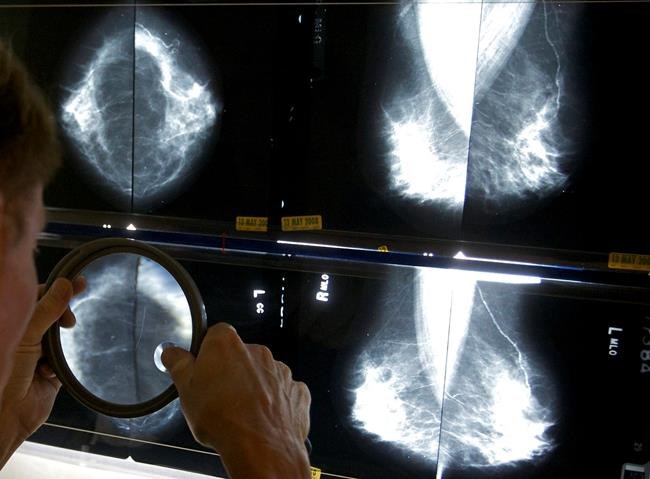
Under the FDA’s proposal, all women would receive a short summary about their breast density. For those with dense breasts, the letter would note that their tissue “makes it harder to find breast cancer,” and could require additional testing. The letter would also recommend that they speak with a doctor about their “individual situation.”
More than 35 states already require some kind of notification for dense breasts. But the FDA’s proposal, if finalized, would apply to all states and set minimum standards for the information disclosed.
“We set a particular bar — you can’t go below that bar — but states can impose more stringent requirements,” said Dr. Jeffrey Shuren, the FDA’s director for medical devices.
The American Cancer Society’s Cancer Action Network said the FDA proposal would “help ensure women get the most accurate information they need following a mammogram,” in a statement.
Regulators will take public comments for three months before finalizing the proposal, a process that can take months or sometimes years.
Professional guidelines don’t specify next steps for women identified with dense breasts, but some physicians may recommend additional forms of scanning, including ultrasound or MRI.
Mammogram reports to doctors have long included information about density. But it wasn’t routinely shared with women until some cancer survivors began pushing for disclosure laws. Congress gave the FDA authority to regulate standards for mammograms in 1992 and recently directed the agency to develop standard summary language.
Regulators said it was the first proposed update to national mammography standards in more than 20 years.
Other proposed regulations would:
— Allow the FDA to contact patients directly if their mammography provider is not meeting quality standards or disclosing required information.

— Sanction mammography providers that don’t adequately track patient records and information.
___
Follow Matthew Perrone at @AP_FDAwriter
___
The Associated Press Health and Science Department receives support from the Howard Hughes Medical Institute’s Department of Science Education. The AP is solely responsible for all content.