Sri Lanka expats wait to reconnect amid social media block

Advertisement

Advertise with us

NEW YORK - Viji Devadas hasn't heard from her nephew in Sri Lanka on her family WhatsApp chat group since he reached out just after the Easter Sunday bomb blasts that tore apart churches and hotels and killed hundreds in the South Asian nation.

Read this article for free:


or

Already have an account? Log in here »

To continue reading, please subscribe:

Subscribe and receive a limited-edition Free Press branded hat or tote.

Digital Subscription

One year of digital access for only $205*

  • Enjoy unlimited reading on winnipegfreepress.com
  • Read the E-Edition, our digital replica newspaper
  • Access News Break, our award-winning app
  • Play interactive puzzles

*First annual payment billed as $205.00 + GST for one year. This annual subscription will automatically renew at $233.00 + GST every 52 weeks (10% off the regular annual price of $259.35). Offer available to new and qualified returning subscribers only. Cancel any time.

To continue reading, please subscribe:

Add Free Press access to your Brandon Sun subscription for only an additional

$1 for the first 4 weeks*

  • Enjoy unlimited reading on winnipegfreepress.com
  • Read the E-Edition, our digital replica newspaper
  • Access News Break, our award-winning app
  • Play interactive puzzles
Start now

*Your next Brandon Sun subscription payment will increase by $1.00 and you will be charged $17.95 plus GST for four weeks. After four weeks, your payment will increase to $24.95 plus GST every four weeks.

Hey there, time traveller!
This article was published 22/04/2019 (2703 days ago), so information in it may no longer be current.

NEW YORK – Viji Devadas hasn’t heard from her nephew in Sri Lanka on her family WhatsApp chat group since he reached out just after the Easter Sunday bomb blasts that tore apart churches and hotels and killed hundreds in the South Asian nation.

It’s unsettling, but she knows he’s ok, and the Sri Lankan government’s decision to block most social media, citing concern over “false news reports,” makes sense to her.

In “one way, it’s good because so many rumours and so many things, everybody gets scared,” said Devadas, whose family runs a restaurant named after the Sri Lankan capital, Colombo, in a tiny strip of New York’s Staten Island borough known as “Little Sri Lanka.” At the same time, she hoped it wouldn’t be in place for long, since “people like to see what’s going on and happening.”
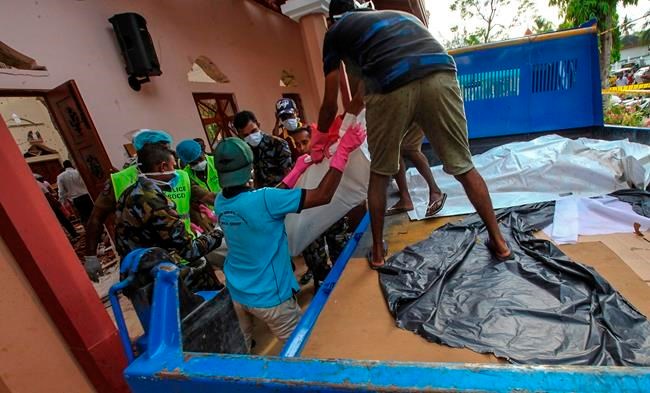
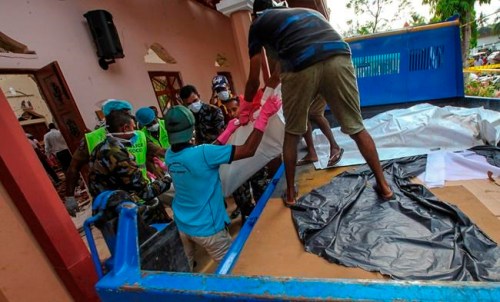
Dead bodies of blast victims are removed from St. Sebastian's Church in Negombo, north of Colombo, Sri Lanka, Sunday, April 21, 2019. More than hundred were killed and hundreds more hospitalized with injuries from eight blasts that rocked churches and hotels in and just outside of Sri Lanka's capital on Easter Sunday, officials said, the worst violence to hit the South Asian country since its civil war ended a decade ago. (AP Photo/Chamila Karunarathne)

The block on social media including Facebook and its WhatsApp and Instagram services was announced by the Sri Lankan government’s official news portal, which cited the spread of misinformation online. The NetBlocks observatory said it detected an intentional blackout of the popular platforms, as well as YouTube, Snapchat and Viber. Twitter appeared unaffected.

Officials likely feared that the spread of inflammatory content could provoke more bloodshed in Sri Lanka, a Buddhist-majority island nation that has large Hindu, Muslim and Christian minorities and a long history of ethnic and sectarian conflict. At least 290 people were killed and 500 people injured in the bombings.

That made sense to Devadas. The government doesn’t “want to get new rumours, they don’t want to get riots,” she said.

James Moses agreed. “I think it’s a good thing, what they have done because … a lot of people give misinformation, and spread that which is not accurate,” said the Sri Lankan immigrant, who also lives on Staten Island. “I see sometimes hatred, violence … put up on social media. That’s not going to help anybody. That’s going to be really a mess.”

The decision by Sri Lankan authorities to flick the off switch on most social media after the attacks was a lightning fast reaction that also reflects accumulated distrust in the capability of American internet companies to control harmful content.

It wasn’t the first time Sri Lanka has blocked social media. The government imposed a weeklong ban in March 2018 because of concerns that WhatsApp and other platforms were being used to fan anti-Muslim violence in the country’s central region.

Ivan Sigal, head of the internet and journalism advocacy organization Global Voices, said the country’s rapid action after Sunday’s attack was a “telling moment.”

“A few years ago we’d be using these platforms to help each other and co-ordinating assistance. Now we view them as a threat,” he wrote on Twitter.
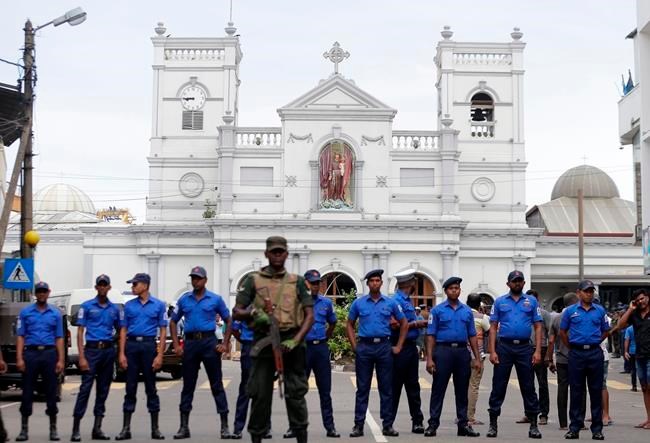
Sri Lankan Army soldiers secure the area around St. Anthony's Shrine after a blast in Colombo, Sri Lanka, Sunday, April 21, 2019. A Sri Lanka hospital spokesman says several blasts on Easter Sunday have killed dozens of people. (AP Photo/Eranga Jayawardena)

“If I were Facebook and WhatsApp I’d take a moment to ask myself where I’d gone wrong,” he added. “Cannot think of a clearer signal for lack of platform trust.”

In the past, blocking social media would have been seen as “outrageous censorship,” Sigal said, highlighting the shift in attitudes toward social media sites. “Now we think of it as essential duty of care, to protect ourselves from threat.”

Sri Lanka’s defence ministry said the shutdown would extend until the government wraps up its investigation into the bomb blasts. Sri Lanka’s U.N. ambassador, Amrith Rohan Perera, said in a statement Monday that the blocks aim “to prevent speculative and mischievous attempts to spread rumours.” He also cautioned expatriates to use social media responsibly to support one another but not to inadvertently spread “panic and mistrust.”

NetBlocks, however, said post-attack blackouts can be ineffective.

“What we’ve seen is that when social media is shut down, it creates a vacuum of information that’s readily exploited by other parties,” said Alp Toker, executive director of the London-based group. “It can add to the sense of fear and can cause panic.”

“That’s going to be a problem for people trying to communicate with friends and family,” Toker said.

Some internet users are circumventing the social media blocks by using a virtual private network, which masks the location of a computer, Toker said. An analysis by Sri Lankan researcher and author Yudhanjaya Wijeratne of thousands of Facebook posts made during last year’s ban found that many Sri Lankans simply found ways around it.
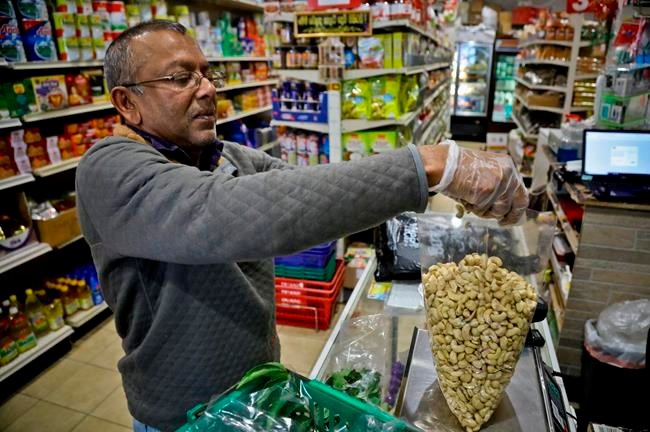
Dhannitha Meemanage, from Sri Lanka, bags cashews in his family's grocery store, in New York's Staten Island's
Dhannitha Meemanage, from Sri Lanka, bags cashews in his family's grocery store, in New York's Staten Island's "Little Sri Lanka" community, Monday, April 22, 2019. Sri Lanka’s abrupt shutdown of social media sites in the wake of the string of deadly Easter Sunday terror attacks has left worried friends and relatives in places like “Little Sri Lanka” in the dark. Meemanage, turned to old-fashioned means of getting news about loved ones after the attack, a landline phone. (AP Photo/Bebeto Matthews)

Others, like Staten Island resident Dhannitha Meemanage, turned to old-fashioned means of getting news about loved ones after Sunday’s attack — a landline phone.

“Everything is shut down because of this problem,” he said as he bagged cashews in his family’s grocery story in Little Sri Lanka.

__

Associated Press writers Matt O’Brien, Stephen Wright and Jennifer Peltz contributed to this report.

Report Error Submit a Tip

More Stories

Port of Churchill expansion could chase belugas away, U of M researcher says

Nicole Buffie 4 minute read Preview

Port of Churchill expansion could chase belugas away, U of M researcher says

Nicole Buffie 4 minute read Yesterday at 9:07 AM CDT

As plans to expand the Port of Churchill into a four-season trade corridor gathers momentum, a University of Manitoba researcher has published a report on what ship traffic could mean for the beluga whales that gather in the Churchill River estuary each summer.

Veronica Coppolaro said more vessels in the waterways bring a risk that belugas will stop using the estuary for migration, which would impact the ecological landscape, tourism and communities that rely on the animals for food and cultural purposes.

“There are studies showing that (noises) change the way they swim, they change the way (the whales) are vocalizing, they change their main activity, and so this (expansion) can have consequences at different levels,” she said.

The Churchill river estuary is a marine habitat where the Churchill River empties into Hudson Bay. During the summer months belugas gather in the area to feed and give birth.

Read
Yesterday at 9:07 AM CDT

Finding fulfilment as canines’ companion

AV Kitching 9 minute read Preview

Finding fulfilment as canines’ companion

AV Kitching 9 minute read 6:00 AM CDT

Tim Campbell loves dogs. He loves them so much that as soon he retired from his job at Panasonic Canada in early 2024 he began volunteering in earnest at the Winnipeg Humane Society (WHS).

He’d started his voluntary career five years prior with another local dog rescue organization. The work was rewarding, he says but the call-outs were unpredictable.

He was looking for a voluntary role which had a bit more structure to it, something he could build a routine around, while spending time with the animals he truly adores.

“In the summer, I’m there two mornings a week, and when the weather turns a little colder, I’m there anywhere from three to four mornings, depending on what’s going on,” Campbell, 59, explains.

Read
6:00 AM CDT

Sri Lanka expats wait to reconnect amid social media block

Deepti Hajela, The Associated Press 6 minute read Preview

Sri Lanka expats wait to reconnect amid social media block

Deepti Hajela, The Associated Press 6 minute read Monday, Apr. 22, 2019

NEW YORK - Viji Devadas hasn't heard from her nephew in Sri Lanka on her family WhatsApp chat group since he reached out just after the Easter Sunday bomb blasts that tore apart churches and hotels and killed hundreds in the South Asian nation.

It's unsettling, but she knows he's ok, and the Sri Lankan government's decision to block most social media, citing concern over "false news reports," makes sense to her.

In "one way, it's good because so many rumours and so many things, everybody gets scared," said Devadas, whose family runs a restaurant named after the Sri Lankan capital, Colombo, in a tiny strip of New York's Staten Island borough known as "Little Sri Lanka." At the same time, she hoped it wouldn't be in place for long, since "people like to see what's going on and happening."

The block on social media including Facebook and its WhatsApp and Instagram services was announced by the Sri Lankan government's official news portal, which cited the spread of misinformation online. The NetBlocks observatory said it detected an intentional blackout of the popular platforms, as well as YouTube, Snapchat and Viber. Twitter appeared unaffected.

Read
Monday, Apr. 22, 2019

Menstruation, consent move up in sex-ed lesson plan

Maggie Macintosh 5 minute read Preview

Menstruation, consent move up in sex-ed lesson plan

Maggie Macintosh 5 minute read 6:00 AM CDT

Manitoba’s newest curriculum introduces the menstrual cycle earlier and repeatedly calls for explicit lessons on how students can give, seek, and decline to provide their consent.

The education department has released its sweeping proposal to overhaul how exercise, nutrition and sexuality are taught between kindergarten and Grade 12.

Grade 5 has long served as a key turning point for “the talk,” said J Fiedler, a sexual and reproductive health educator who provided input on the new curriculum.

“There’s no ‘the talk’ anymore. Now, there’s continuations of multiple ‘talks,’ which can hopefully reduce stress for students and stigma that people experience talking about sexuality.”

Read
6:00 AM CDT

Defenceman Morrissey focused on season ahead

Ken Wiebe 8 minute read Preview

Defenceman Morrissey focused on season ahead

Ken Wiebe 8 minute read 12:08 PM CDT

Josh Morrissey insists that a trade request from the franchise goalie doesn’t change his desire to be a lifelong Winnipeg Jet.

The top-pairing defenceman and alternate captain reinforced that view on Monday morning when speaking to a group of reporters prior to the Winnipeg Jets Golf Classic at St. Charles Country Club.

“At the end of the day, I love being here and I love being a Jet. That’s how I’ve always felt,” said Morrissey, who spoke for just over nine minutes on a variety of topics. “That doesn’t change because of somebody else’s decision. Nothing is finalized, so who knows, he could be back. My position doesn’t change.”

Morrissey has two years left on a contract that pays him US$6.25 million and he’s only eligible to sign an extension on July 1, but the future of the franchise pillar will be a topic of discussion as the Jets work to sort through the situation with franchise goaltender Connor Hellebuyck, which remains unresolved.

Read
12:08 PM CDT

Downtown no place to be after dark, huge majority of Winnipeggers say in survey

Joyanne Pursaga 8 minute read Preview

Downtown no place to be after dark, huge majority of Winnipeggers say in survey

Joyanne Pursaga 8 minute read Friday, Sep. 11, 2026

Most Winnipeggers are afraid to walk alone downtown and believe the city needs more police officers, a new survey finds.

Winnipeg Police Service released its 2026 citizen survey Friday.

Downtown safety appears to remain a major concern, with just 44 per cent saying they feel very or reasonably safe walking alone in the area during the day. The number plummets to eight per cent overall at night, down from nine per cent in 2024, the last time the survey was conducted.

This year, 14 per cent of men felt very or reasonably safe walking alone downtown at night, compared to just three per cent of women.

Read
Friday, Sep. 11, 2026