An insider’s insight
Wilson-Raybould's collection of speeches ponders the path forward on Indigenous issues
Advertisement
Read this article for free:
or
Already have an account? Log in here »
To continue reading, please subscribe:

Digital Subscription
One year of digital access for only $205*
- Enjoy unlimited reading on winnipegfreepress.com
- Read the E-Edition, our digital replica newspaper
- Access News Break, our award-winning app
- Play interactive puzzles
*First annual payment billed as $205.00 + GST for one year. This annual subscription will automatically renew at $233.00 + GST every 52 weeks (10% off the regular annual price of $259.35). Offer available to new and qualified returning subscribers only. Cancel any time.
To continue reading, please subscribe:
Add Free Press access to your Brandon Sun subscription for only an additional
$1 for the first 4 weeks*
- Enjoy unlimited reading on winnipegfreepress.com
- Read the E-Edition, our digital replica newspaper
- Access News Break, our award-winning app
- Play interactive puzzles
*Your next Brandon Sun subscription payment will increase by $1.00 and you will be charged $17.95 plus GST for four weeks. After four weeks, your payment will increase to $24.95 plus GST every four weeks.
Read unlimited articles for free today:
or
Already have an account? Log in here »
Hey there, time traveller!
This article was published 19/10/2019 (2502 days ago), so information in it may no longer be current.
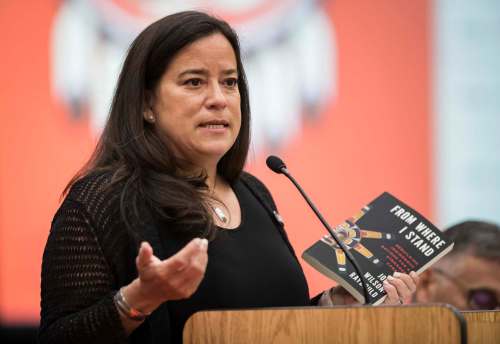
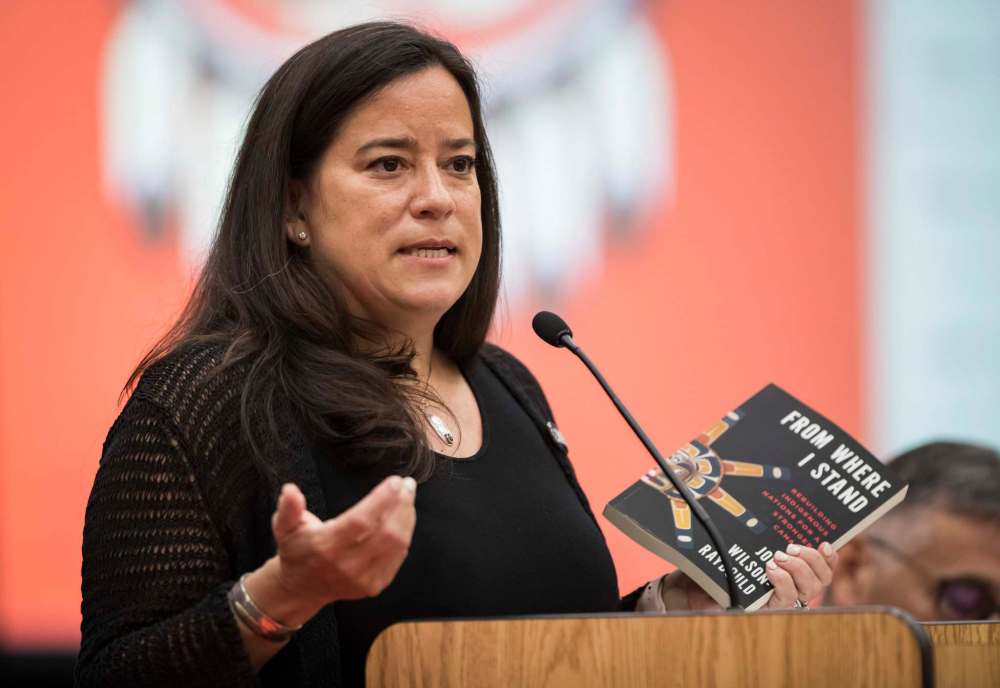
Canadians who snapped up Jody Wilson-Raybould’s new book looking for scandalous tidbits on the SNC-Lavalin issue — the one that led to her expulsion from the federal cabinet and from the Liberal Party of Canada — will be disappointed.
When Wilson-Raybould does mention party leader Justin Trudeau in From Where I Stand: Rebuilding Indigenous Nations for a Stronger Canada, it is most often complimentary. That’s because the book is a collection of speeches Wilson-Raybould gave throughout her 10-year political career, beginning in 2009 as the B.C. regional chief of the Assembly of First Nations (AFN) and ending in a high-profile fallout with Trudeau in early 2019.
Political speeches, by their very nature, are intended to persuade rather than provide detail, with generalized arm-waving, euphemisms and large doses of platitudes. This collection of political speeches — all carefully buffed and polished by Wilson-Raybould and her assistants for presentation at policy and law forums, and for Indigenous business and political organizations such as the AFN — is essentially the voice of an insider in the world of Indigenous political issues largely speaking to other insiders.
There is a profound knowledge deficit in Canada when it comes to understanding Indigenous political issues. A significant majority of ordinary Canadians stand ready to answer the call for reconciliation, but they need to understand what is being asked of them before they can offer their full support. From Where I Stand will certainly add some understanding, but it is just as likely to disappoint Canadians looking for clarity on confusing and frustrating issues that so often feel like trying to grab hold of smoke.
“Rebuilding the nation-to-nation relationship,” writes Wilson-Raybould, “and achieving reconciliation lies at the heart of a strong Canada.”
This is a theme repeated throughout the speeches. But the author herself keeps raising questions about what constitutes an Indigenous nation, the institutions needed for the governance of such nations as well as the absence of a mechanism for First Nations transitioning from Indian Act administrative structures to rebuilding themselves as strong, self-determining communities.
The need for a clear, predictable and understandable process to rewrite the relationship between Indigenous and non-Indigenous Canadians — which Wilson-Raybould admits does not yet exist — is necessary for the country, but particularly crucial for ordinary Indigenous people.
The author acknowledges the significant gap between insiders “fighting vociferously for self-government” and the rank and file in First Nations communities. They would, she says, vote against self-government, if asked, out of fear of life beyond the Indian Act. Until ordinary Indigenous people have confidence that their lives will be improved by the as-yet-undefined Indigenous rights framework being negotiated by insiders, it is understandable that they might prefer to remain with the devil they know.
As a novice minister, Wilson-Raybould pushed hard for the federal government to make the kind of changes to legislation and to the court system that she advocated as a regional chief. Her belief in what she is doing comes through clearly in her speeches.
And so does her frustration that change is not moving fast enough. Politicians, however, cannot move on the dramatic changes that Wilson-Raybould promises will completely restructure Canada’s governance if they do not have the support of ordinary Indigenous and non-Indigenous Canadians (a.k.a. voters).

Wilson-Raybould is now running as an independent candidate in the Vancouver-Granville constituency in the federal election.
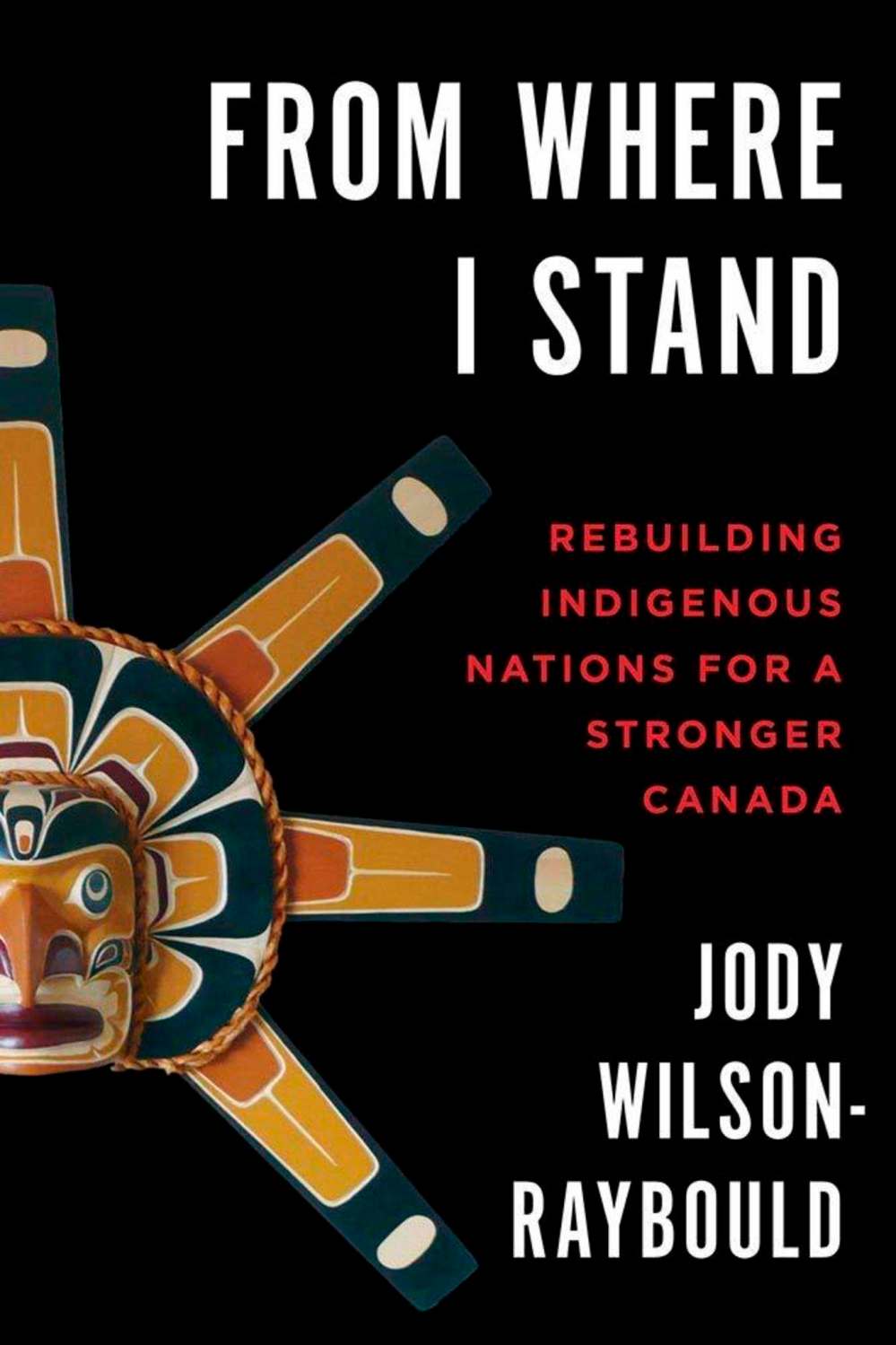
It’s tough fighting a campaign without the political machinery and money of a party apparatus, so it was an astute political move on the part of Wilson-Raybould and her publisher to get this book out during the election campaign. It helps raise her profile (through reviews like this one), and that helps her campaign.
From Where I Stand will give readers an insight into an insider’s view of the issues, but readers might want to check out the work that has informed Wilson-Raybould’s political actions in government.
She and husband Tim Raybould produced the “Governance Toolkit: A Guide to Nation Building” in 2014 for the B.C. AFN. You can download all three volumes (bcafn.ca/about/governance-toolkit/), but pay particular attention to Part 3: it will answer far more questions about nation building and reconciliation than carefully crafted political speeches.
Sheilla Jones is the author of Let the People Speak: Oppression in a Time of Reconciliation, and co-chair of the Modernized Annuity Working Group (mawg.ca).
Book review
From Where I Stand:
Rebuilding Indigenous Nations for a Stronger Future
By Jody Wilson-Raybould
Purich Books/UBC Press, 256 pages, $25
Related Articles
Following the leader
Advertisement Advertise With Us
Advertisement Advertise With Us