Carpenters wow public with medieval techniques at Notre Dame

Advertisement

Advertise with us

PARIS - With precision and boundless energy, a team of carpenters used medieval techniques to raise up — by hand — a three-ton oak truss Saturday in front of Notre Dame Cathedral, a replica of the wooden structures that were consumed in the landmark's devastating April 2019 fire that also toppled its spire.

Read this article for free:


or

Already have an account? Log in here »

To continue reading, please subscribe:

Subscribe and receive a limited-edition Free Press branded hat or tote.

Digital Subscription

One year of digital access for only $205*

  • Enjoy unlimited reading on winnipegfreepress.com
  • Read the E-Edition, our digital replica newspaper
  • Access News Break, our award-winning app
  • Play interactive puzzles

*First annual payment billed as $205.00 + GST for one year. This annual subscription will automatically renew at $233.00 + GST every 52 weeks (10% off the regular annual price of $259.35). Offer available to new and qualified returning subscribers only. Cancel any time.

To continue reading, please subscribe:

Add Free Press access to your Brandon Sun subscription for only an additional

$1 for the first 4 weeks*

  • Enjoy unlimited reading on winnipegfreepress.com
  • Read the E-Edition, our digital replica newspaper
  • Access News Break, our award-winning app
  • Play interactive puzzles
Start now

*Your next Brandon Sun subscription payment will increase by $1.00 and you will be charged $17.95 plus GST for four weeks. After four weeks, your payment will increase to $24.95 plus GST every four weeks.

Hey there, time traveller!
This article was published 20/09/2020 (2148 days ago), so information in it may no longer be current.

PARIS – With precision and boundless energy, a team of carpenters used medieval techniques to raise up — by hand — a three-ton oak truss Saturday in front of Notre Dame Cathedral, a replica of the wooden structures that were consumed in the landmark’s devastating April 2019 fire that also toppled its spire.

The demonstration to mark European Heritage Days gave the hundreds of people a first-hand look at the rustic methods used 800 years ago to build the triangular frames in the nave of Notre Dame de Paris.

It also showed that the decision to replicate the cathedral in its original form was the right one, said Gen. Jean-Louis Georgelin, who heads the cathedral’s reconstruction.

Charles, one of the carpenters puts the traditional final branch decoration during a show on the plaza in front of Notre Dame Cathedral in Paris, France, Saturday, Sept. 19, 2020, the day honoring European heritage, by reproducing for the public a section of the elaborate carpentry used when the edifice was built. The elaborate wooden beams went up in flames in a devastating April fire that also toppled the spire of the cathedral, now being renovated. (AP Photo/Francois Mori)

“It shows … firstly that we made the right choice in choosing to rebuild the carpentry identically, in oak from France,” Georgelin said in an interview. “Secondly, it shows us the … method by which we will rebuild the framework, truss after truss.”

A debate over whether the new spire should have a futuristic design or whether the trusses should be made of fireproof cement like in the Cathedral of Nantes, which was destroyed in a 1972 fire, ended with the decision in July to respect Notre Dame’s original design and materials.

A total of 25 trusses are to be installed at an unknown date in the cathedral nave. Philippe Gourmain, a forestry expert working on the cathedral project, said the carpentry phase will not come before 2022.

“The problem of Notre Dame is not a carpentry problem. We have the wood. We know how to do it,” Gourmain said. “The big issue is regarding the stone.”

Some stones — which support the carpentry — were damaged by the fire and “it’s not so easy now” to find similar stone, he said.

French President Emmanuel Macron wants the cathedral reopened in 2024 in time for the Paris Olympic Games, a deadline that many experts have called unrealistic.

For the moment, the delicate task of dismantling melted scaffolding, which was originally erected to refurbish the now-toppled spire, continues. That job, started in early June, will be completed in October.

The soaring cathedral vaults are also being cleared of debris by 35 specialists on ropes. The organ with its 8,000 pipes was removed for repair in early August.

It is not yet known what technique will be used to create and install the wooden trusses.

The truss mounted for the weekend display is a replica of truss No. 7, more advanced that the first six trusses, which were “more primitive,” said Florian Carpentier, site manager for the team from Carpenters Without Borders team that felled the trees and used axes to cut the logs for the wooden frame. With rope cables and a rustic pulley system, the carpenters slowly pulled the truss they built in July from the ground where it was laid out.

“It’s a moment to see, ancestral techniques that last. There is the present and the past and it links us to our roots,” said Romain Greif, an architect who came with his family to watch the display. “It’s an event.”

In a final touch, once the No. 7 truss replica was raised on high, a carpenter shinnied up the wooden beams — to cheers — to tie an oak branch to the top of the triangular structure, a symbol of prosperity and a salute to the workers, a tradition still honoured in numerous European countries.
Report Error Submit a Tip

More Stories

Champion curler Meleschuk never lost his passion for the game

Joshua Frey-Sam 9 minute read Preview

Champion curler Meleschuk never lost his passion for the game

Joshua Frey-Sam 9 minute read 3:00 AM CDT

At the height of his curling career, Orest Meleschuk balanced ferocity and finesse like almost no one else.

The Winnipeg product was a fierce competitor skilful enough to thread a rock through a window and find the button.

Known as “The Big O,” he curled competitively for over six decades, finding success at the local, provincial, national and global level, and his longevity on the pebble was notable before lengthy careers became the norm.

Meleschuk is still tied with his good friend John Usackis for the most appearances in the Manitoba men’s provincial playdowns, at 30.

Read
3:00 AM CDT

Mayoral race grows to 11 candidates

Joyanne Pursaga 2 minute read Yesterday at 3:21 PM CDT

Realtor Brad Gross is the 11th candidate to register for the race to become Winnipeg’s next mayor.

Gross, 60, said improving public safety and renewing roads will be key goals in his campaign.

“I just don’t like the direction the city’s going and it doesn’t seem to be getting better…. A lot of seniors, a lot of people are worried about crime. (And) the streets are just horrible again,” he said.

He said the city should not invest in bike lanes until Winnipeg’s roads are in better condition. He also hopes to provide free bus fares for seniors and gradually add security cameras at all bus shacks with known safety concerns, if elected.

New lab a win for Winnipeg’s long game

Editorial 4 minute read Preview

New lab a win for Winnipeg’s long game

Editorial 4 minute read 2:01 AM CDT

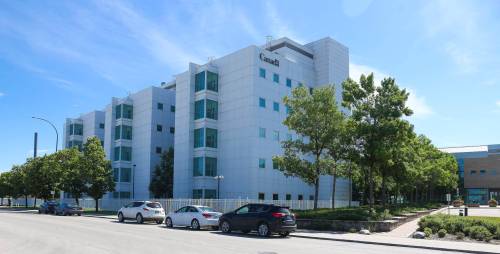
It would be easy to overlook the announcement this week that the federal government was green-lighting a quarter-billion-dollar expansion of the National Microbiology Laboratory’s Canadian Science Centre for Human and Animal Health on Arlington Street.

Easy to overlook, in part, because it will take a decade to build the new 140,000-square-foot laboratory specializing in medical countermeasures.

But make no mistake, this latest investment from Ottawa galvanizes Winnipeg’s reputation as a global leader in the research of the world’s most infectious diseases. It also confirms that a wager made by Manitoba political leaders nearly 40 years ago is paying off in spades.

The existing NML was, to be frank, hastily conceived compensation for one of the most egregious examples of political pork-barrelling ever seen in Canada.

Read
2:01 AM CDT

Sending the wrong message

Andrea Charron 4 minute read 2:01 AM CDT

The U.S. State Department has announced plans to close five overseas diplomatic posts approved by Congress: Douala, Cameroon (a branch office); St. George’s, Grenada (an embassy); Nagoya, Japan (a consulate); Medan, Indonesia (a consulate); and Winnipeg, Canada (a consulate).

All are located in countries that are partners or allies of the United States.

It is unusual for the United States to reduce its diplomatic footprint. With the exception of some retrenchment efforts during the Trump administration, Washington has generally viewed diplomacy as a force multiplier. Diplomacy is not simply a matter of authority and leverage. It requires sustained local engagement, relationships and presence.

Consulates and branch offices are not the same as embassies. They are smaller missions, headed by consuls or consuls general rather than ambassadors and often provide a more limited range of services. Yet they play a vital political, economic and cultural role, supporting both local populations and American citizens abroad.

Watching while we work

Tory McNally 7 minute read Preview

Watching while we work

Tory McNally 7 minute read 2:01 AM CDT

For many employees, the idea that their employer might be tracking how long they spend at their keyboard, how often they move their mouse, or whether they are actively working throughout the day feels unsettling. For many employers, however, workplace surveillance is increasingly viewed as another management tool, particularly as hybrid and remote work become more common. The recent news that TD plans to monitor certain employees’ activity during the workday has reignited a conversation that has been quietly growing for several years: where is the line between legitimate oversight and excessive monitoring?

The reality is that workplace surveillance is nothing new. Employers have long monitored attendance, reviewed security camera footage, tracked company vehicles using GPS, audited expense reports, and reviewed internet usage on company-owned devices. What has changed is the sophistication of the technology. Today’s software can record login times, monitor application usage, track keystrokes, capture screenshots, analyze email activity, and even generate reports ranking employees based on their perceived productivity.

This naturally raises an important question. Does increased surveillance actually make people work harder?

The answer is not nearly as straightforward as many organizations hope.

Read
2:01 AM CDT

Letters, Aug. 8

7 minute read 2:01 AM CDT

Where is the love?Re: The true costs of your pet — for everyone (Think Tank, Aug. 7)

Before I put Jerry Storie’s mean-spirited diatribe at the bottom of the cage of my precious lovebirds, Harry and Sally, they need to tell him that not only do pet birds add joy and song to a household, they also represent love for all in the pet kingdom.

Yes, pets cost money but they’re still cheaper than kids. Pets earn their keep just by being the lovable creatures they are. Even those with behaviour problems deserve our care.

The animal-human bond has been scientifically proven to reduce stress, blood pressure and, most importantly, loneliness. Pets can help children learn social skills and are crucial to society as therapy agents. They get folks out walking and talking to each other. Many unsheltered people have comfort pets, often feeding their pets before themselves. Manitoba Harvest gives out pet food when donations allow, and Bear Clan has held pet food drives.