Burke drops the gloves in bristling bio

Advertisement

Advertise with us

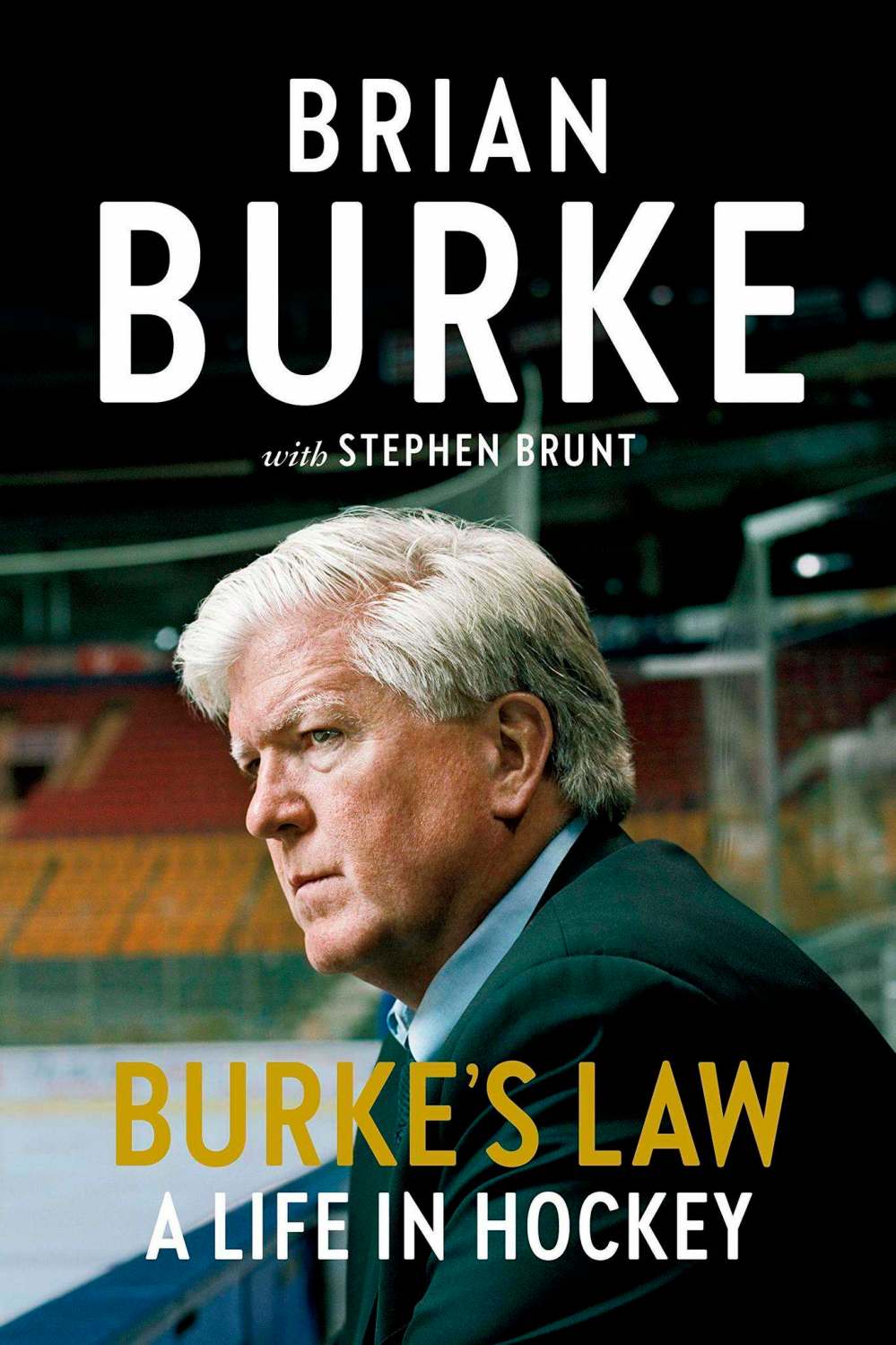
Brian Burke’s memoir is a great read.

Read this article for free:


or

Already have an account? Log in here »

To continue reading, please subscribe:

Subscribe and receive a limited-edition Free Press branded hat or tote.

Digital Subscription

One year of digital access for only $205*

  • Enjoy unlimited reading on winnipegfreepress.com
  • Read the E-Edition, our digital replica newspaper
  • Access News Break, our award-winning app
  • Play interactive puzzles

*First annual payment billed as $205.00 + GST for one year. This annual subscription will automatically renew at $233.00 + GST every 52 weeks (10% off the regular annual price of $259.35). Offer available to new and qualified returning subscribers only. Cancel any time.

To continue reading, please subscribe:

Add Free Press access to your Brandon Sun subscription for only an additional

$1 for the first 4 weeks*

  • Enjoy unlimited reading on winnipegfreepress.com
  • Read the E-Edition, our digital replica newspaper
  • Access News Break, our award-winning app
  • Play interactive puzzles
Start now

*Your next Brandon Sun subscription payment will increase by $1.00 and you will be charged $17.95 plus GST for four weeks. After four weeks, your payment will increase to $24.95 plus GST every four weeks.

Hey there, time traveller!
This article was published 12/12/2020 (2116 days ago), so information in it may no longer be current.

Brian Burke’s memoir is a great read.

But it’s also greatly flawed, both in its language and logic.

Currently a hockey analyst for Sportsnet broadcasts, Burke has a long track record as a hockey executive.
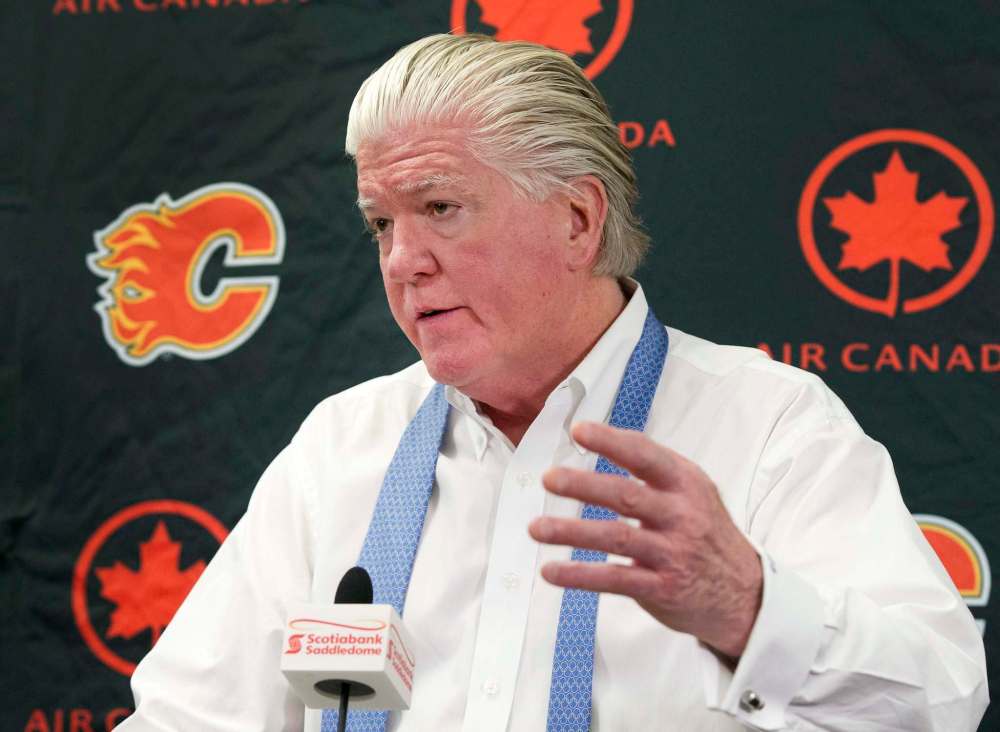
Larry MacDougal / The Canadian Press files
In this 2014 photo, then-Calgary Flames’ president of hockey operations and acting general manager Brian Burke speaks to the media. In his book, Burke is as blunt (albeit with a few more profanities) as he was with the press.
Larry MacDougal / The Canadian Press files In this 2014 photo, then-Calgary Flames’ president of hockey operations and acting general manager Brian Burke speaks to the media. In his book, Burke is as blunt (albeit with a few more profanities) as he was with the press.

He’s had stints as a vice-president and director of hockey operations with the National Hockey League (NHL) and as a president and/or general manager of five NHL teams (Calgary Flames, Toronto Maple Leafs, Anaheim Ducks, Vancouver Canucks and Hartford Whalers).

Co-author Stephen Brunt is a former Globe and Mail sports reporter and columnist and the author of seven books, including Searching for Bobby Orr (2006) and Gretzky’s Tears (2009).

Burke has a law degree from Harvard University and an undergraduate history degree from Providence College. Brunt is an award-winning veteran journalist.

Both are literate men, capable of adroit manipulation of the English language.

Which leads you to wonder why their book is so laced with profanity.

Variants of the “f” word abound. By way of example, it appears on page 1 as an adjective, on page 2 as a noun and on page 3 as an adjective.

It surfaces regularly thereafter throughout the book (and so frequently this reviewer gave up the count).

Employing the “f” word at every turn is lazy, and lousy, writing. Tossed around so liberally, it loses any residual punch it might have carried if used sparingly.

Worse, its omnipresence distracts from the narrative, which is a good one, because Burke has an interesting story to tell.

There’s lots of juicy insider stuff here about evaluating and drafting young players, negotiating contracts, making trades and dealing with the league salary cap.

Burke famously managed to draft the Sedin twins, Daniel and Henrik, for the Vancouver Canucks in 1999. How he did that is still the stuff of hockey legend, and you get it straight from the horse’s mouth here.

He also, while running the Anaheim Ducks, pulled off a trade with the Edmonton Oilers that saw star defenceman Chris Pronger join the Ducks — a master stroke that gave them the jam to win the 2007 Stanley Cup.

Burke likes his hockey with plenty of fighting.

“I have no problem with fighting, and I’m never going to apologize for being a fighting guy,” he writes. “I believe in it.”
He even complains there’s not enough fighting, allowing that “I don’t always like the way the game is played now. There’s too much flag football being played.”

The problem with that stance is that it leads to tragic results, one of the very worst of which occurred on his watch.

In a March 2004 game between the Vancouver Canucks and Colorado Avalanche, while Burke was general manager of the Canucks, Vancouver player Todd Bertuzzi twice sucker punched Colorado player Steve Moore in the back of the head. Moore hit the ice face first, and players from both teams piled on top of the pair.

Moore suffered fractured neck vertebrae, a concussion and facial cuts. The attack ended his professional hockey career. It also resulted in criminal charges against Bertuzzi and a civil suit against Bertuzzi and the Vancouver Canucks.

But in Burke’s spinning of the incident, and its fallout, Bertuzzi suffered as much, if not more than, Moore. He laments that Bertuzzi thereafter ceased to be an on-ice pugilist.

“Todd was never the same player again,” he writes. “He wasn’t as committed physically. I think he was afraid of hurting somebody.”

Burke’s memoir is gossipy, names names and pulls no punches, which makes it an engaging read.

But beware, this is also memoir as self-justification.

Enjoy it. But don’t believe everything you read.

Douglas J. Johnston is a Winnipeg lawyer and writer.

History

Updated on Saturday, December 12, 2020 1:58 PM CST: Corrects that Burke is a hockey analyst for Sportsnet broadcasts
Report Error Submit a Tip

More Stories

Is a better Winnipeg on the horizon?

Tom Brodbeck, Rebecca Chambers, Niigaan Sinclair and Brent Bellamy 20 minute read Preview

Is a better Winnipeg on the horizon?

Tom Brodbeck, Rebecca Chambers, Niigaan Sinclair and Brent Bellamy 20 minute read Friday, Sep. 25, 2026

Four Free Press columnists weigh in on the challenges ahead and how the city can become better.

Read
Friday, Sep. 25, 2026

Signs of local neo-Nazi recruiting efforts spark concern

Conrad Sweatman 7 minute read Preview

Signs of local neo-Nazi recruiting efforts spark concern

Conrad Sweatman 7 minute read Saturday, Sep. 26, 2026

A far-right canvassing push in Manitoba this month is raising concerns among Winnipeg residents.

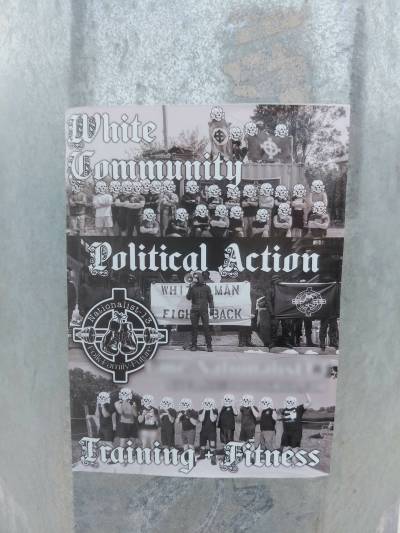
Stickers promoting Nationalist-13, a men’s-only neo-Nazi group also known as NS-13 based primarily in Hamilton, Ont., have appeared in Winnipeg and parts of southern Manitoba. The stickers bear national socialist branding and messages such as “White Man, Fight Back” and “White Community, Political Action, Training and Fitness.”

Winnipeg writer Jess Woolford recently encountered an NS-13 poster on Pembina Highway.

“It was appalling,” Woolford said. “It has the Nazi death heads covering people’s faces. It was pretty disturbing to come across this … I just didn’t expect to see it so blatantly displayed in my neighbourhood.”

Read
Saturday, Sep. 26, 2026

Charges laid after St. Boniface hospital assault

1 minute read Yesterday at 12:40 PM CDT

A man has been charged after a serious assault at St. Boniface Hospital on Saturday.

Just after 1 a.m. Sept. 26, two men were having an argument that escalated to a physical fight in which the victim sustained serious upper-body injuries, the Winnipeg Police Service stated in a news release Sunday.

When police arrived, a 36-year-old man was being detained by security personnel. The incident didn't involve hospital staff and no one else was hurt, the release stated.

James Anthony Junior Clark, 36, was arrested and charged with assault causing bodily harm and two counts of violating a probation order.

Local Muslims, Indigenous people hold interfaith event

Malak Abas 3 minute read Preview

Local Muslims, Indigenous people hold interfaith event

Malak Abas 3 minute read Yesterday at 6:42 PM CDT

Bannock with wild rice and samosas with halal beef stew were served in equal measure as Indigenous and Muslim Winnipeggers sought common ground at an interfaith event discussing truth and reconciliation Sunday.

The Islamic Social Services Association’s second annual Muslim-Indigenous Solidarity event recognized Orange Shirt Day through conversations with elders, shared prayers and crafting.

Organizer Shahina Siddiqui said many of the people attending the gathering, held at Canadian Mennonite University, share the traumatic impacts of colonialism.

Siddiqui said she herself had attended a Catholic day school in her home country of Pakistan, where she and other students were forced to speak English, and were hurt if they didn’t. Many Muslim-majority countries, she said, have been harmed by colonialism.

Read
Yesterday at 6:42 PM CDT

Wab Kinew as ‘communicator in chief’

Paul G. Thomas 6 minute read Preview

Wab Kinew as ‘communicator in chief’

Paul G. Thomas 6 minute read 2:00 AM CDT

Premier Wab Kinew and his party have been riding high in the polls longer than normal for a government one year or less away from its first re-election contest. One reason is his ubiquitous, dominating communications presence as NDP leader and premier.

The argument here is that Kinew has supplemented his prerogatives as premier and party leader (such as appointing cabinet ministers and approving party nominations) with the skilful use of communications to advance his policy agenda, boost his personal popularity and maintain the competitive advantage of his party over the opposition Progressive Conservatives.

Communications has always been a significant part of politics and policy making. However, in the contemporary political and media environments, communications considerations have moved from the background to the foreground of decision-making by political parties, including when they are performing in the role of government. Campaigning and governing now overlap in what has been described as a permanent election campaign.

Political parties use communications strategies for several purposes: to establish an image of the leader which makes a positive emotional connection with voters; to promote a coherent message and to keep party members on message; and to gain favourable media coverage for its policies and other actions on almost a daily basis.

Read
2:00 AM CDT

Unhappy Dynacare staff refuse OT shifts; doors could be closed at clinics with Saturday hours

Carol Sanders 4 minute read Preview

Unhappy Dynacare staff refuse OT shifts; doors could be closed at clinics with Saturday hours

Carol Sanders 4 minute read Friday, Sep. 25, 2026

Some Winnipeg Dynacare sites normally open on Saturday were closed last week, and may continue to be because staff are refusing to pick up overtime shifts after they were forced back to work amid a labour dispute with the company.

Read
Friday, Sep. 25, 2026