New music
Reviews of this week's CD releases
Advertisement
Read this article for free:
or
Already have an account? Log in here »
To continue reading, please subscribe:

Digital Subscription
One year of digital access for only $205*
- Enjoy unlimited reading on winnipegfreepress.com
- Read the E-Edition, our digital replica newspaper
- Access News Break, our award-winning app
- Play interactive puzzles
*First annual payment billed as $205.00 + GST for one year. This annual subscription will automatically renew at $233.00 + GST every 52 weeks (10% off the regular annual price of $259.35). Offer available to new and qualified returning subscribers only. Cancel any time.
To continue reading, please subscribe:
Add Free Press access to your Brandon Sun subscription for only an additional
$1 for the first 4 weeks*
- Enjoy unlimited reading on winnipegfreepress.com
- Read the E-Edition, our digital replica newspaper
- Access News Break, our award-winning app
- Play interactive puzzles
*Your next Brandon Sun subscription payment will increase by $1.00 and you will be charged $17.95 plus GST for four weeks. After four weeks, your payment will increase to $24.95 plus GST every four weeks.
Read unlimited articles for free today:
or
Already have an account? Log in here »
Hey there, time traveller!
This article was published 17/12/2020 (2085 days ago), so information in it may no longer be current.
POP / ROCK
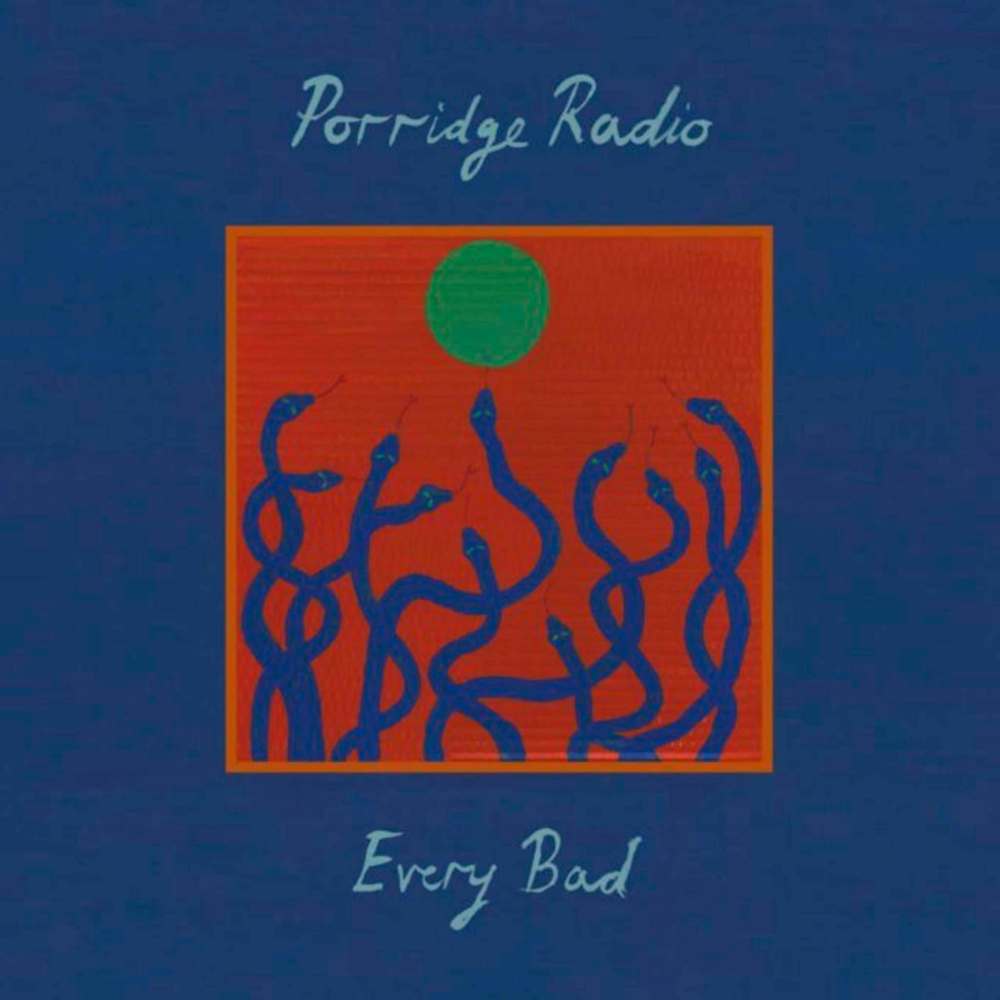
Porridge Radio
Every Bad (Secretly Canadian)
It’s very tempting to play “spot-the-influence” with Porridge Radio, a four-piece alt/indie/post-punk English band formed in Brighton, U.K., around the work and songwriting of singer/guitarist Dana Margolin. You know the sort of thing — “There’s a lot of P.J. Harvey in this” and “She sounds like Florence here…” or “Ooh… they do the loud-quiet-loud bits well, don’t they?”
Names like Raincoats and Savages are often dropped in feature stories about and reviews of the group. Mentioning the quartet — which also includes bassist Maddie Ryall, keyboardist Georgie Stott and drummer Sam Yardley — in such company is surely meant to be complimentary but it also does a disservice to Margolin’s musical vision and the singular brilliance of her emotionally wrought performances. Mercury Prize jurors evidently thought so, too, as the band’s second album, Every Bad (which is really its first proper studio recording) was shortlisted for the prize, the U.K. equivalent of Canada’s Polaris Prize, which was eventually won by Michael Kiwanuka.
.JPG?w=1000)
As a songwriter, Margolin (who also painted the album’s cover) says she focuses on honestly conveying emotions and the 11 songs here each set their own moods which, though not dissimilar, are unique and compellingly dramatic and musically dynamic expressions of longing and loss, vulnerability and pain, frustration and even therapeutic squalls of anger. The 26-year-old’s lyrics are often mini-mantras; key lines repeated over and over as she explores one idea with varying degrees of intensity and intonation. Album opener Born Confused, for example, begins as a pop-infused description of a past relationship before evolving into variations on the phrase “thank you for leaving me, thank you for making me happy” which begin sincerely and become almost choral before they turn into a shrieking, song-ending flip-off. Don’t Ask Me Twice, a study in deconstructed post-punk rhythm, finds her screaming, “I don’t know what I want but I know what I want.”
Lilac, the album’s wistful first single and also its emotional centre, begins with Margolin musing on a relationship that seems to be stuck in neutral and ends with her wishing, then proclaiming and finally demanding: “I don’t want us to get bitter, I want us to get better; I want us to be kinder, to ourselves and to each other.”
After the year we’ve endured, most listeners will surely agree. ★★★★ out of five
STREAM THESE: Born Confused, Lilac, Homecoming
— John Kendle
POP / ROCK
The War on Drugs
Live Drugs (Super High Quality)
Adam Granduciel is a perfectionist, a studio obsessive who builds up the War on Drugs’ atmospheric music from painstakingly layered guitars and keyboards on songs that cast a hypnotic spell as they embark on journeys of discovery.
Acclaimed albums such as 2014’s Lost in the Dream and 2017’s Grammy-winning A Deeper Understanding are the product of Granduciel’s vision. But the Drugs are anything but a one-man band.
The other five members of the Philadelphia sextet, beginning with bass player Dave Hartley, all make key contributions to the Drugs’ studio effort — and step to the fore onstage, where they’ve become more and more impressive as a live unit that has mastered reimagining, not simply recreating, Granduciel’s richly textured songs.
Before the pandemic, the band had been on track to release an album of new songs in 2020. (Last month, they performed one brand new one, Ocean of Darkness, on The Tonight Show Starring Jimmy Fallon.)
Instead, they dug into the archives for Live Drugs, which was culled from the band’s 2017-18 tour. It’s the first release on the band’s Super High Quality label and is accompanied by a four-part Super High Quality Podcast.
The set list reaches back to 2008’s Wagonwheel Blues for the Dylanesque Buenos Aires Beach, includes a sterling cover of Warren Zevon’s Accidentally Like a Martyr, and draws a concentration of songs from Lost in the Dream.
Three from that album — Eyes to the Wind, Under the Pressure and In Reverse — bring Live Drugs to a crescendo. Each track takes its time moving from contemplation to catharsis, slowly strengthening before locking into overdrive and lifting off like a jet engine, like only a great live band can do. ★★★★★ out of five
STREAM THESE: Eyes to the Wind, Under the Pressure, In Reverse
— Dan DeLuca, Philadelphia Inquirer
JAZZ
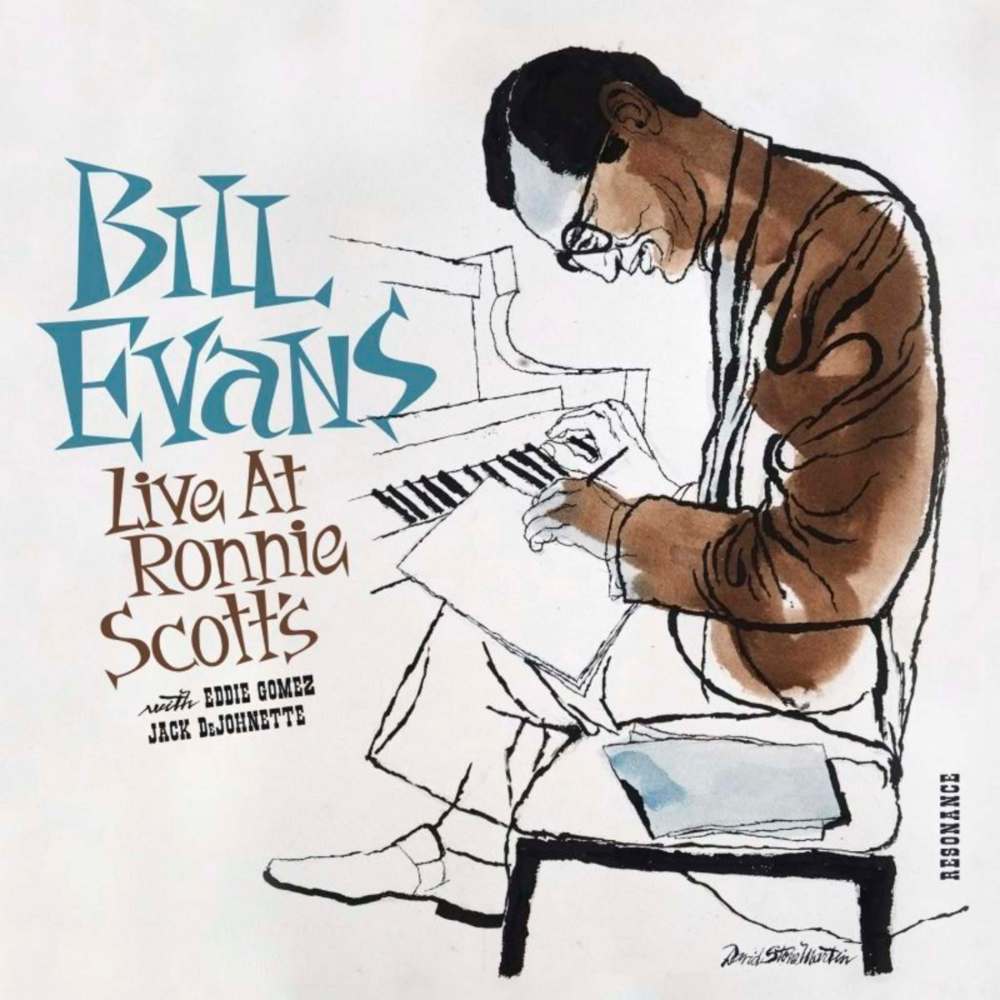
Bill Evans
Live at Ronnie Scott’s (Resonance)
The discovery of “lost” jazz sessions is something of a common occurrence lately. The “detectives” at Resonance Records label have been among the most diligent, releasing several stunning examples over the last several years; this album continues that victory.
Pianist Bill Evans spent some time in Europe in 1968 in a short (six-month) association with bassist Eddie Gomez and drummer Jack DeJohnette. For whatever reason, many of the tapes of concerts were not released at the time and have been lying dormant somewhere since. The only release of that trio at the time was recorded at Montreux that year and won a Grammy.

The trio here has a somewhat unusual sound, in that DeJohnette drives the group in different ways than other drummers in Evans’ experience. The tunes are familiar Evans repertoire, but the emotion and energy are tangible. Ronnie Scott’s is an iconic venue in London, and that might have been a factor in the spirit of these recordings. Evans standards such as Sleeping Bee, Waltz For Debbie or Turn out the Stars are all given wonderful attention, with Evans stretching out on some tracks with beautiful effect.
Beyond furthering Evans’ legacy as one of the most influential and talented pianists in jazz history, there is actually not a lot that needs to be said about this two-disc release. It is perhaps not going to attract long-term Evans fans who have other great examples of the music. It is, however, not only a historical session but a fine way to become acquainted with the music and creativity of a jazz giant, containing many wonderful moments. Here’s hoping the “detectives” aren’t finished digging yet. ★★★★★ out of five
STREAM THESE: Someday My Prince Will Come, ‘Round Midnight
— Keith Black
https://www.youtube.com/watch?v=VigOzx_8BbU
CLASSICAL
Beethoven: Sonatas for Cello and Piano, Op. 5
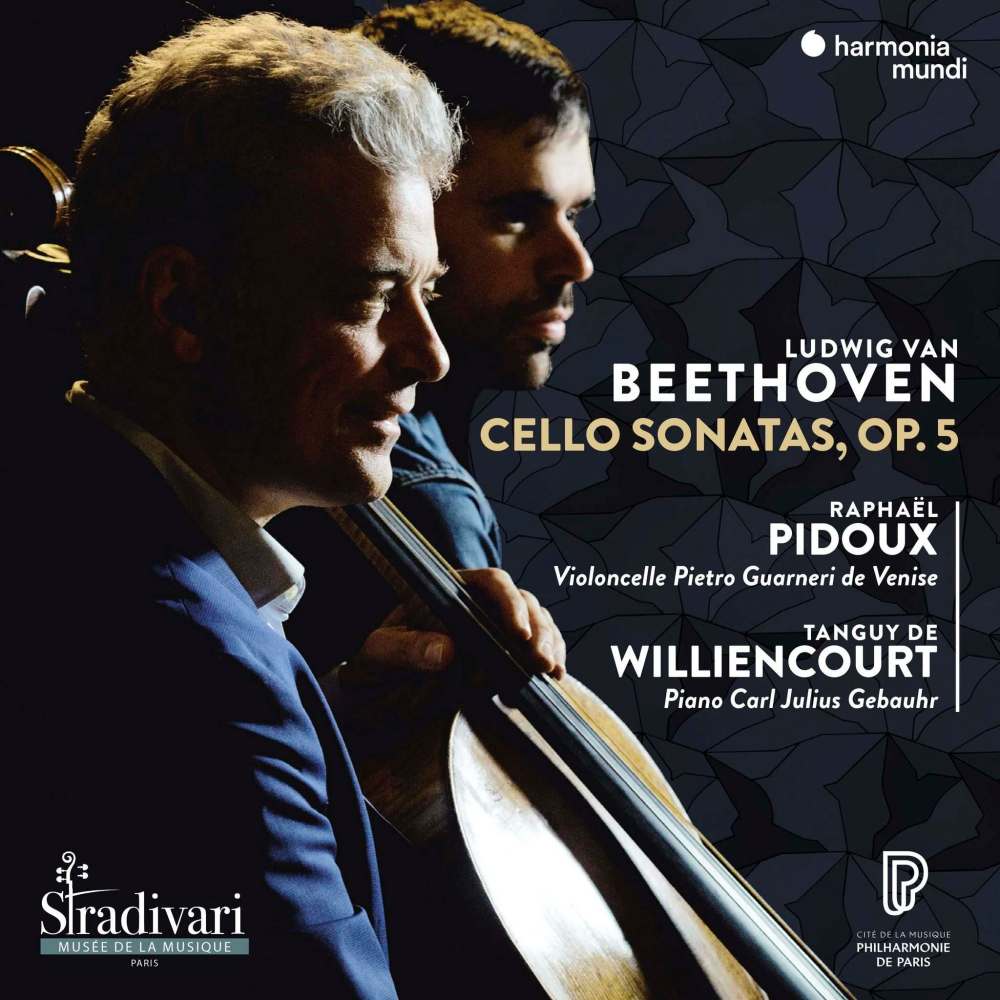
Raphaël Pidoux and Tanguy de Williencourt (Harmonia Mundi)
In the twilight hours of the yearlong Beethoven 250 celebrations (obviously scaled-down by the global pandemic), French cellist Raphaël Pidoux pays homage to the celebrated guest of honour with Beethoven’s Sonatas for Cello and Piano, Op. 5, joined by pianist Tanguy de Williencourt
This upcoming January release is also the latest instalment in the label’s Stradivari collection, which includes four prior recordings, featuring precious, rare period instruments housed at the Museum of Music in Paris. In this case, the cellist performs on a Pietro Guarneri de Venise 1734, with its rich tonal colours infusing authentic voice into the two chamber works penned in 1796; his compatriot plays a Carl Gulius Gebauhr, Königsberg, dated circa 1855.
In the first, Cello Sonata No. 2 in F Major, Op. 5, No. 1 Pidoux tackles its opening movement, Adagio sostenuto — Allegro, with both aplomb and precision, while Williencourt is particularly compelling during the second, Rondo, Allegro vivace, as a well-balanced, supportive partner.
The duo imbues the more darkly hewn Cello Sonata, No. 2 in G Minor, Op. 5, No. 2 with operatic intensity from the opening Adagio sostenuto e espressivo, before the finale Rondo, Allegro ends the work on a lighter, more rollicking note.
Seven Variations on Bei Männern, welche Liebe fühlen’9’13 (from Mozart’s Die Zauberflöte) WoO 46 offers a fascinating journey through the Wunderkind’s famous Singspiel, which inspired Beethoven’s own arrangement. As the album’s only non-Beethoven piece, the presence of the lesser-known Souvenirs de La Flûte enchantée, excerpted from 18th-century composers Camille Pleyel and Charles-Nicolas Baudiot’s Nocturne for piano and violoncello concertants, feels like an outlier, yet provides a final sampling of the musicians’ expressive artistry the now-250-year-old birthday boy would surely approve of. ★★★★ out of five
STREAM THIS: Beethoven’s Cello Sonata, No. 2 in G Minor, Op. 5, No. 2, Adagio sostenuto e espressivo
— Holly Harris