July 4, Juneteenth and the meaning of national holidays
Advertisement
Read this article for free:
or
Already have an account? Log in here »
To continue reading, please subscribe:

Digital Subscription
One year of digital access for only $205*
- Enjoy unlimited reading on winnipegfreepress.com
- Read the E-Edition, our digital replica newspaper
- Access News Break, our award-winning app
- Play interactive puzzles
*First annual payment billed as $205.00 + GST for one year. This annual subscription will automatically renew at $233.00 + GST every 52 weeks (10% off the regular annual price of $259.35). Offer available to new and qualified returning subscribers only. Cancel any time.
To continue reading, please subscribe:
Add Free Press access to your Brandon Sun subscription for only an additional
$1 for the first 4 weeks*
- Enjoy unlimited reading on winnipegfreepress.com
- Read the E-Edition, our digital replica newspaper
- Access News Break, our award-winning app
- Play interactive puzzles
*Your next Brandon Sun subscription payment will increase by $1.00 and you will be charged $17.95 plus GST for four weeks. After four weeks, your payment will increase to $24.95 plus GST every four weeks.
Read unlimited articles for free today:
or
Already have an account? Log in here »
Hey there, time traveller!
This article was published 30/06/2021 (1908 days ago), so information in it may no longer be current.
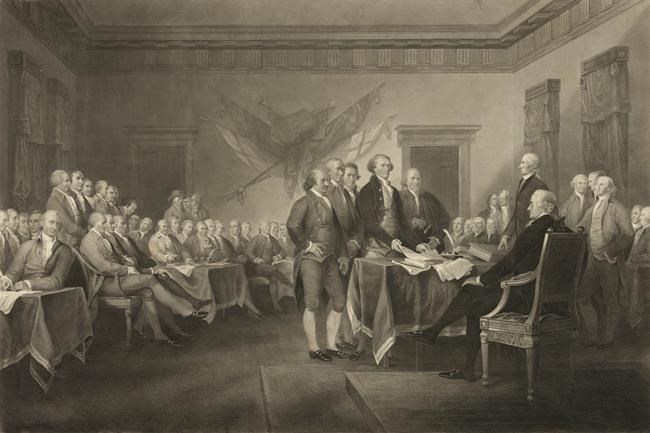
NEW YORK (AP) — On July 4, 1776, the Continental Congress formally endorsed the Declaration of Independence. Celebrations began within days: parades and public readings, bonfires and candles and the firing of 13 musket rounds, one for each of the original states.
Nearly a century passed before the country officially named its founding a holiday.
With the recent passage of the Juneteenth National Independence Day Act, commemorating the end of slavery in the United States, the country now has 12 federal holidays. Many are fixtures in the American calendar, but their presence isn’t only a story of continuity. They reflect how the U.S. has evolved — from an affiliation of states with a relatively small federal government to a more centralized nation.
Statewide and local gatherings for Independence Day and other holidays are as old as the country itself. But the first round of federal holidays, identified as such because federal employees (initially only federal employees in Washington, D.C.) were given the day off, was only signed into law in 1870, by President Ulysses S. Grant, five years after the Civil War ended.
“The Civil War consolidated national power in all sorts of ways, and national holidays are an illustration of that,” says the Pulitzer Prize-winning historian Eric Foner. “There were many, many firsts after the Civil War.”
Juneteenth and other federal holidays have passed with substantial majorities in Congress, suggesting broad, bipartisan consensus. The first holidays, notes Grant biographer Ron Chernow, were the safest ones at the time — New Year’s Day, Independence Day, Thanksgiving, Christmas and George Washington’s birthday (enacted in 1879).
“They followed the Civil War, but, by no accident, they had nothing to do with the Civil War. The war wounds were still deep and irrevocable, and any commemoration of the war itself would have been seen as divisive,” Chernow says. He notes that Memorial Day, the honoring of those who died in war, did not become a federal holiday until 1888.
“The first five federal holidays … attempted to restore common ground between North and South,” Chernow says. “Both sides in the Civil War claimed to have fought in the spirit of the American Revolution. It was therefore easy for both sides to honor Washington’s birthday and Independence Day.”
Whether statements of patriotism or social justice, federal holidays mirror a part of the country’s sense of itself and how it changes.
Public support to make the Rev. Martin Luther King’s birthday a holiday was so strong that it was signed into law in 1983 by President Ronald Reagan, who had opposed the Civil Rights Act and Voting Rights Act in the 1960s and privately believed the late civil rights leader’s standing was “based on an image, not reality.” Even then, Arizona, New Hampshire and South Carolina resisted making it a state holiday, with South Carolina waiting until 2000. Alabama and Mississippi still pair King’s birthday with the birthday of Confederate Gen. Robert E. Lee.
Columbus Day became a national holiday in 1968, endorsed by Congress and President Lyndon Johnson as a tribute to immigrants and as a “declaration of willingness to face with confidence the imponderables of unknown tomorrows,” according to a Senate report at the time. But over the past 40 years, as Columbus’ image has shifted from the “discoverer of America” to that of a racist and imperialist, cities and states have either changed the holiday’s name (Hawaii calls it “Discovery Day”) or used the day to honor others; since 1989, South Dakoka has called it “Native American Day.”
“You can think of federal holidays as being like monuments erected in parks,” says Matthew Dennis, author of “Red, White, and Blue Letter Days,” a 2002 book on American holidays. “With a monument, you try to set the meaning of the past in stone. But that can change, and people might say, ‘Wait, who is this guy?’”
Among national holidays, July 4 stands as the most complex and debated, a reflection of the questions and contradictions about the country’s origins and about the Declaration of Independence itself.
Independence Day has been caught up in the country’s divisions almost from the start. In the 1780s and 1790s, supporters of a stronger central government (Federalists) and those who worried about a return to British-style monarchy (sometimes called Jeffersonian Republicans), argued over the authorship of the Declaration of Independence, with Republicans giving sole credit to their own Thomas Jefferson and Federalists countering (correctly) that many others had worked on it.
In the decades before the Civil War, Black Americans were often excluded from official July 4 events and instead would celebrate on July 5, both acknowledging July 4 and their distance from it. Frederick Douglass delivered his famed 1852 speech, “What to the Slave Is the Fourth of July,” on July 5.
The Civil War itself was a time for competing interpretations. Southerners embraced the Declaration of Independence’s message of defiance against tyranny. The North looked to it as a blueprint. In a letter to Congress sent on July 4, 1861, just months after the Civil War began, President Abraham Lincoln spoke of Independence Day as inspiration for a new and more humane society.
“Our adversaries have adopted some declarations of independence in which, unlike the good old one penned by Jefferson, they omit the words `all men are created equal,’” Lincoln wrote, adding that the Union was upholding “government whose leading object is to elevate the condition of men; to lift artificial weights from all shoulders; to clear the paths of laudable pursuit for all; to afford all an unfettered start and a fair chance in the race of life.”
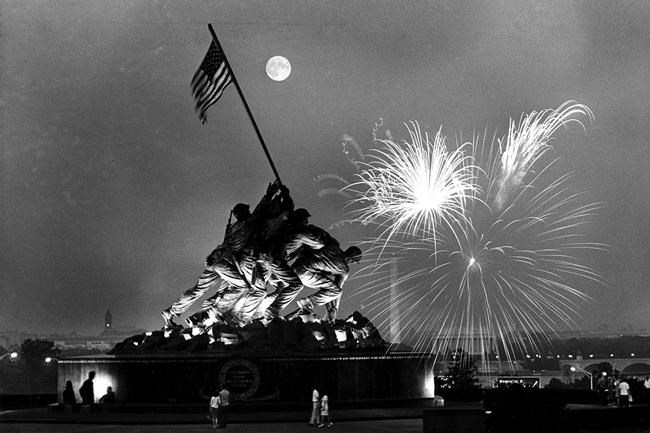
The meaning of July 4 has continued to evolve, from president to president. Franklin D. Roosevelt and George W. Bush are among those who dedicated Independence Day speeches to the military, whether during World War II or in the aftermath of the Sept. 11 attacks. John F. Kennedy’s 1962 address, in the midst of the Cold War, called independence the “single issue that divides the world today” and invoked “the longing for independence behind the Iron Curtain.” In 2014, President Barack Obama cited the promise of “life, liberty and the pursuit of happiness” as a reason “immigrants from around the world dream of coming to our shores.”

For Independence Day in 2020, less than two months after the murder of George Floyd, President Donald Trump denounced Black Lives Matters protesters and what he called “a merciless campaign to wipe out our history, defame our heroes, erase our values and indoctrinate our children.” His eventual successor, Joe Biden, issued a brief video saying the country had yet to live up to its promise of equality, noting that even Jefferson was a slaveholder.
“But once proposed, it (equality) was an idea that couldn’t be constrained,” he said. “It survived the rages of the Civil War, the dogs of Bull Connor, the assassination of Martin Luther King and more 200 years of systematic racism.”
“America is no fairy tale,” Biden added. “It’s been a constant push and pull between two parts of our character: the idea that all men and women — all people — are created equal and the racism that has torn us apart.”
___
Hillel Italie, the books and publishing writer for The Associated Press, writes frequently about culture and history.