Canada approves Nunavut’s request for military help with Iqaluit’s water emergency

Advertisement

Advertise with us

IQALUIT, Nunavut - The federal government is sending the Canadian Armed Forces to help with the water emergency in Nunavut's capital, and the work may include setting up a mobile water treatment plant.

Read this article for free:

or

Already have an account? Log in here »

To continue reading, please subscribe:

Subscribe and receive a limited-edition Free Press branded hat or tote.

Digital Subscription

One year of digital access for only $205*

  • Enjoy unlimited reading on winnipegfreepress.com
  • Read the E-Edition, our digital replica newspaper
  • Access News Break, our award-winning app
  • Play interactive puzzles

*First annual payment billed as $205.00 + GST for one year. This annual subscription will automatically renew at $233.00 + GST every 52 weeks (10% off the regular annual price of $259.35). Offer available to new and qualified returning subscribers only. Cancel any time.

To continue reading, please subscribe:

Add Free Press access to your Brandon Sun subscription for only an additional

$1 for the first 4 weeks*

  • Enjoy unlimited reading on winnipegfreepress.com
  • Read the E-Edition, our digital replica newspaper
  • Access News Break, our award-winning app
  • Play interactive puzzles
Start now

*Your next Brandon Sun subscription payment will increase by $1.00 and you will be charged $17.95 plus GST for four weeks. After four weeks, your payment will increase to $24.95 plus GST every four weeks.

Hey there, time traveller!
This article was published 22/10/2021 (1745 days ago), so information in it may no longer be current.

IQALUIT, Nunavut – The federal government is sending the Canadian Armed Forces to help with the water emergency in Nunavut’s capital, and the work may include setting up a mobile water treatment plant.

In a tweet Friday, Prime Minister Justin Trudeau said he had spoken with Nunavut PremierJoe Savikataaq and that the military will be deployed to Iqaluit to co-ordinate and deliver clean drinking water.

The city’s 8,000 residents haven’t been able to consume tap water for 11 days, since it was discovered to contain fuel.
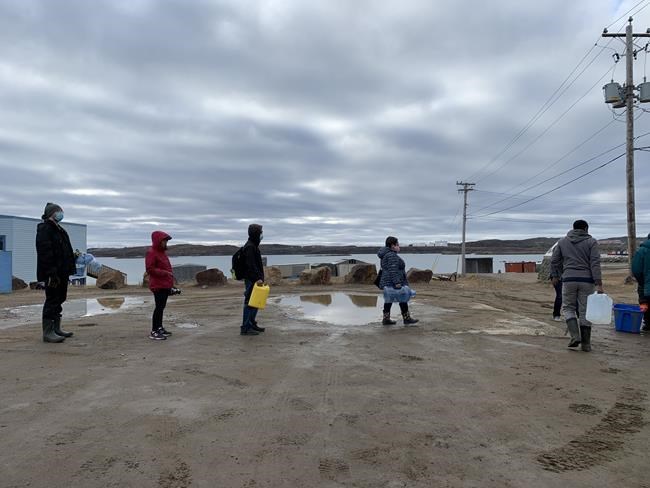
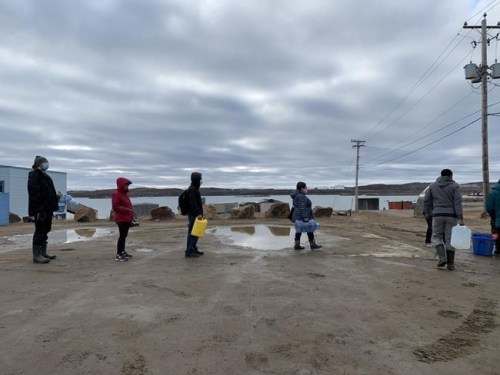
Residents line up to fill containers with potable water in Iqaluit on Thursday, Oct. 14, 2021. The city is set to provide an update today on the results of additional water testing. Its 8,000 or so residents haven't been able to consume tap water for 11 days after it was discovered to contain fuel. THE CANADIAN PRESS/Emma Tranter

Iqaluit mayor Kenny Bell said the military will help set up the mobile plant but he didn’t offer details about how it would work.

The military has sent three to five people to Iqaluit to assess where it could put the mobile plant, he said. “Right now, it’s a little bit too early to say what they’re going to do.”

In an email to The Canadian Press, a spokesperson for the Canadian Armed Forces said it is “working with federal and territorial partners to finalize the details on our support to the people of Iqaluit” and couldn’t provide more information.

Iqaluit residents had reported a fuel smell in their water as early as Oct. 2. But the city said regular testing, for things such as bacteria, had come back clean.

On Oct. 12, workers opened a tank at the city’s water treatment facility and smelled fuel. Tests later came back positive for high concentrations of fuel in that tank.

Residents have been collecting water from the city’s Sylvia Grinnell River and picking up free bottled water from distribution sites.

The territory’s chief public health officer, Dr. Michael Patterson, has said that the health risks to residents who drank the city’s tap water are very low.

At a news conference Friday, he said residents may still smell fuel in their water even though the city has bypassed the contaminated tank.

When water is heated up or moved around, Patterson explained, the fuel smell becomes stronger even if the levels mean it’s not dangerous to consume.

The city said it’s still in the process of flushing the contaminated water from its system and residents need to clean their home’s water tanks.

Flushing is expected continue into at least next week.

The city had originally said the process would take about 48 hours, but that another round of flushing needs to be completed.

Services at Iqaluit’s hospital have also been affected, as medical tools cannot be sanitized with the contaminated water. Nunavut’s health department said the hospital has so far postponed about 30 surgeries, eight urology cases and 28 dental procedures.

It’s still not clear how fuel got into the tank at the treatment plant.

Amy Elgersma, the city’s chief administrative officer, said an assessment found “no obvious cracks” in the contaminated tank.

The tank was bypassed, but hydrocarbons are still being found in the water, particularly in the city’s reservoir tanks, Elgersma said.

“They are presenting as hydrophobic and they tend to remain on the surface, which means they can be removed directly from those tanks using a vacuum system,” she said.

Environmental assessments of the ground around the treatment facility are ongoing, she added.

“We do suspect that contamination from the soil or groundwater from outside the plant has seeped into the water treatment plant,” she said.

Next steps will depend on thoseassessments, Elgersma said.

The city said it is also in the process of installing a real-time monitoring station to detect fuel in its water.

This report by The Canadian Press was first published Oct. 22, 2021.

This story was produced with the financial assistance of the Facebook and Canadian Press News Fellowship.
Report Error Submit a Tip

More Stories

Downtown Keg closes… to reopen nearby

Free Press staff 2 minute read Preview

Downtown Keg closes… to reopen nearby

Free Press staff 2 minute read Friday, Jul. 31, 2026

Downtown Winnipeg is without a Keg restaurant — for a couple of months, anyways.

The Keg Steakhouse and Bar vacated 115 Garry St. on Wednesday, after more than five decades at the location. It will open in a new Donald Street apartment tower this fall.

Its move comes after years of waiting. The DSM, at 185 Donald St., sat as a partially started apartment block after its developer stopped operating and sought creditor protection in April 2023. The developer began the project in 2019.

Carrington Real Estate took over in 2024. Part of the 14-storey site’s initial plans — pre-Carrington — was for the Keg to occupy the main floor.

Read
Friday, Jul. 31, 2026

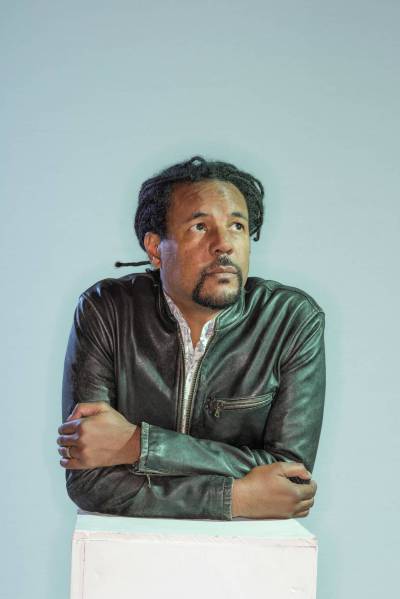
On the night table: Colson Whitehead

1 minute read Preview

On the night table: Colson Whitehead

1 minute read Yesterday at 2:02 AM CDT

Colson Whitehead

Author, Cool Machine

I’ve been reading Caroline Fraser. She has a book called Murderland about serial killers that came out last year. Her previous book, Prairie Fires, was a biography of Laura Ingalls Wilder. She’s a new author for me, and I’m going through that biography now. I never read Wilder’s books, but I liked the TV show when I was a kid; it’s one of those books that’s about a person’s life, but also pulls back to get the larger cultural panorama of America, talking about frontier life and and prairie life — it’s really interesting.

Colson Whitehead will launch Cool Machine, the third book in his Harlem trilogy, on Tuesday at 7 p.m. in the Muriel Richardson Auditorium at WAG-Qaumajuq (300 Memorial Blvd.) in an event presented by McNally Robinson Booksellers.

Read
Yesterday at 2:02 AM CDT

Military to help with Iqaluit water emergency

Emma Tranter, The Canadian Press 4 minute read Preview

Military to help with Iqaluit water emergency

Emma Tranter, The Canadian Press 4 minute read Friday, Oct. 22, 2021

IQALUIT, Nunavut - The federal government is sending the Canadian Armed Forces to help with the water emergency in Nunavut's capital, and the work may include setting up a mobile water treatment plant.

In a tweet Friday, Prime Minister Justin Trudeau said he had spoken with Nunavut PremierJoe Savikataaq and that the military will be deployed to Iqaluit to co-ordinate and deliver clean drinking water.

The city's 8,000 residents haven't been able to consume tap water for 11 days, since it was discovered to contain fuel.

Iqaluit mayor Kenny Bell said the military will help set up the mobile plant but he didn't offer details about how it would work.

Read
Friday, Oct. 22, 2021

Manitoba Hydro expects storm-related power outages to be repaired Saturday

Zoe Pierce 6 minute read Preview

Manitoba Hydro expects storm-related power outages to be repaired Saturday

Zoe Pierce 6 minute read Yesterday at 5:46 PM CDT

As Manitoba Hydro crews work to restore the last pockets of power following this week’s severe storms, some Winnipeg residents say the prolonged outages left them effectively stranded, unable to safely leave their apartments or charge essential mobility devices.

More than 30,000 Manitoba Hydro customers lost power after powerful storms swept across southern Manitoba Wednesday and Thursday, bringing down trees and power lines. Environment and Climate Change Canada recorded wind gusts of 133 km/h in Brandon, 113 km/h in Souris and 91 km/h in Winnipeg, along with more than 2,900 lightning strikes within 50 kilometres of the city.

In an update posted to social media Saturday morning, Manitoba Hydro said about 500 customers remained without power. The utility said it hoped to restore all remaining storm-related outages later in the day.

“Right now, we’re prioritizing customers that have been out the longest,” the post reads. “The final restoration work will still take time, in part because we’re dealing with small, localized outages and need to travel across a widespread area.”

Read
Yesterday at 5:46 PM CDT

As wildfire season rages, new book explores the frontlines of battling Canadian blazes

Reviewed by GC Cabana-Coldwell 4 minute read Preview

As wildfire season rages, new book explores the frontlines of battling Canadian blazes

Reviewed by GC Cabana-Coldwell 4 minute read Yesterday at 2:02 AM CDT

Mother Nature’s talking but we haven’t been listening, according to Jesse Winter, author of Wild Fire: Dispatches from a Country Ablaze, a book, released earlier this summer detailing Canada’s wildfire woes.

Currently, almost 1,000 wildfires across Northwestern Ontario, British Columbia, the Prairies, Northwest Territories and eastern provinces are burning in Canada. Forest fires also continue to wreak havoc in France, Spain and other European countries, and in the U.S. states of Oregon, California, Florida and Texas. While 2023 still rates as the world’s worst wildfire season, 2026 is hot on its heels.

Winter, a Vancouver-based, award-winning climate disaster photojournalist, spent more than two years on Wild Fire, his first book. In-depth research included working with firefighting crews and environmentalists as well as talking to researchers, politicians and evacuees. He says we need to rethink our views on wildfires or be prepared to watch more land go up in flames.

Canada, Winter writes, is “a country almost perfectly designed to burn.” At least 70 per cent of boreal forests, which cover one-third of the country, are stuffed with highly flammable spruce, fir, pine and tamarack trees as well as aspen, poplar and birch. With a wealth of available fuel, it’s no surprise, he writes, that an area twice the size of Vancouver Island burns every summer in Canada.

Read
Yesterday at 2:02 AM CDT

Hydro scrambling to restore power to remaining 4,500 customers after storm; some outages will continue into Saturday

Chris Kitching 5 minute read Preview

Hydro scrambling to restore power to remaining 4,500 customers after storm; some outages will continue into Saturday

Chris Kitching 5 minute read Friday, Jul. 31, 2026

Power outages could stretch into a third day for some Manitobans — mainly in and around Winnipeg — while crews continued to repair widespread damage caused by powerful thunderstorms.

About 4,500 Manitoba Hydro customers were still without electricity at 2:30 p.m. Friday, after more than 30,000 lost power while powerful winds brought down trees and power lines Wednesday night and early Thursday.

The Crown corporation said it is aiming to have all outages with greater numbers of customers restored by Friday night, but some customers may remain without power into Saturday.

“The challenge is just the sheer scale of this thing — hundreds of different outages spread across a large part of the city,” Hydro spokesman Peter Chura said. “Just getting to all of them in a timely fashion is very difficult.”

Read
Friday, Jul. 31, 2026