Elections Canada probed how many Canadians have a ‘conspiracy mindset’

Advertisement

Advertise with us

OTTAWA - Elections Canada was curious to know how many Canadians believed in conspiracy theories in the lead up to the recent federal vote.

Read this article for free:


or

Already have an account? Log in here »

To continue reading, please subscribe:

Subscribe and receive a limited-edition Free Press branded hat or tote.

Digital Subscription

One year of digital access for only $205*

  • Enjoy unlimited reading on winnipegfreepress.com
  • Read the E-Edition, our digital replica newspaper
  • Access News Break, our award-winning app
  • Play interactive puzzles

*First annual payment billed as $205.00 + GST for one year. This annual subscription will automatically renew at $233.00 + GST every 52 weeks (10% off the regular annual price of $259.35). Offer available to new and qualified returning subscribers only. Cancel any time.

To continue reading, please subscribe:

Add Free Press access to your Brandon Sun subscription for only an additional

$1 for the first 4 weeks*

  • Enjoy unlimited reading on winnipegfreepress.com
  • Read the E-Edition, our digital replica newspaper
  • Access News Break, our award-winning app
  • Play interactive puzzles
Start now

*Your next Brandon Sun subscription payment will increase by $1.00 and you will be charged $17.95 plus GST for four weeks. After four weeks, your payment will increase to $24.95 plus GST every four weeks.

Hey there, time traveller!
This article was published 02/11/2021 (1747 days ago), so information in it may no longer be current.

OTTAWA – Elections Canada was curious to know how many Canadians believed in conspiracy theories in the lead up to the recent federal vote.

Prime Minister Justin Trudeau had two years left in his minority mandate in August when he plunged the country into an election while a fourth wave of COVID-19 raged.

Protesters opposed to public health measures like masking and mandatory vaccinations staged demonstrations, some of them following Trudeau as he crisscrossed the country, hurling obscenities at him and, at one point, even gravel.
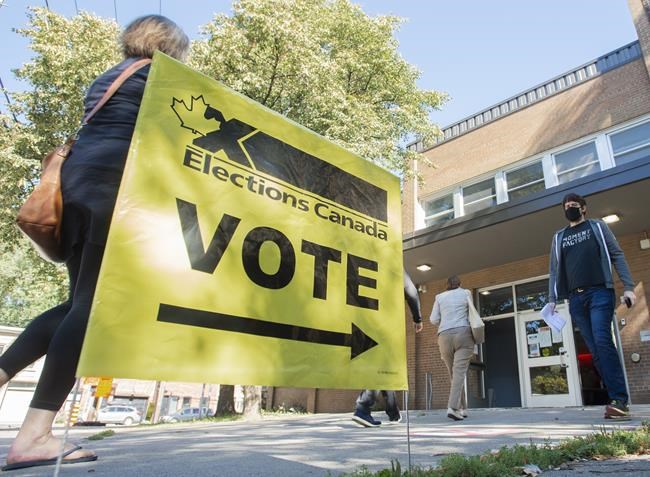
People arrive to cast their ballot on federal election day in Montreal, Monday, Sept. 20, 2021. Elections Canada was curious to know how many Canadians believed in conspiracy theories leading up to the recent federal vote. THE CANADIAN PRESS/Graham Hughes

Months before triggering the vote, the federal agency in charge of running elections commissioned its first stand-alone survey into the level of trust Canadians had in the electoral process. That included finding out how many held a “conspiracy mindset.”

“Questions about conspiracies allow for a better understanding of what can trigger distrust toward electoral administration,” Elections Canada spokeswoman Natasha Gauthier said in a statement, adding the “COVID-19 pandemic has caused significant social and economic changes, including in the realm of election administration.”

“Looking at mistrust in general also helps us better understand what sorts of information and communication approaches can be effective in instilling trust in elections.”

Conducted by the firm Leger over 10 days in April, the poll surveyed 2,500 Canadians online and through computer assisted interviewing technology.

It found a majority of respondents trusted Elections Canada and believed the voting system was “safe and reliable.”

When it came to conspiracy beliefs, the study, recently posted to a government website, reported 17 per cent believed the government was trying to cover up the link between vaccines and autism, and 30 per cent thought new drugs or technologies were being tested on people without their knowledge.

The research also found 40 per cent of respondents subscribed to thinking that certain big events have been the product of a “small group who secretly manipulate world events.”

Aengus Bridgman, a lead researcher on a project which tracked the spread of false and misleading information during the campaign, said putting an exact number on how many Canadians believe in conspiracies is tough because it comes down to how that’s measured.

The McGill University PhD student in political science says the project, co-organized with the University of Toronto, has done its own surveys that suggest between 10 to 20 per cent of people held strong conspiracy beliefs.

Bridgman says false information about the novel coronavirus played a big role during the election. Social media also saw a “relentless group of individuals” making untrue claims about how mail-in votes would be counted, reflective of what unfolded during the 2020 U.S. presidential election, where former president Donald Trump pushed unsubstantiated concerns about fraudulent mail-in ballots.

As the Sept. 20 election day neared, Elections Canada countered with messages explaining the process for counting these ballots but Bridgman says that needs to happen faster.

“As soon as it starts circulating on a Telegram channel, you can be pretty sure within 24 hours, 36 hours, it’s going to be on some of the more mainstream platforms, and people are going to be being exposed to it.”

One of pandemic’s effects, he says, is that vaccinations have become a “flashpoint” where groups who hold different conspiracy-based beliefs, from the Earth being flat to the allegedly sinister agenda of large pharmaceutical companies, finding a home together.

Mainstream political parties are often referred to as “big tent parties,” Bridgman notes. “Well, now we have this big tent conspiracy party.”

He says one conspiracy theory that appeared during the campaign and also online was around so-called “climate lockdowns.”

That was spread by, among others, long-time Conservative MP Cheryl Gallant from Ontario. Leading up to the election, she circulated mailers to constituents warning that the Liberals wanted to impose a “climate lockdown” and made similar comments in a video posted to social media.

The video was removed after Conservative Leader Erin O’Toole received questions about it.

This report by The Canadian Press was first published Nov. 2, 2021
Report Error Submit a Tip

More Stories

Could renewed interest in strategically critical rare earth elements finally make sub-sector profitable?

Joel Schlesinger 6 minute read Preview

Could renewed interest in strategically critical rare earth elements finally make sub-sector profitable?

Joel Schlesinger 6 minute read 3:00 AM CDT

Rare earth elements are among the most critical of mined resources for modern economies.

They’re essential in manufacturing specialized magnets used in a host of technologies from wind turbines and electric vehicles to hard drives, smartphones, television screens, and fibre optics. Most notably, however, rare earth minerals are increasingly vital to the defence industry.

These 17 elements — closely related chemically and usually found all together in mineral deposits — have indeed been growing in geopolitical importance as the United States, Canada and other Western nations recognize their dependence on production from China.

It is the world’s largest producer and processor of rare earths, including the most in-demand elements neodymium and praseodymium used to manufacture very light and powerful magnets for an array of technologies, including the most advanced weapons of modern warfare.

Read
3:00 AM CDT

Wyatt vows to ‘absolutely’ continue serving as city councillor despite latest sex-crime charges

Joyanne Pursaga 5 minute read Preview

Wyatt vows to ‘absolutely’ continue serving as city councillor despite latest sex-crime charges

Joyanne Pursaga 5 minute read Thursday, Aug. 13, 2026

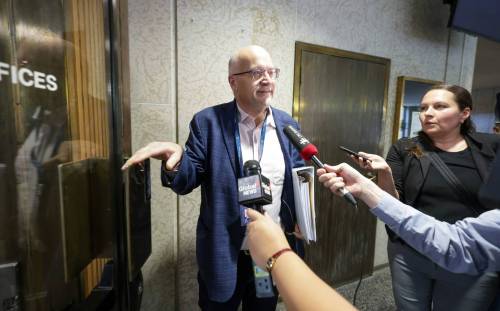
Transcona Coun. Russ Wyatt vowed Thursday to continue doing his job after more criminal charges were laid against him this week, while the mayor called for “better tools” to address elected officials who face serious allegations.

Wyatt, 56, was charged Monday with sexual assault and administering a noxious substance in an October 2023 incident. He was previously charged with sexual assault and administering a noxious substance in March, based on allegations tied to a 2025 gathering.

On Thursday, Wyatt arrived at city hall and quickly walked to his office at 10:20 a.m., nearly an hour after the East Kildonan-Transcona community committee meeting he planned to attend was scheduled to begin.

He answered few questions from reporters.

Read
Thursday, Aug. 13, 2026

Psychologist sentenced to house arrest after affair with patient

Dean Pritchard 5 minute read Thursday, Aug. 13, 2026

A psychologist who didn’t disclose her sexual affair with a mental-health patient under her care when she testified on his behalf before the Criminal Code Review Board has been sentenced to 18 months house arrest.

Aunt’s hidden, mysterious life unlocks a moving meditation on humanity and family

Reviewed by Joel Boyce 4 minute read Preview

Aunt’s hidden, mysterious life unlocks a moving meditation on humanity and family

Reviewed by Joel Boyce 4 minute read 3:00 AM CDT

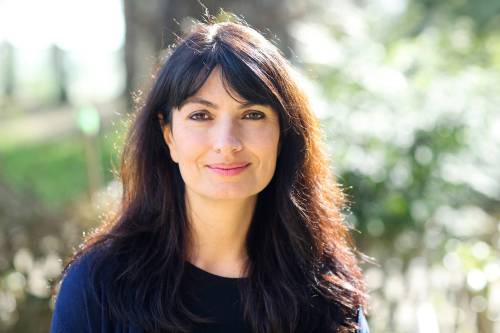
Valérie Perrin is not a household name on this side of the pond, but in France her novels have garnered multiple awards. In Tata, Perrin’s fourth novel but the second translated to English, a simple but intriguing premise unfolds into a complex, multi-faceted story, one that seemingly incorporates the lessons of not only her three prior novels but also her several produced screenplays.

Scene 1: Paris, an upscale apartment in the autumn of 2010. Agnes, a celebrated film director, is publicly lauded but privately still reeling from her divorce three years ago. The phone rings. On the other end is a provincial police officer from Gueugnon, who regretfully informs her that her aunt, Colette Septembre, was found dead in her home that morning.

But Agnes reacts with confusion, not grief — Aunt Colette died three years ago.

It’s a great set-up for a thriller, although this isn’t one.

Read
3:00 AM CDT

Proposed Transcona development — which could add 20,000 people — gets thumbs down from residents

Joyanne Pursaga 5 minute read Preview

Proposed Transcona development — which could add 20,000 people — gets thumbs down from residents

Joyanne Pursaga 5 minute read Yesterday at 6:15 PM CDT

Dozens of Winnipeggers fear plans to make way for up to 20,000 more people to live in south Transcona would dramatically alter their neighbourhood and tie hefty fees for new services to their property titles.

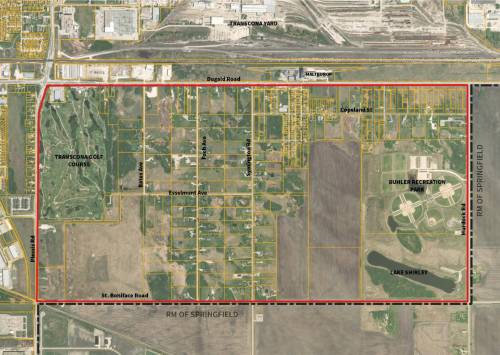
If city council adopts the proposed South Transcona secondary plan, all future development applications would need to conform to its goals. The affected area is located south of Dugald Road, north of St. Boniface Road, east of Plessis Road and west of Murdock Road.

Homeowner Virginia Page Jähne fears the plan could add a massive tab to the title of her 4.3-acre property to cover services required for the development.

“My main concern is that they are wanting to put $1.4 million onto my title to pay for this. Now, they say that I will not have to pay it unless I subdivide. But if a person comes by and wants to buy from me … and they see that $1.4 million … what’s the first thing (they’re) going to do?” said Page Jähne, in an interview.

Read
Yesterday at 6:15 PM CDT

‘Disrespectful’: residents frustrated after Wyatt arrives hour late to committee meeting

Joyanne Pursaga 3 minute read Preview

‘Disrespectful’: residents frustrated after Wyatt arrives hour late to committee meeting

Joyanne Pursaga 3 minute read Updated: Yesterday at 1:00 PM CDT

Several Winnipeggers attending a city development hearing on Thursday expressed frustration that one councillor arrived about an hour late, delaying the matter from being heard.

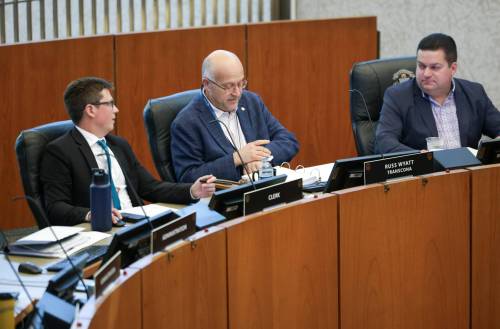
Coun. Russ Wyatt, who continues to attend city hall while facing criminal charges, began participating in the 9:30 a.m. East Kildonan-Transcona community committee meeting at 10:35 a.m.

A resident who hoped to speak at the meeting about a development plan in south Transcona noted the tardiness led the committee to bump the topic down on its agenda, while dozens waited to speak on it.

Christina Pyra eventually opted to leave city hall instead of waiting for her turn to make a presentation, to avoid missing a work commitment.

Read
Updated: Yesterday at 1:00 PM CDT