Deep divides

Rift between India’s modern and traditional cultures at the core of Umrigar’s latest novel

Advertisement

Advertise with us

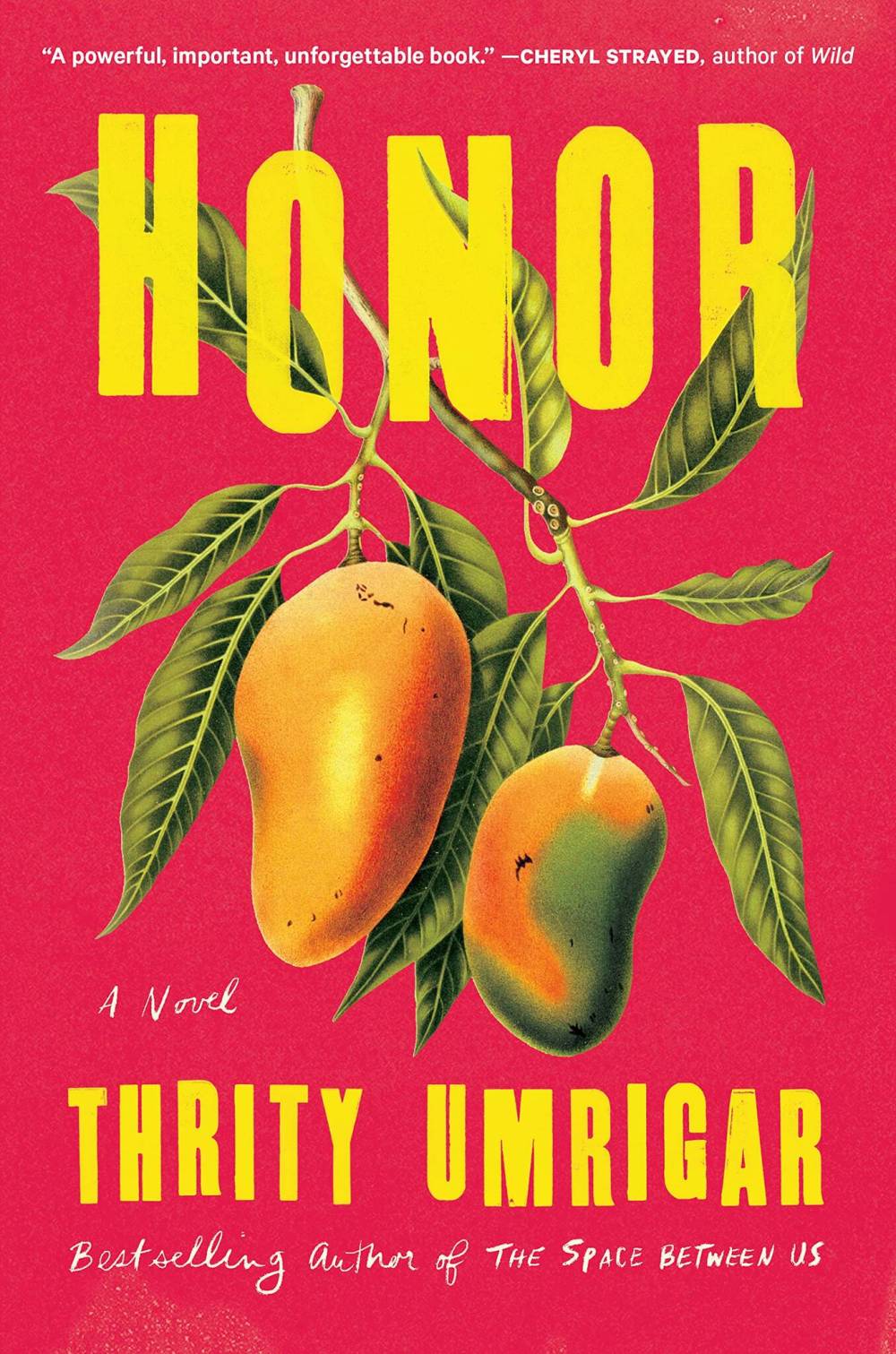
An unthinkably horrifying act lies at the heart of Thrity Umrigar’s novel, Honor: a Muslim man is set on fire and murdered by his two Hindu brothers-in-law, an act encouraged by the head of the village council while local police are bribed to stay away.

Read this article for free:


or

Already have an account? Log in here »

To continue reading, please subscribe:

Subscribe and receive a limited-edition Free Press branded hat or tote.

Digital Subscription

One year of digital access for only $205*

  • Enjoy unlimited reading on winnipegfreepress.com
  • Read the E-Edition, our digital replica newspaper
  • Access News Break, our award-winning app
  • Play interactive puzzles

*First annual payment billed as $205.00 + GST for one year. This annual subscription will automatically renew at $233.00 + GST every 52 weeks (10% off the regular annual price of $259.35). Offer available to new and qualified returning subscribers only. Cancel any time.

To continue reading, please subscribe:

Add Free Press access to your Brandon Sun subscription for only an additional

$1 for the first 4 weeks*

  • Enjoy unlimited reading on winnipegfreepress.com
  • Read the E-Edition, our digital replica newspaper
  • Access News Break, our award-winning app
  • Play interactive puzzles
Start now

*Your next Brandon Sun subscription payment will increase by $1.00 and you will be charged $17.95 plus GST for four weeks. After four weeks, your payment will increase to $24.95 plus GST every four weeks.

Hey there, time traveller!
This article was published 08/01/2022 (1695 days ago), so information in it may no longer be current.

An unthinkably horrifying act lies at the heart of Thrity Umrigar’s novel, Honor: a Muslim man is set on fire and murdered by his two Hindu brothers-in-law, an act encouraged by the head of the village council while local police are bribed to stay away.

Terribly disfigured by her attempt to put out the flames that consumed her beloved husband Abdul, Meena Mustafa accepts a female lawyer’s pro bono offer to bring her brothers to trial for murder. It’s this decision that attracts an American journalist’s attention. Shannon writes about Meena’s bravery in trying to seek justice in her husband’s memory despite her family’s and society’s condemnation of her marriage to a Muslim.

Umrigar was born in Mumbai, the setting for part of Honor. She writes about the unexpected and secret beauty of the metropolis that’s overwhelmed by its human population, its rapid economic development and the pollution that growth brings. She moved to the United States when she was 21 to attend university. A journalist, critic and novelist, Umrigar has written a memoir, eight novels and three children’s books.

Umrigar uses her personal experience as an Indian-American journalist to create the character of Smita Agarwal. Smita also grows up in Mumbai, but leaves for America with her family when she’s 14. Her childhood memories resurface when she’s suddenly called to Mumbai by Shannon, who is hospitalized while awaiting hip surgery. Shannon asks Smita to take over coverage of Meena’s case against her brothers, as a verdict is expected soon. Smita agrees, even though she has actively worked to stay away from India and repress the bad memories it holds for her.

Shannon’s friend Mohan volunteers to accompany Smita to the tiny village where Meena and her young daughter Abru are living with Meena’s mother-in-law. In the Indian countryside, a woman travelling on her own is unusual, and there is a personal risk involved. Smita points out to Mohan that traditional Indian society dictates very different roles for women and men. This disparity is still common in rural India, where women are primarily expected to look after the home and children, and men to work outside the home. Meena and her sister challenge this traditional view by working as seamstresses at a nearby clothing factory to help supplement the family income. Their older brother Govind is struggling to make a living farming, and their younger brother Arvind is a drunkard. Even though the brothers take all the money their sisters earn, they still believe that women shouldn’t have jobs outside the home.

The bad feelings existing between the siblings reach a breaking point when Meena runs away to marry Abdul, who she meets at the factory. A few months later, the couple return to Meena’s former home and announce her pregnancy to her brothers and sister. Meena tells Smita, “… my older brother, Govind, would not even let us enter his home. He said I already cut his nose by running away to marry a Muslim. But to carry a Muslim child meant that the stain of dishonor would spread through the generations.”

Meena’s plight, caused by the deep religious rifts that continue to exist within modern India, brings back Smita’s memories of a traumatic event also related to Hindu-Muslim conflict. Visiting a former neighbour in the Mumbai apartment building where her family once lived only serves to increase her mental anguish.

In Honor, Umrigar depicts the natural beauty of her former homeland, balancing that depiction with the ravages that development is causing. The deeply held beliefs of rural villagers are slowly changing as their society evolves, but these changes aren’t always viewed as positive by all who are impacted. The ancient and modern faces of India are very different, and Umrigar manages to capture both views in her writing.
Andrea Geary is a freelance writer.

Report Error Submit a Tip

More Stories

At the city’s busiest fire and paramedic hall, first responders face a relentless workload

Scott Billeck 24 minute read Preview

At the city’s busiest fire and paramedic hall, first responders face a relentless workload

Scott Billeck 24 minute read Friday, Aug. 28, 2026

As a soft rain begins to fall between the concrete walls of “Hope Alley,” little feels further away than the place’s namesake.

Winnipeg Fire Paramedic Service crews have been called to the narrow downtown passage, named by Al Wiebe, a formerly homeless man turned advocate. People regularly pass through here, moving between the shelters, drop-ins and resource centres clustered around Main Street between Logan and Higgins avenues.

Against a wall, as the sky switches into night mode, a man sits bleeding from his nose, seemingly unaware of how he ended up with blood running down his T-shirt.

His situation has already set Winnipeg’s emergency response network in motion.

Read
Friday, Aug. 28, 2026

Of frogs, roses, kings and a Great Lake

Editorial 4 minute read Preview

Of frogs, roses, kings and a Great Lake

Editorial 4 minute read Yesterday at 2:01 AM CDT

A rose by any other name would smell as sweet, as the saying goes. Basically, if you change something’s name, you don’t actually change the nature of the thing.

That being said, if even 15 years ago an American president had called an entire news conference to announce he was renaming one of the Great Lakes by writing on a map with a red pen and issuing an executive order purporting to rename Lake Ontario as “Lake America,” all and sundry would question his mental health.

Maybe, after witnessing so much from Donald Trump, we’ve all just been hardened off and the foolish is now expected daily. Perhaps it’s the political equivalent of the fable of the boiling frog.

As the fable goes, drop a frog into a pot of boiling water and it will jump right out. But put the frog in room temperature water and bring the pot to a boil, the frog will stay until its death. (It’s unlikely the frog would actually wait.)

Read
Yesterday at 2:01 AM CDT

Beware invasive, ‘frightening’ waterhemp

Laura Rance-Unger 4 minute read Preview

Beware invasive, ‘frightening’ waterhemp

Laura Rance-Unger 4 minute read Yesterday at 2:01 AM CDT

There’s a threat lurking on the edge of Manitoba farmers’ fields this fall that’s even scarier than the escalating trade war with their biggest customer.

Provincial extension advisers are warning farmers to watch for a weed known as “tall waterhemp,” which, true to its name, may already be towering above ready-to-harvest crops.

Those wispy tentacles waving in the breeze look pretty innocuous from a distance. But this highly invasive member of the pigweed family produces hundreds of thousands of seeds that are just itching for dispersal through farmers’ combines and across their fields.

Each of those tiny seeds — one small pill container filled halfway holds 44,000 — can produce plants with stems the width of saplings and heights of two to five metres. One or two plants can quickly turn into a patch. If waterhemp takes over a field, it can choke out the growing crop and cut yields by more than 90 per cent.

Read
Yesterday at 2:01 AM CDT

Carney’s defence of Lake Ontario carries enormous weight

Niigaan Sinclair 5 minute read Preview

Carney’s defence of Lake Ontario carries enormous weight

Niigaan Sinclair 5 minute read Friday, Aug. 28, 2026

For centuries on Turtle Island (North America), explorers, map makers, and political leaders have erased Indigenous place names and substituted them — more often than not — with political, ethnocentric, and self-aggrandizing names.

In recent years, a few places on the continent have had Indigenous names re-established, but as of today, few of the original names are “official.”

So, it was no surprise when U.S. President Donald Trump on Thursday signed an executive order directing the U.S. Department of the Interior and Board on Geographic Names to take steps within 30 days to officially rename Lake Ontario as “Lake America.”

The move may have been a result of the Canada-U.S. trade war and Trump’s pettiness and ego, but it also fits in perfectly with his career.

Read
Friday, Aug. 28, 2026

No kidding with comment on son’s resemblance

Maureen Scurfield 5 minute read Yesterday at 2:00 AM CDT

DEAR MISS LONELYHEARTS: I saw someone on the beach I used to love. She was with her husband, who had just gone into the water. She had several children with her, playing in the sand.

Her oldest kid looked right up at me and I said to my ex in a shocked whisper, “He looks like me!”

She replied in a whisper, “And my husband looks a lot like you, too, you idiot. My son was born two years after we broke up. He’s not yours, and you and I mean nothing to each other anymore.”

Interesting! That child had my colour of eyes and my colour of curly hair. Now what?

Trump’s tariff tantrum, geopolitical turmoil could be blessings in disguise for Manitoba’s diversified economy

Conrad Sweatman 18 minute read Preview

Trump’s tariff tantrum, geopolitical turmoil could be blessings in disguise for Manitoba’s diversified economy

Conrad Sweatman 18 minute read Friday, Aug. 28, 2026

It’s early July and Warren Luky’s second last day before he retires as president of United Steelworkers Local 6166. After a career at the bargaining table and in and around mineshafts, Luky speaks candidly as he fires up a barbecue at his Thompson home.

Luky, who represents 472 miners at Vale’s Thompson mining operation along with other northern labourers, is quite aware of the buzzwords currently attached to his trade and the region.

Phrases like “Arctic sovereignty,” “trade diversification,” “Indigenous-led” and “critical minerals” have caught on with politicians of all stripes over the past couple years as federal and provincial governments tout the need for greater Canadian sovereignty, with the push for major infrastructure projects declared a matter of national interest.

In light of the bitter collapse in trade negotiations between Canada and the U.S. on Aug. 21 — a historic blow to cross-border relations — these phrases are bound to become more contagious.

Read
Friday, Aug. 28, 2026