California prepares for energy shortfalls in hot, dry summer
Advertisement
Read this article for free:
or
Already have an account? Log in here »
To continue reading, please subscribe:

Digital Subscription
One year of digital access for only $205*
- Enjoy unlimited reading on winnipegfreepress.com
- Read the E-Edition, our digital replica newspaper
- Access News Break, our award-winning app
- Play interactive puzzles
*First annual payment billed as $205.00 + GST for one year. This annual subscription will automatically renew at $233.00 + GST every 52 weeks (10% off the regular annual price of $259.35). Offer available to new and qualified returning subscribers only. Cancel any time.
To continue reading, please subscribe:
Add Free Press access to your Brandon Sun subscription for only an additional
$1 for the first 4 weeks*
- Enjoy unlimited reading on winnipegfreepress.com
- Read the E-Edition, our digital replica newspaper
- Access News Break, our award-winning app
- Play interactive puzzles
*Your next Brandon Sun subscription payment will increase by $1.00 and you will be charged $17.95 plus GST for four weeks. After four weeks, your payment will increase to $24.95 plus GST every four weeks.
Read unlimited articles for free today:
or
Already have an account? Log in here »
Hey there, time traveller!
This article was published 06/05/2022 (1605 days ago), so information in it may no longer be current.
SACRAMENTO, Calif. (AP) — California likely will have an energy shortfall equivalent to what it takes to power about 1.3 million homes when use is at its peak during the hot and dry summer months, state officials said Friday.
Threats from drought, extreme heat and wildfires, plus supply chain and regulatory issues hampering the solar industry will create challenges for energy reliability this summer, the officials said. They represented the California Public Utilities Commission, the California Energy Commission, and the California Independent System Operator, which manages the state’s energy grid.
State models assume the state will have 1,700 fewer megawatts of power than it needs during the times of highest demand — typically early evening as the sun sets — in the hottest months when air conditioners are in full use.
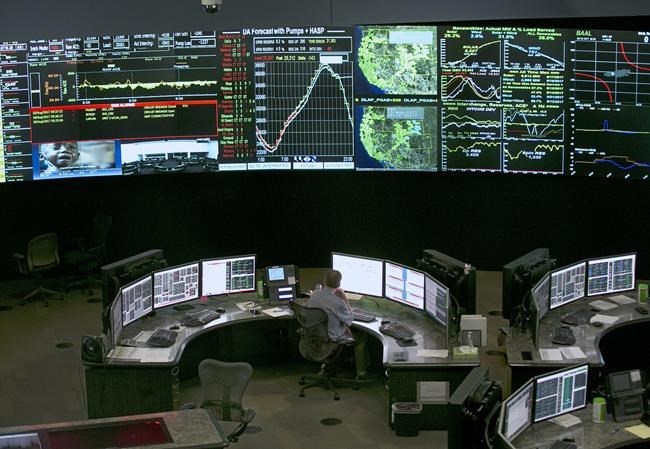
One megawatt powers about 750 to 1,000 homes in California, according to the energy commission. Under the most extreme circumstances, the shortfall could be far worse: 5,000 megawatts, or enough to power 3.75 million homes.
“The only thing we expect is to see new and surprising conditions, and we’re trying to be prepared for those,” said Alice Reynolds, president of the California Public Utilities Commission, which regulates major utilities such as Pacific Gas & Electric.
Climate change is driving a megadrought in California, which this year saw the driest January through March on record. Last summer the state for the first time shut off hydropower generation at the Oroville Dam because there wasn’t enough water. It’s up and running again, but the shutdown cost the state 600 megawatts of power, officials said.
Large hydropower projects generated nearly 14% of the state’s electricity in 2020, according to the independent system operator. Renewable energy sources, chiefly solar, accounted for 34.5% and nuclear power made up 10%.
Amid expected shortfalls this summer the state — and residents — have multiple tools to avoid blackouts. Power can be purchased from other states and residents can lower their use during peak demand, but power shortages still are possible during extreme situations, officials said. Reynolds urged people to consider lowering their energy use by doing things like cooling their homes early in the day then turning off their air conditioners when the sun goes down.
In August 2020, amid extreme heat, the California Independent System Operator ordered utilities to temporarily cut power to hundreds of thousands of customers.
Mark Rothleder, senior vice president for the system operator, said the state would be more likely to experience blackouts again this year if the entire West has a heat wave at the same time. That would hinder California’s ability to buy excess power from other states. Wildfires could also hinder the state’s ability to keep the power on, he said.
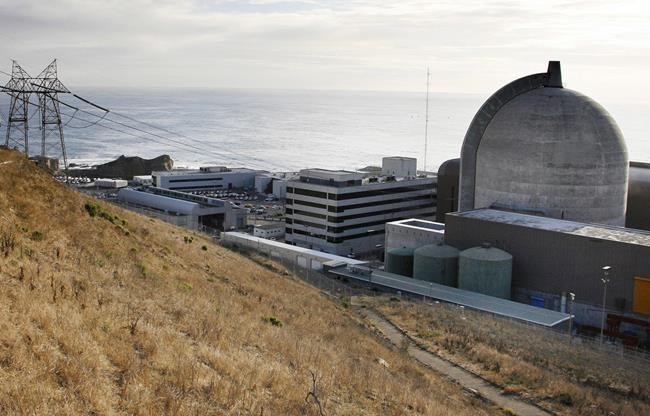
California is in the process of transitioning its grid away from power sources that emit greenhouse gases to carbon-free sources such as solar and wind power. As old power plants prepare for retirement, including the Diablo Canyon Nuclear Power Plant, the state has fewer energy options available. By 2025, the state will lose 6,000 megawatts of power due to planned power plant shutdowns.
Ana Matosantos, cabinet secretary for Gov. Gavin Newsom, declined to share details about what other actions the administration might take to ensure reliability, only saying Newsom was looking a “range of different actions.” The Democratic governor recently said he was open to keeping Diablo Canyon open beyond its planned 2025 closing.
Meanwhile, supply chain issues caused by the pandemic are slowing down the availability of equipment needed to stand up more solar power systems with batteries that can store the energy for use when the sun isn’t shining.
The state officials also pointed to an investigation by the U.S. Department of Commerce into imports of solar panels from Southeast Asia as something with the potential to hinder California’s move toward clean energy.
California has set a goal of getting 100% of its electricity from non-carbon sources by 2045, with certain benchmarks along the way including 60% by 2030. Already the state sometimes exceeds that target, particularly during the day. How much power comes from renewable sources varies based on the time of day and year as well as what’s available.

Recently the system operator said it hit a record of getting more than 99% of energy from non-carbon sources around 3 p.m., though that only lasted for a few minutes.
Solar power by far makes up the largest share of renewable power, though it peaks during the day and drops off significantly at night when the sun goes down. The state is ramping up battery storage so solar power can continue to be used when its dark, but the state’s capacity is still significantly lacking.
Pacific Gas & Electric, which serves about 16 million people in California, has added more battery storage since the 2020 power outages and is working on programs to reduce the energy load during peak demand, spokeswoman Lynsey Paolo said in a statement. The company is conserving water in reservoirs it relies on for hydropower and telling customers how they can reduce demand, she said. Her statement did not mention Diablo Canyon, which the utility operates.
Southern California Edison, another major utility, is working to procure more power, complete its own battery storage project and incentivize customers to use less energy, spokesman David Song said.
“Southern California Edison understands how much our customers depend on reliable electricity that is delivered safely, especially during the summer months when customers rely on electric service for air conditioners and fans during extended heat waves,” he said.